

Raising Children
When Your Child Acts Like a Bully: What It Means
When your child acts like a bully, they may be asking for something deeper. Learn how boundaries can restore calm and respect.
- Mor Gimani
- | Updated
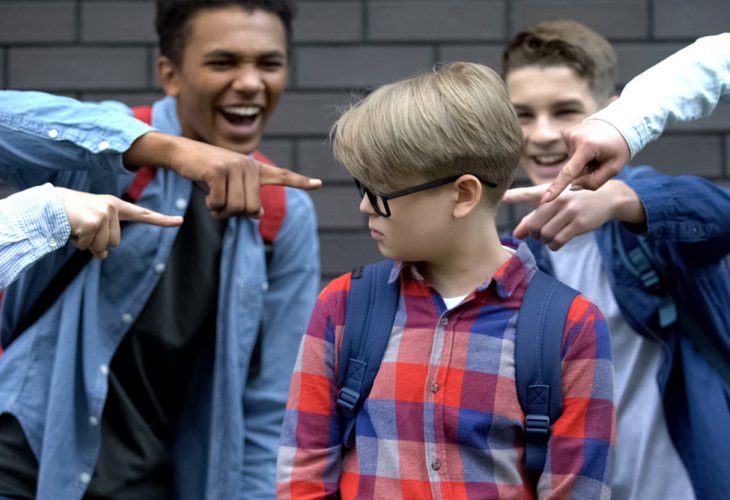 (Photo: Shutterstock)
When we think of a bully, we usually picture a child who pushes others around, takes what is not theirs, and reacts with anger when things do not go their way. But what happens when that behavior shows up at home? When your own child begins to act demanding, forceful, or disrespectful, it can feel confusing and even painful. After everything you have given, how did this happen? To understand it, we need to look deeper. From the outside, a child who behaves this way may seem strong and controlling. But on the inside, it is often the opposite. Many children who act like “bullies” are actually sensitive. They are overwhelmed, unsure, and searching for something they cannot express clearly. What are they really asking for? Boundaries. A child needs to feel that the adults in their life are steady, clear, and consistent. When there are no firm boundaries, or when boundaries are set and then disappear, the child becomes confused. Without realizing it, they begin to push harder. They test. They demand. They escalate. Not because they want to control, but because they are trying to find stability. Every behavior is strengthened by what feeds it. When a child learns that persistence, pressure, or outbursts lead to getting what they want, that behavior grows. If a child asks, cries, insists, and eventually receives what they demanded, the lesson is clear. “This works.” Over time, this pattern becomes stronger and more automatic. When your child asks for something, pause for a moment. Ask yourself: do I actually agree with this request? Your inner response matters. Sometimes the request feels reasonable. Sometimes it feels too much. Sometimes it simply does not feel right. That inner feeling is your boundary. After you think it through, make a decision. And then stay with it. Not with anger. Not with force. But with calm clarity. A child needs to see an adult who knows where they stand, who does not collapse under pressure, and who can hold a boundary with confidence. Children do not feel secure when they can control everything. They feel secure when the adult in front of them is steady. When a parent respects their own boundaries, they also teach the child to respect others. This is where real respect begins. A child is not born a “bully.” They learn it. When, from a young age, they receive whatever they want, or learn that pushing harder eventually leads to success, the pattern becomes fixed. Every time a boundary is set and then removed, the behavior is reinforced. To change the pattern, we do not need to fight the child. We need to change what feeds the behavior. Clear, consistent boundaries reduce the need for the child to push. Calm responses replace power struggles. Over time, the child begins to feel safer and more balanced. What looks like bullying is often a child asking, in the only way they know how, for guidance and limits. When we respond with clarity, consistency, and calm strength, we give them exactly what they need. Not control. Not more power. But the stability that helps them grow into respectful, thoughtful people.The Hidden Need Behind the Behavior
Why Boundaries Matter So Much
The “Food” That Fuels the Behavior
Listening to Your Inner Boundary
Standing Behind Your Decision
What Children Really Respect
How the Pattern Is Created
Breaking the Cycle
Conclusion
When we look at the bully from the side, some might even admire how he gets everything he asks for, while others hear the word "no," stay quiet, and move on. But it’s actually not as comfortable for him as we think. That "bully" everyone fears is, inside, very sensitive—and he’s crying out. What is the one thing he’s asking for in such a rough, unpleasant way? Boundaries.
A "bully" child is, by nature, a good and sensitive kid whose outer shell is bullying. His efforts to search for boundaries and his deep desire for his emotional needs to be acknowledged lead him to actions he doesn’t necessarily intend. The bully, emotionally and physically, is fed by "food." That food is our attitude toward him.
So what is a bully’s food? Society’s agreement to all his wants and requests. A child who is fed without limits swells until he reaches oversized proportions; everyone around him recoils and is afraid, gives him what he asks for to keep the imagined "quiet," and the bully moves on to the next person.
When our child asks us for something, the first thing we need to check is whether we agree with that request. Something inside will tell you whether the request is appropriate, excessive, or simply not right for you at that moment. As parents, we need to listen to that inner voice.
That voice is probably my boundary.
How much am I willing to give, how much am I willing to buy, how right is it for me and for our household finances, how much will it serve me and my child educationally.
After I weigh all the factors, I decide—and when I make a decision, I follow it through to the end. Not aggressively, but firmly. Decisively.
My child, through his rough behavior, is asking to see in front of him an adult who is decisive, who stands behind his decisions, who has a backbone with regard to himself and those around him. Only a decisive person with a backbone is someone whom, as a child, I would want to respect. One who respects his own boundary respects himself, and above all, respects those around him.
When I behave toward the world with bullying and get, at any given moment, whatever I ask for, I teach those who come after me to act that way too. Bullying behavior is behavior that is not inclusive, not accepting, and lacking empathy for others.
"Bullying" is a harsh word; it sounds very severe. Is a child bully to blame? No.
From a young age, he was taught that whatever he wants, he’ll get. And even if it’s decided he won’t—he’ll persuade, cry, scream—and then he’ll get it. Either way, he gets it, and that’s the bully’s food. When every boundary that is set blurs and disappears, the bully becomes stronger.
A bully becomes a bully over those weaker than him.
A bully would not meet the definition of a bully if he didn’t find someone weaker to pick on and grow stronger at their expense.
Remember - every time you set a boundary and it disappears because you didn’t hold it, remember that you are feeding your child bully food. He grows stronger at your expense, at the expense of your boundary that vanished.
And no one in the world likes bullies, so let’s teach them to be people.

