

Passover
Passover Insights: What the Nile Really Represents
A powerful Passover reflection on the Nile, Egypt, and the hidden path to redemption.
- Debbie Reichman
- | Updated
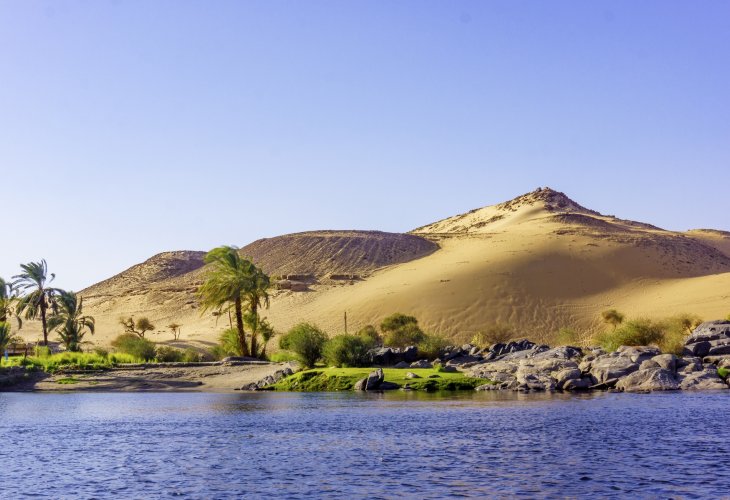 (Photo: shutterstock)
As Passover approaches, we return once again to the story of our beginnings as a nation. The story of Egypt, of exile and redemption, is not only about people and events. It is also deeply connected to a place.
Again and again in the Torah, one element stands out: the Nile River.
The Egyptians worshiped the Nile. Pharaoh commanded that newborn Hebrew boys be cast into its waters. And from this very river, Moshe was drawn as a baby by Batya, Pharaoh’s daughter.
The Nile is not just part of the background. It is part of the story of redemption itself.
What Is the Nile River
In Hebrew, the Nile is called the “Ye’or.” This name refers to one of the most famous rivers in the world.
The Nile is the longest river in Africa and one of the longest in the world. Its size, strength, and importance are extraordinary. Through it, we can already begin to see the wonders of Hashem’s creation.
Where the Nile Begins
The Nile is formed from two main tributaries.
The White Nile begins at Lake Victoria and flows through Uganda into Sudan. The Blue Nile starts at Lake Tana in Ethiopia. These two rivers meet in Khartoum and continue north as one powerful river through Egypt.
Near Cairo, the river spreads into branches before flowing into the Mediterranean Sea, forming the well-known Nile Delta, a wide and fertile region shaped like a triangle.
The Nile and Life in Egypt
Throughout history, the Nile was the lifeline of Egypt.
Even today, most of Egypt’s population lives along the Nile, where water is available. The surrounding land is mostly desert, making the river essential for survival.
The Nile provided water for drinking, irrigation for crops, and a path for travel and trade. Without it, Egypt could not exist in the way it did.
The fertile Delta region was especially significant. This is also where the Land of Goshen was located, where the Israelites lived after Yaakov and his family came down to Egypt.
A River That Sustained a Civilization
The banks of the Nile supported a wide variety of plant life.
Reeds, grains, and especially papyrus grew along its edges. Papyrus was used to build boats and also to create one of the earliest forms of paper. In fact, the English word “paper” comes from “papyrus.”
The Nile was not just a river. It was the foundation of an entire civilization.
A River of Power and Illusion
To the Egyptians, the Nile represented power, stability, and control. They depended on it so completely that they came to see it as a god.
But as we approach Passover, we are reminded of a deeper truth.
The very river they worshiped became a place of suffering, where cruel decrees were carried out. And yet, it also became the place where Moshe’s life was saved, setting the stage for redemption.
What seemed like a source of absolute power was, in truth, entirely in the hands of Hashem.
A Message for Passover
As we prepare for Passover, the story of the Nile reminds us that what appears strong and unshakable in the world is not always what it seems.
Egypt looked powerful. The Nile looked like the source of life. But behind it all, Hashem was guiding every detail.
Even in the darkest moments, even in the waters that symbolized fear and oppression, the seeds of redemption were already being placed.
Closing Thoughts
The Nile is more than a river in the Torah. It is a symbol.
A symbol of dependence, of illusion, and ultimately of Divine control.
As we sit at the Seder and tell the story of leaving Egypt, we remember that just as Hashem transformed the Nile from a symbol of power into part of the redemption, so too He continues to guide every part of our lives.
Even when we cannot yet see it.

