

Wonders of Creation
The Fascinating World of Snakes
Fascinating facts about snakes, from the giant reticulated python and anaconda to the tiny Barbados threadsnake
- Debbie Reichman
- | Updated
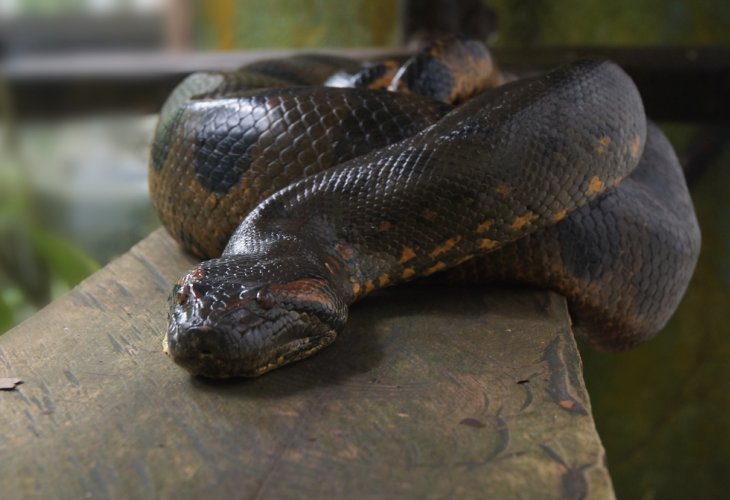 (Photo by: Shutterstock)
When Yaakov blesses his sons before his death in this week’s Torah portion, he compares the tribe of Dan to a snake: “Dan shall be a serpent by the way…” The snake is a unique and fascinating creature, and although most of us would certainly prefer not to encounter one near our homes, it is truly interesting to learn about them. Following are some special and surprising facts about snakes.
Which Is the Longest Snake in the World?
The Reticulated python can grow to a length of more than 10 meters (over 32 feet). It lives in the tropical forests of South Asia, including the Philippines, Malaysia, Sumatra, and other regions.
The reticulated python is a constrictor snake. When it hunts prey, it wraps itself tightly around the animal, suffocates it, and then swallows it whole.
Its digestion process takes a long time.
The reticulated python is capable of preying on very large animals, and although it usually avoids confrontation with humans, it can swallow a person as well.
Which Is the Largest Snake in the World?
Although the reticulated python holds the title of the longest snake, the Green anaconda is considered the largest snake in the world.
Its length is only slightly shorter than that of the reticulated python, but its great thickness and weight make it the largest overall.
Like the python, the anaconda is also a constrictor.
Which Is the Smallest Snake in the World?
In contrast to these giant record holders, there are also very small snakes, even tiny ones.
The Barbados threadsnake is the smallest snake in the world. Its width is no greater than that of a strand of spaghetti, and its length reaches only about 10 centimeters (4 inches).
This tiny snake lives on the island of Barbados, and it is often smaller than the leaves it crawls upon.
How Does a Snake Grow?
Unlike most animals, and humans as well, whose skin renews and expands as they grow, a snake’s skin becomes worn and does not grow along with its body.
For this reason, every few months a snake sheds its skin, or more precisely, the upper layer of its scales.
The snake that emerges from the shed skin is usually larger than it was before, now covered with a fresh and clean new layer of skin.
The old skin is left behind, almost like a sock forgotten by the side of the road.

