

Raising Children
Beyond Small Talk: How to Truly Connect With Your Child
Your child needs more than quick check-ins. Learn how meaningful conversations can build trust, improve emotional expression, and strengthen your bond.
- Rabbi Yosef Greenbaum
- | Updated
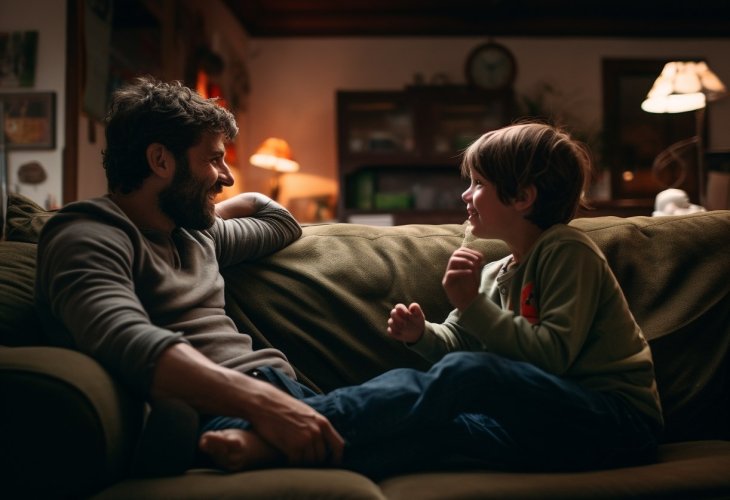
As parents, we invest a great deal of time and energy into caring for our children. We work hard to meet their physical and emotional needs, but we do not always make space for a truly open and meaningful conversation.
Many of our daily interactions are brief and functional. We ask how things are going, but the conversation often centers on homework, chores, or daily routines. Even our more serious discussions tend to happen in response to a problem, after a behavior issue or an emotional outburst.
In the process, we may miss valuable opportunities to deepen our connection and truly be present for our children.
Building a Relationship Beyond Performance
A healthy home is not built only on structure and expectations. It also requires a strong emotional connection.
When we place constant focus on performance, such as tasks, behavior, and responsibilities, we can unintentionally overlook the importance of relationship, honesty, and sharing.
Children need more than guidance. They need connection.
The Power of Full Attention
Children need dedicated time when they feel fully seen and heard.
This means offering steady, empathetic, and nonjudgmental listening. It means resisting the urge to immediately fix, correct, or advise, and instead simply being present.
When we listen this way, we allow our children to share their experiences, their successes, their disappointments, and their daily challenges.
These moments build trust and strengthen the emotional bond between parent and child.
Helping Children Learn to Express Emotions
Open conversation does more than strengthen connection. It teaches an essential life skill.
When children are given the space to talk, they learn how to express their emotions in words. They begin to understand what they feel and how to communicate it clearly.
This reduces the need to express emotions through behavior, such as anger or frustration.
Emotional expression is not something children are born knowing how to do. It is something they learn through consistent, supportive interaction.
Why Children Do Not Always Open Up
Even when children want to share, they do not always initiate these conversations.
Sometimes they sense that we are too busy to listen. Other times, they may feel unsure about how we will respond.
This is why it is important for parents to take the lead.
By asking thoughtful questions and creating a safe, open space, we invite our children to share what is on their minds and in their hearts.
Creating Meaningful Moments of Connection
A meaningful conversation is not defined by how long it lasts or where it happens. It is defined by the quality of attention we give.
When we create space for open dialogue, we show our children that they matter, that their inner world is important, and that they have a place where they can be heard without judgment.
When a child feels comfortable speaking openly, it is a clear sign of trust. It means they see their parents as a safe and reliable source of support.
And that is one of the greatest gifts we can give them.
Rabbi Yosef Greenboim is an educational consultant and emotional therapist.

