

Israel’s Knesset Passes Death Penalty for Terrorists After Heated Debate, Backed by Netanyahu
In a 62–48 vote with one abstention, lawmakers approved National Security Minister Itamar Ben-Gvir’s bill in its final readings. Netanyahu supported it; most opposition leaders voted no, except Avigdor Liberman.
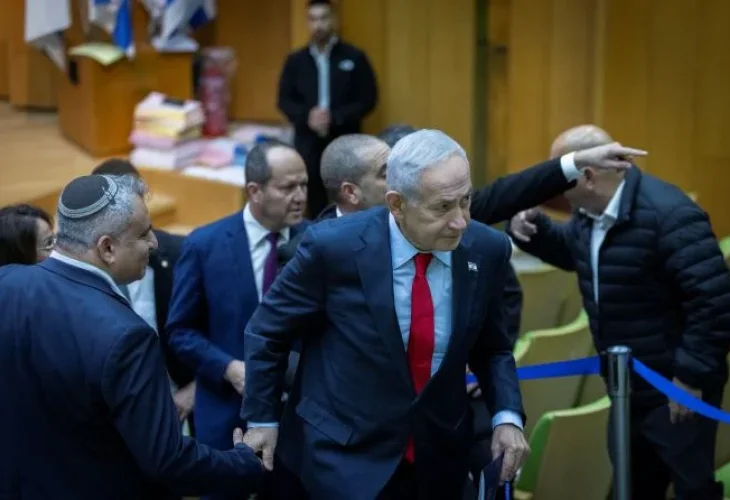 Netanyahu at the *Knesset* this evening (Photo: Asher Goldberg, Flash90)
The *Knesset* plenum approved this evening (Monday), by a majority of 62 in favor, 48 against, and one abstention, the Death Penalty for Terrorists law. The bill, initiated by National Security Minister Itamar Ben-Gvir, passed its second and third readings.
Prime Minister Benjamin Netanyahu supported the law, as did MK Avigdor Liberman. The other opposition faction leaders opposed it, as did MK Moshe Gafni.
Before the vote, Ben-Gvir said: "The time of judgment has arrived — the voice of the blood of our brothers and sisters cries out from the ground, and today we are doing historic justice. Today we deter; today we restore pride to the people of Israel. Today we restore sanity to the State of Israel. The death penalty for terrorists law that my colleagues and I from *Otzma Yehudit* have led is a historic law that changes the picture."
Ben-Gvir added: "Anyone who murdered, butchered, and slaughtered, and did so from a nationalist motive — there is no longer a need for the attorney general’s position in order for him to be executed. For years we waited for the attorney general’s position; we waited for the prosecution’s position, but it was slow in coming. The default is a mandatory punishment. Even without the attorney general’s request it’s possible, and in fact the rule is the death penalty; the exception is life imprisonment."
Opposition leader MK Yair Lapid said in the debate preceding the vote that he opposes the bill. In his words, "What’s on the *Knesset*’s table here is not a law. It’s a twisted PR stunt. This law does not include the hanokhavot. It does not include the murderers of October 7."
It should be noted that recently Netanyahu demanded softening the wording of the law, which had included a death penalty without judicial discretion, out of concern for international harm. Netanyahu insisted there be room for judicial discretion in exceptional cases and also the possibility of appeal.
According to the current wording, the law distinguishes between a death penalty for a terrorist in Judea and Samaria and the death penalty under Israeli law. In Judea and Samaria, the death penalty will be the default, but not an absolute obligation as Ben-Gvir had demanded. Under the wording, there will be judicial discretion to impose life imprisonment, and the judges will be required to state exceptional reasons. There will be no possibility of pardon or sentence reduction by a regional commander.
In addition, the defense minister will have the authority to determine the venue for the trial of a terrorist from Judea and Samaria — in a military court or, alternatively, in a regular court. Likewise, under Ben-Gvir’s wording there will be no requirement for a unanimous decision by the judges to impose the death penalty in Judea and Samaria, and it will not be contingent on the prosecution’s request for the penalty.
Under Israeli law it is written that the death penalty will apply only to someone who caused the death of a person \"with the intent to deny the existence of the State of Israel.\" In addition, the law also stipulates that the government will not be able to release terrorists sentenced to death in future hostage deals.

