

Wonders of Creation
Head Lice Facts: How They Spread, Reproduce, and How to Get Rid of Them
Learn how head lice spread, why they are common in children, how quickly they reproduce, and the most effective ways to remove lice and eggs safely
- Debbie Reichman
- | Updated
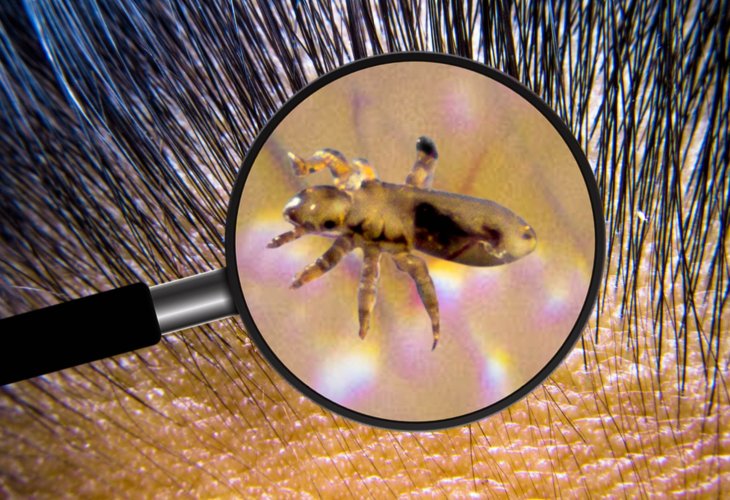 (Photo: shutterstock)
The lice we know today may not be exactly the same lice with which God struck the Egyptians in this week’s Torah portion, but even today they can still be quite a nuisance.
There are several different types of lice, but the most familiar and common are head lice, which are not dangerous.
In the past, people believed that lice could spread various diseases, even serious ones, from one person to another. However, head lice do not transmit diseases at all.
Body lice, which are much rarer, can indeed spread disease, but today they are almost nonexistent in many places.
That said, a person suffering from a severe untreated lice infestation over a long period may develop anemia, as lice feed on the blood of the person or animal on which they live.
How Do Lice Spread?
Contrary to what many people think, lice cannot fly or jump.
Therefore, transmission from one person to another is only possible through direct head to head contact, when the lice simply crawl from one person to the next.
It is therefore not surprising that most cases of head lice are found in children between the ages of 4 and 12, because at those ages close play and head to head contact are far more common.
For the same reason, girls are often more likely to become infected than boys, both because their hair is often longer and because girls may more frequently engage in social activities involving close physical proximity.
How Quickly Do Lice Reproduce?
From the moment a louse lays an egg, it takes about eight days for a new louse to hatch. Another nine days are needed for the louse to reach maturity.
It is important to know that a single louse can lay up to five eggs per day, so the rate of reproduction is very high.
What Should You Do If There Are Lice?
Today there are many types of treatments that help kill lice.
At the same time, the most effective way to get rid of them is to comb the hair with a fine toothed lice comb, preferably every day, in order to remove both the lice and their eggs.
There is no need to boil clothing, and certainly no need to throw it away.
Lice do not survive even a regular wash cycle, and after just a few hours off the scalp, they are no longer able to feed or cause harm.
A Small Historical Anecdote
In the Middle Ages, nobles in France often wore wigs.
The reason? A severe lice outbreak that struck the country during that period.
The nobles got rid of the lice by shaving their hair and wearing wigs instead.

