

Wonders of Creation
Amazing Animal Facts: The World’s Most Unusual Creatures
Discover fascinating facts about some of the world’s strangest animals, from the tiniest chameleon and the long necked gerenuk to the proboscis monkey and the vampire bat
- Naama Green
- | Updated
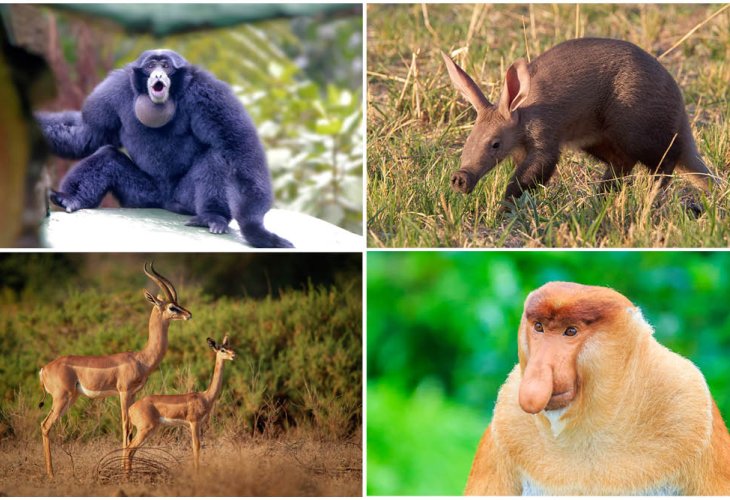 Photos: Shutterstock
Following are some of the world’s most unusual and fascinating animals.
The Smallest Chameleon in the World
In 2012, researchers from Germany and the United States discovered four new species of dwarf chameleons in Madagascar, the smallest chameleons in the world.
The tiniest among them is the dwarf leaf chameleon found in the forests of the northeastern part of the island. Its length reaches only 29 millimeters.
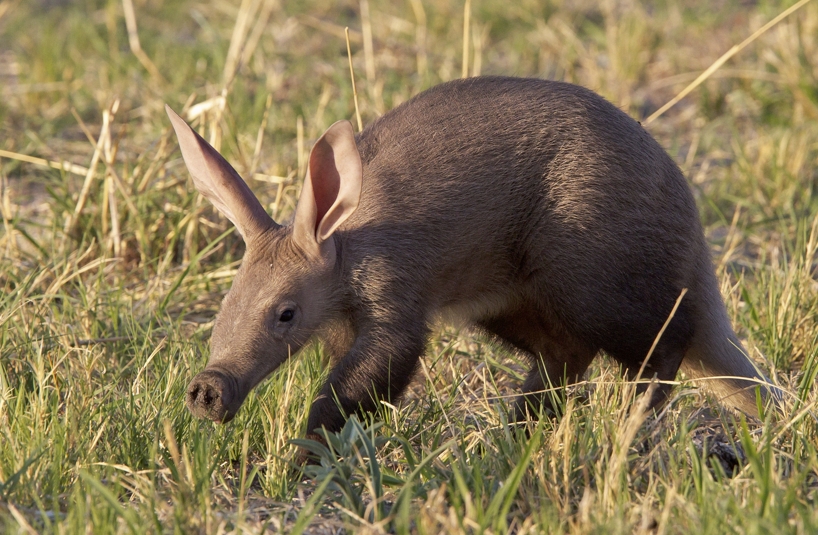
Aardvark: Teeth That Wear Down and Regrow
The aardvark is a unique nocturnal African mammal, unusual both in its appearance and in its teeth.
Its cylindrical teeth contain no soft inner tissue with nerves, blood vessels, or stem cells as in other mammals, and they also lack enamel. Because of this, the teeth wear down quickly and continually regrow.
Externally, the aardvark somewhat resembles a pig, which is why it is sometimes nicknamed the “ant pig.”
It has a large, heavy body with an arched back, an elongated head, a short thick neck, huge ears, and a cylindrical snout.
Its claws are large and flat like a shovel, appearing almost as a form between hooves and paws. The hind legs have five toes, while the front legs have only four.
Siamang: The Monkey With an Inflatable Throat
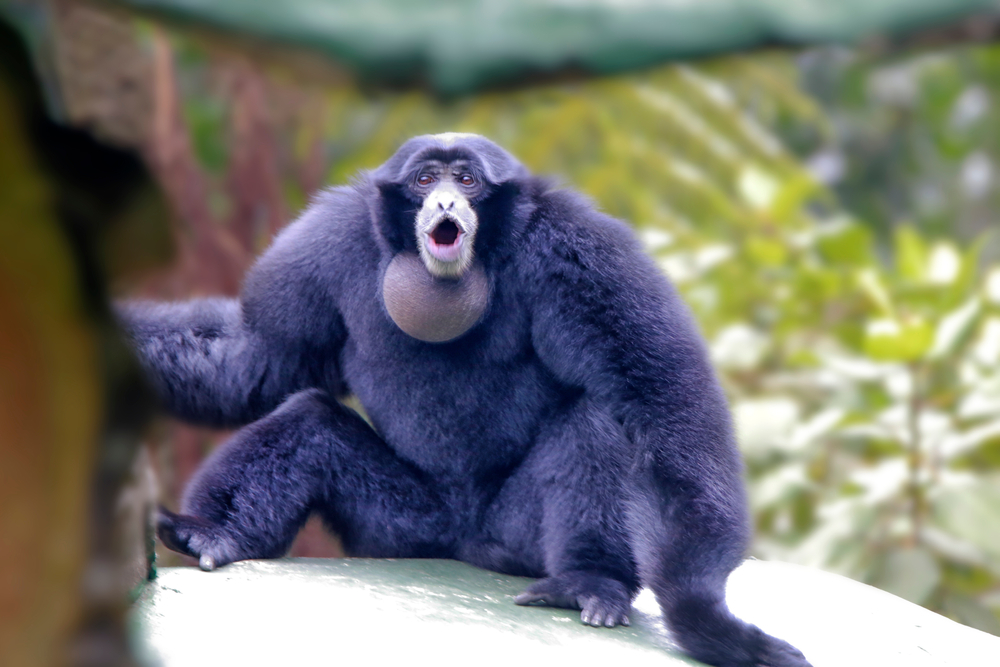
The Siamang is a large ape that spends most of its time in trees.
Its long and powerful arms help it move through the forest canopy. It can grow to about one meter in height and weigh around 12 kilograms.
Its diet consists mainly of leaves.
Because leaves provide relatively low energy, siamangs try not to waste energy and maintain a particularly low activity level.
Its throat is especially flexible and can inflate to the size of a human head. It uses this throat pouch as a resonance chamber to produce loud calls and communicate with others over great distances.
Proboscis Monkey: A Unique Plant Eating Monkey
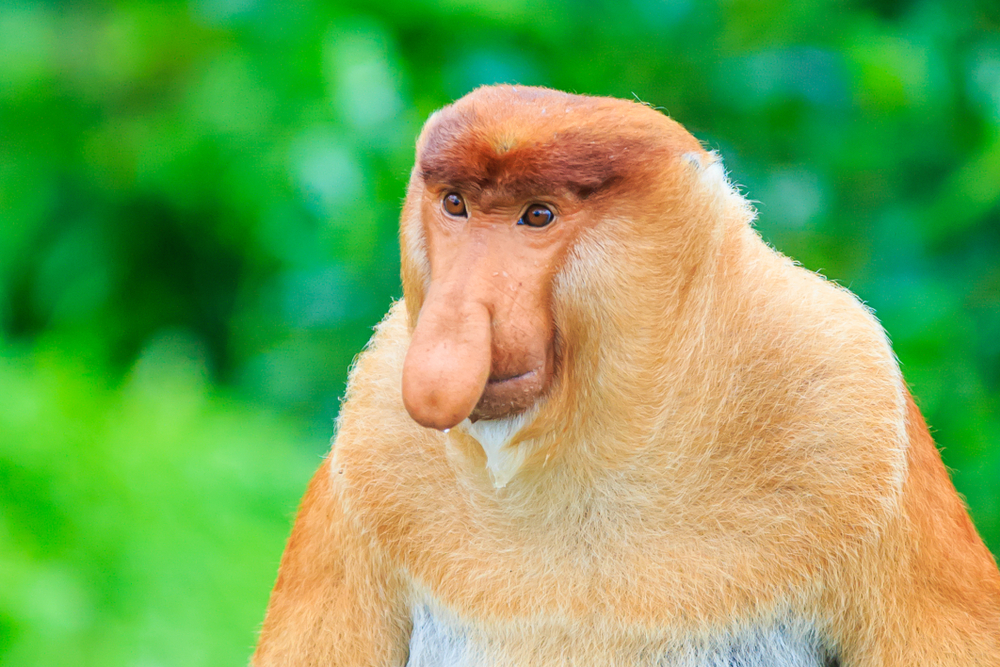
The Proboscis monkey is a highly unusual monkey found only in limited regions of Borneo.
Its most striking feature is the large, prominent nose of the male, which is also the source of its name.
Its diet is based on unripe fruits, nuts, and leaves. Its digestion releases a large amount of gas, causing its stomach to swell and giving it the appearance of a very large belly.
When it eats too many nuts and suffers stomach upset from harmful toxins, it eats soil to neutralize the toxins.
Only about 7,000 individuals remain in the wild, and it is considered severely endangered. The main threats are uncontrolled hunting and deforestation, which reduce its habitat and food sources.
Gerenuk: The Gazelle With a Long Neck
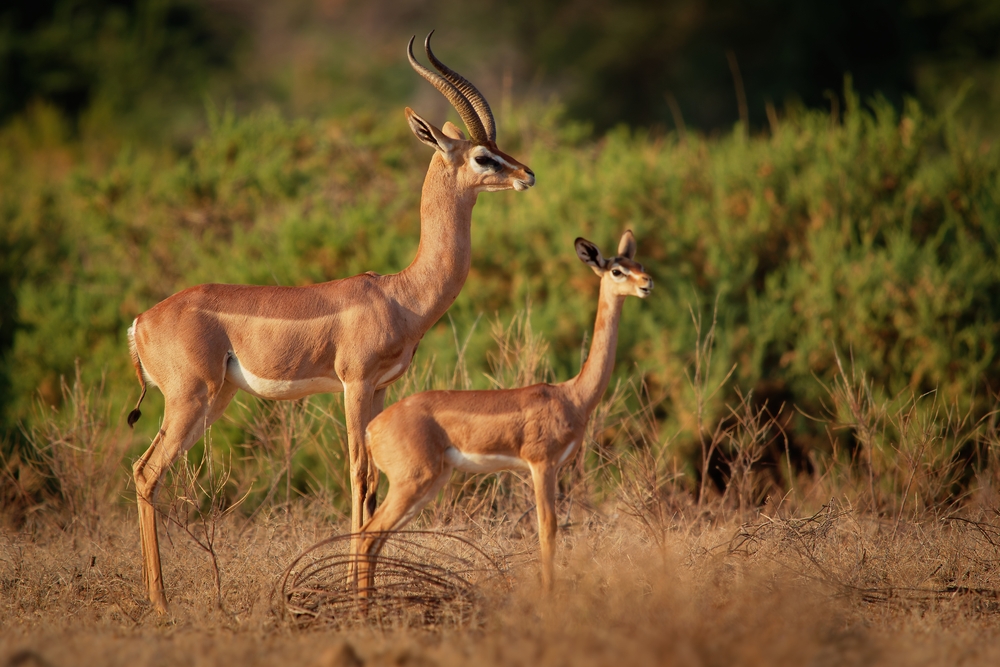
The Gerenuk, sometimes called the giraffe gazelle, lives in East Africa and is known for its unusually long neck.
It has a relatively small head, large eyes, and the males’ horns can reach 40 centimeters in height.
Its body length is about 150 centimeters, its height about 105 centimeters, and it can weigh up to 58 kilograms.
Unlike most gazelles that feed on ground grasses, the gerenuk stands on its hind legs and stretches its long neck to reach leaves, buds, flowers, and fruit growing on tall shrubs.
Vampire Bat: Feeds on Blood
The Vampire bat is found in the rainforests and deserts of the Americas, from Mexico in the north to Argentina in the south.
Vampire bats live in colonies inside caves, on trees, in abandoned buildings, and in storage spaces, and they become active at night.
Their body length is about 9 centimeters, their weight ranges from 15 to 50 grams, and their wingspan reaches 35 centimeters.
They are among the rare flying mammals.
Vampire bats feed on the blood of vertebrate animals. They locate their victims through smell, echolocation, and body heat.
Once they find an animal, they bite it and create a tiny wound about 3 millimeters wide. The injury is barely noticeable, and usually the victim does not even wake up. Their saliva contains an enzyme that prevents blood clotting, and for about 20 minutes they lick the blood flowing from the wound.
A vampire bat can drink an amount of blood equal to up to 60% of its body weight in one feeding. They feed only on red blood cells and expel the plasma even before finishing the meal.
Within colonies, which usually contain up to 100 individuals, they identify one another by voice and smell and maintain strong social bonds.
When food is scarce, they feed one another through regurgitation, so a bat that failed to find prey may receive food from another member of the colony.
Vampire bats can transmit diseases to both humans and animals, and every year they cause millions of dollars in damage to the cattle industry in Latin America.

