

Wonders of Creation
A Mother’s Instinct: What Animals Teach Us About Care
A mother cat facing a predator reveals a powerful truth. Learn what the animal world teaches us about care, courage, and responsibility.
- Et Lachshov
- | Updated
During a recent walk in Petah Tikva, I witnessed a striking scene.
A large, aggressive dog stood growling, straining against its leash, while its owner struggled to hold it back. Facing it was a small cat, standing upright on her hind legs, trying to appear as threatening as possible. Instead of running, she stood her ground.
At first, it was hard to understand. Why would such a small animal confront a powerful predator rather than escape?
Then the answer became clear.
Behind her, hidden in the bushes, were several tiny kittens.
The Power of a Mother’s Protection
The cat was not acting out of recklessness. She was protecting her young.
Her courage did not come from calculation or strategy, but from a powerful instinct placed within her. Her kittens would likely never understand the danger she faced or the bravery she showed, and she herself was not acting in expectation of recognition or gratitude.
She simply did what she was created to do.
This instinct exists throughout the animal kingdom. Animals are naturally equipped with the ability to care for, feed, and protect their offspring, ensuring the survival of their species.
What Makes Humans Different
Rabbi Shmuel Rozovsky offered a unique perspective on this idea.
When a grandfather would announce the birth of a grandchild, he would bless him by saying, “Mazel Tov, you have become a person.”
When asked about this unusual blessing, he explained that animals are given instincts to care for their young, but those bonds often fade once the offspring become independent. In contrast, humans maintain lasting relationships that extend beyond their children to future generations.
This ongoing connection, this ability to care beyond instinct and across time, is what defines a true “person.”
When Instinct Is Not Enough
In the animal world, parental care is deeply ingrained and consistent. In contrast, the human world sometimes presents a painful reality.
There are cases where this natural responsibility is not fulfilled. In a time marked by increasing self focus, the basic duty to care for and protect children can be weakened.
This contrast highlights something important. While animals from instinct, humans are given the ability to choose. With that choice comes responsibility.
Lessons From the Animal World
Many examples in nature reflect extraordinary devotion.
Farmers have long relied on maternal instinct by placing orphaned animals with other mothers, knowing they will often accept and care for them.
Rabbi Eliyahu Lopian shared a powerful story about a dog trained to bring bread home each day. Over time, it was noticed that one roll was always missing. When the situation was investigated, it was discovered that the dog was giving part of the bread to an injured dog hiding nearby.
This story highlights something profound. Compassion is not only taught. It is embedded within creation itself.
A Model of Care and Responsibility
The Torah compares Hashem’s care for the Jewish people to an eagle protecting its young, a powerful image of dedication and protection.
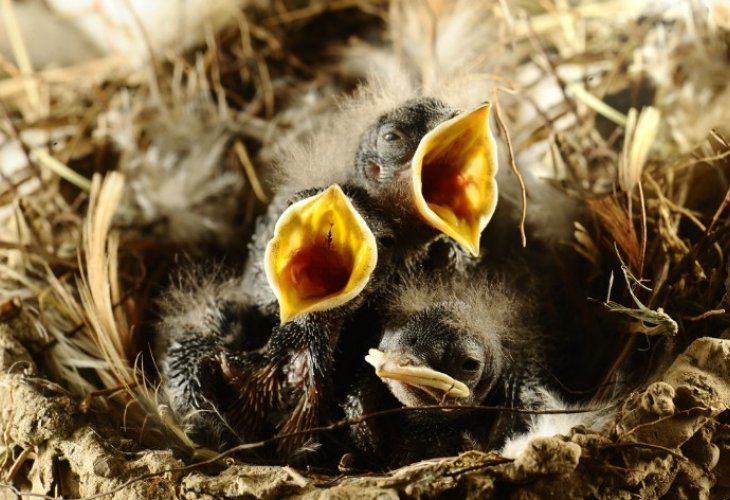
Across the animal world, we see similar patterns. Birds risk their lives to draw predators away from their nests. Mammals defend their young with fierce determination. Even in harsh environments, such as the freezing cold where penguins protect their chicks, the drive to care for the next generation remains strong.
These examples are not random. They reflect a system designed to preserve life and ensure continuity.
What We Are Meant to Learn
Observing the natural world reveals a clear message.
Care, responsibility, and devotion are not optional qualities. They are essential for the continuation of life.
In animals, these qualities are instinctive. In humans, they are a choice.
And that choice defines who we are.

