

Wonders of Creation
What Is a Geyser? How These Natural Wonders Work
Geysers are rare and powerful. Learn how heat, pressure, and underground structure create these fascinating natural phenomena.
- Rabbi Avraham Ohion
- | Updated
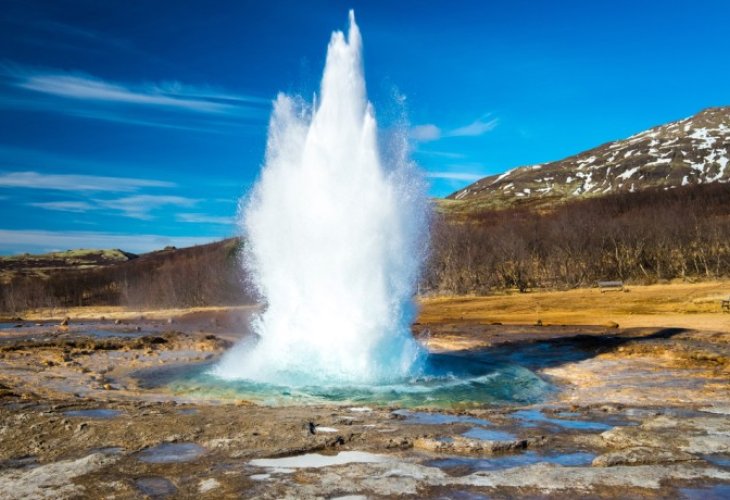 (Photo: shutterstock)
A geyser forms when water seeps deep into the ground and reaches extremely hot rocks heated by magma beneath the Earth’s surface. As the water heats up, it begins to rise through cracks and narrow channels.
If the underground structure is just right, with tight, narrow passages, pressure builds below the surface. The cooler water above traps the hotter water below, creating a situation similar to a pressure cooker.
Eventually, the pressure becomes too great. The hot water boils, turns into steam, and erupts forcefully through the opening. After the eruption, the system cools down, water refills the chamber, and the cycle begins again.
Different Types of Geysers
Not all geysers erupt in the same way.
Fountain geysers erupt from pools in powerful bursts. Blowout geysers release steady jets of water and steam, sometimes lasting several minutes, like Old Faithful. Surtsey style geysers erupt from wider openings with strong, dramatic bursts.
Each type depends on the structure of the underground channels and how pressure builds within them.
Why Are Geysers So Rare?
Geysers are rare because they require very precise conditions.
The underground rock must be hot enough to heat the water, but not allow it to escape too easily. The channels must remain narrow and strong, which is only possible when certain minerals in the ground help hold the structure together.
In addition, there must be a steady supply of water, usually from regular rainfall, and the environment must support the delicate balance needed for repeated eruptions.
Even small changes can disrupt this balance. Some geysers have disappeared due to natural events like landslides, while others have stopped functioning because of human activity, such as geothermal development or pollution.
A Fragile and Powerful Phenomenon
Geysers are both powerful and fragile. Their eruptions can reach impressive heights, yet the system that creates them is delicate and easily disturbed.
One striking example is the Beehive Geyser in Yellowstone. Known for its dramatic eruptions, it can shoot water and steam tens of meters into the air, creating a spectacular display. Nearby activity often signals when it is about to erupt, adding to its unique character.
A Window Into Nature’s Complexity
Geysers remind us of the incredible complexity of the natural world. Beneath what appears to be a simple burst of water lies a precise system of heat, pressure, and structure working together.
Their rarity and beauty highlight how delicate natural systems can be, and how important it is to preserve them.

