

Raising Children
When Mom Is Always to Blame: A Different Perspective
We often hear children’s pain, but what about mothers? A moving reflection on sacrifice, misunderstanding, and seeing the full picture.
- Naama Green
- | Updated
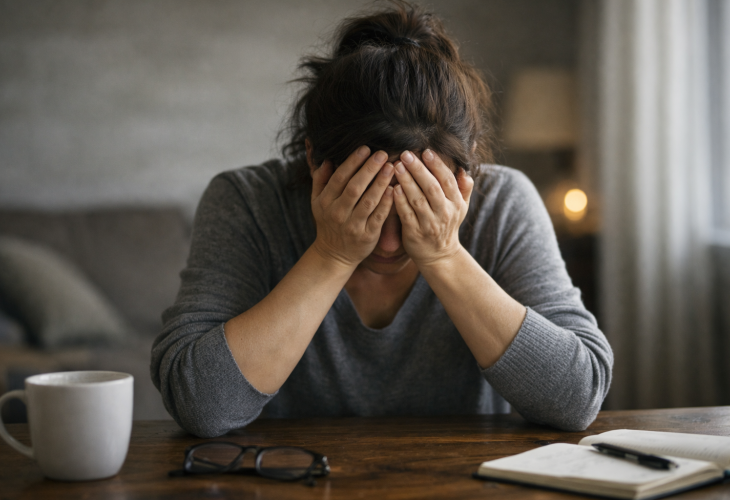 (Photo: Shutterstock)
A mother of four recently shared a raw and painful reflection, one that struck a deep chord. “Maybe once in a lifetime,” she wrote, “someone will write about how hard it is to be a mom.” Her words came in response to a column written by a young woman who felt hurt and deprived in her family. But what followed was not an argument. It was a cry. A voice that is rarely heard, even though it exists in so many homes.
When the Blame Falls on Mom
“How many psychologists end up blaming Mom,” she wrote. “Not Dad. He is often not even there. But Mom is always the one held responsible.”
She described a mother who gives endlessly, who has set aside her own needs, her own dreams, and sometimes even her own sense of self, in order to be there for her children. A mother who keeps going day after day, not because it is easy, but because she feels she has no other choice.
A Life of Giving Without Recognition
In her words, motherhood becomes a role with no space for being human. “You are not allowed to cry. Not allowed to laugh too much. Not allowed to get angry. Just take care of everything and carry the guilt.”
Behind these words is a deep exhaustion. Not only from the physical demands, but from the emotional weight of always being needed, always being responsible, and often feeling unseen. It is the quiet burden that builds over time.
When Children Grow Up
The pain does not necessarily fade as children grow older. In some cases, it shifts. Children begin to process their experiences, to speak about what they felt they lacked, and often that pain is directed toward their mother.
“Then they grow up,” she writes, “and they speak about how everything is because of Mom.”
These words are difficult, not because children’s feelings are not real, but because they often reflect only one side of a much more complex story.
The Voice We Rarely Hear
“Where is the mother’s voice?” she asks.
Where is the space for the one who is tired, worn down, and still showing up every day? The one who cries quietly, who carries disappointment, guilt, and love all at once?
A mother who continues to give, even when she feels empty.
Her words are not only about pain. They are about being seen.
A Call for Perspective
Her closing words are hard to ignore. “Call her. Ask for forgiveness. Before it is too late.”
This is not meant to dismiss the experiences of children. Their feelings matter, and their stories deserve to be heard. But it is also a call to widen the lens, to look beyond what was missing and recognize what was given.
To notice effort. To acknowledge sacrifice. To understand that love is not always expressed perfectly, but it is often there in ways that are easy to overlook.
Holding Both Sides
Family relationships are layered and complex. There is room for pain, for reflection, and for growth. But there is also room for compassion.
To remember that behind every mother is a person who tried, who struggled, who gave more than can always be seen.
And sometimes, what is needed most is not judgment.
It is understanding.

