

Raising Children
How to Set Limits With Kids Without Power Struggles
When kids don’t listen, words aren’t always enough. Discover a simple, effective way to set boundaries without power struggles.
- Menucha Pock
- | Updated
 (Photo: Shutterstock)
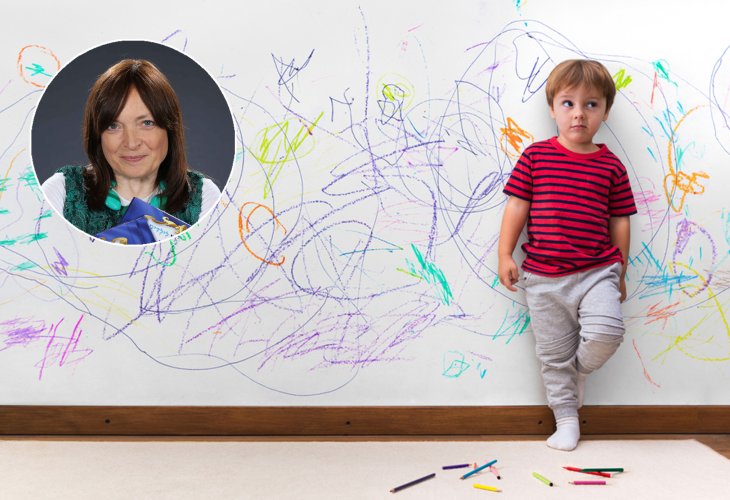
Little Isaac walks around the house with a box of crayons, drawing wherever inspiration strikes. Each day brings a new “masterpiece,” but not always where it belongs. The back of a chair, the living room table, the couch, even the wall.
Dad has already said it is not allowed. Still, the drawings continue. And Dad is running out of ideas.
The Parent’s Role: Setting Clear Boundaries
As parents, we are responsible for guiding our children.
Even if it does not personally bother us, it is important to teach that certain behaviors are not acceptable. Children need to understand that furniture and walls are not places for drawing.
When something is not allowed, our job is not only to say it. Our job is to make sure it actually does not happen.
When Words Are Not Enough
Sometimes, children continue a behavior even after we have explained it clearly.
In those moments, the question becomes practical. How do we help the child succeed? How do we prevent the behavior, rather than just react to it?
The answer often lies not in more talking, but in changing the situation itself.
Taking Action on Our Side
The most effective step in this case is simple. Remove the crayons.
If the child does not have access to crayons, he cannot draw on the walls. There is no argument and no ongoing struggle.
This is not about punishment. It is about creating a boundary that the child can understand and follow.
How to Do It Calmly
The way we take action matters.
The crayons should be taken calmly, without anger or frustration. If we react with irritation, the situation can quickly turn into a power struggle, and the child may respond with more resistance.
A calm response keeps the focus on the behavior, not on conflict.
Allowing the Reaction Without Escalation
It is natural for a child to be upset when something they enjoy is taken away.
There may be crying, frustration, or attempts to push back. This does not mean something is wrong. It is part of the learning process.
When we stay steady and do not react emotionally, the child gradually learns that the behavior no longer works.
Over time, the reaction fades.
Teaching Through Consistency
At some point, the crayons can be returned.
This gives the child an opportunity to show that they have learned. It also communicates that we are not against them, but guiding them.
When the child chooses to use the crayons appropriately, it is important to notice and encourage that behavior. Positive reinforcement helps strengthen the lesson.
When the Lesson Sinks In
Little Isaac walks around the house again with his crayons.
This time, something has changed. He looks for paper, sits down, and begins to draw where he should.
As Dad passes by, he gives him a gentle pat. No tension, no struggle. Just quiet success.
And in the end, it was worth it.

