

Behind the News
Iran Closes the Strait and Strikes Continue — How Stable Is the Ceasefire?
U.S. and Israel exclude Lebanon from the deal, while Iran cites violations as Israeli strikes, Hezbollah rockets, and Strait disruption continue
- Brian Racer
- | Updated
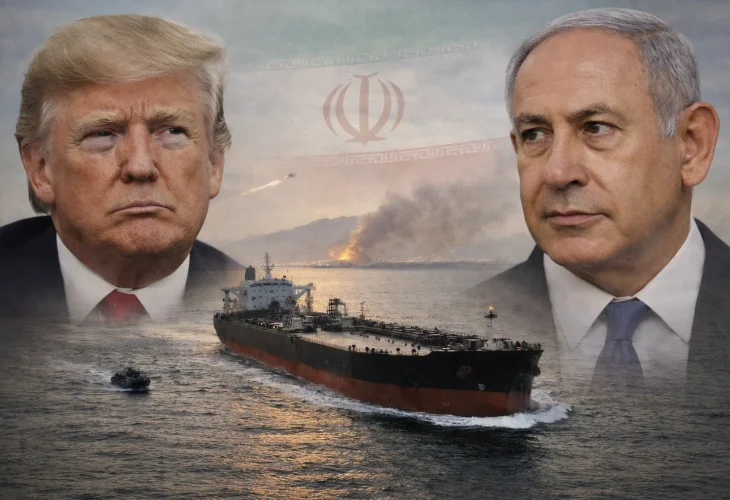
Within hours of its announcement, the two-week ceasefire between the United States and Iran is already facing its first major test, as Iran moved to close the Strait of Hormuz again, Israel launched its largest coordinated strikes in Lebanon, and Hezbollah fired rockets into northern Israel. The ceasefire remains technically in place, but continued military activity, disrupted shipping, and conflicting interpretations of the agreement point to early signs of instability.
Signaling that the United States is treating the ceasefire as conditional, in a post late Wednesday, President Donald Trump saidU.S. forces would remain deployed “in place, in and around, Iran” until what he described as the “REAL AGREEMENT” is fully implemented. “If for any reason it is not… then the ‘Shootin’ Starts,’ bigger, and better, and stronger than anyone has ever seen before,” Trump wrote, adding that Iran must have “NO NUCLEAR WEAPONS and, the Strait of Hormuz WILL BE OPEN & SAFE.”
At the center of the ceasefire is a dispute over what the agreement actually covers. White House Press Secretary Karoline Leavitt said earlier Wednesday, “Lebanon is not part of the ceasefire, that has been communicated to all parties involved.” Israeli Prime Minister Benjamin Netanyahu echoed that position, stating, “The temporary ceasefire with Iran will not include Lebanon.”
Israel’s military actions have reflected its position. The IDF carried outon Wednesdaywhat it described as its largest coordinated strike of the war, hitting more than 100 Hezbollah targets within minutes. Netanyahu said, “This is not the end of the campaign - the negotiations are a stage on the way to achieving our goals,” adding that Israel remains prepared to continue operations if necessary.
Hezbollah also confirmed Thursday that it fired rockets toward northern Israel, warning it would continue attacks in response to what it described as “Israeli-American aggression.”
Iranian state media reported on Wednesday that the Strait of Hormuz was closed again in response to Israeli strikes against Hezbollah in Lebanon. Maritime data and industry assessments indicate that shipping through the strategic waterway remains severely reduced, with vessels hesitating to transit despite U.S. demands that it be reopened. The status of the strait has emerged as a central test of whether the ceasefire is functioning in practice.
Iran has rejected that interpretation, arguing the ceasefire terms have already been violated.Foreign Minister Abbas Araghchi said, “The Iran–U.S. ceasefire terms are clear: the U.S. must choose — ceasefire or continued war via Israel. It cannot have both.” He added, “The ball is in the U.S. court, and the world is watching whether it will act on its commitments.” Pakistan, which helped mediate the deal, has also said the ceasefire applies “everywhere.”
Iranian officials have pointed to those strikes as evidence that the ceasefire has already been violated. Parliament Speaker Mohammad Bagher Ghalibaf said the “workable basis on which to negotiate” had been breached, citing Israeli operations in Lebanon, an alleged drone incursion into Iranian airspace, and disagreements over Iran’s right to uranium enrichment. “In such situation, a bilateral ceasefire or negotiations is unreasonable,” he said.
U.S. Vice President JD Vance suggested the dispute may stem from differing understandings of the agreement. “I think the Iranians thought that the ceasefire included Lebanon, and it just didn’t,” he said, adding that multiple versions of the proposal had circulated during negotiations. “Ceasefires are always messy,” Vance continued, adding that Israel has shown some willingness to “check itself” in Lebanon in order to support ongoing negotiations.
Despite the tensions, diplomatic efforts are continuing. U.S. officials, including Vance and special envoy Steve Witkoff, are expected to participate in talks in Pakistan this weekend, while an Iranian delegation is also set to attend.
For now, the ceasefire has not formally collapsed and remains in place, with schools, airports, and gatherings reopening as of today.But with active exchanges continuing, core terms still disputed, and the Strait of Hormuz not functioning normally, the agreement is being tested in real time.

