

Wonders of Creation
Why Rivers Flow to the Sea: The Science Behind Water’s Path
From flowing rivers to sea level, discover the hidden order behind how water behaves.
- Debbie Reichman
- | Updated
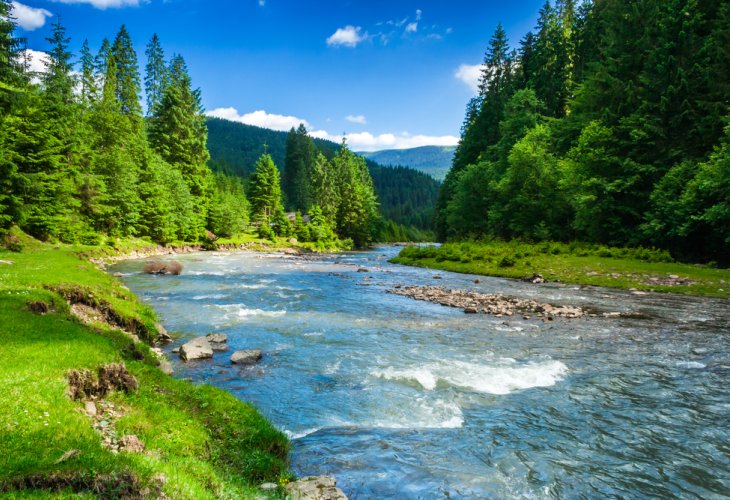 (Photo Credit: Shutterstock)
“All rivers run into the sea,” says Ecclesiastes. It is a simple observation, yet it reflects a powerful pattern we see throughout the world. Rivers and streams flow steadily toward oceans and seas. But what determines that direction?
When we talk about the height of mountains or the depth of valleys, we often measure them in relation to sea level. But what exactly is sea level, and why is it used as a universal reference point?
The answer lies in a fascinating physical principle that can be seen throughout Hashem’s world.
The Law Behind Flowing Water
Imagine several containers connected to each other, with water able to move freely between them. No matter their shape or size, the water inside them will always settle at the same height.
This idea is known as the Law of Communicating Vessels.
As long as the containers are connected, the water balances itself. It does not matter how wide or narrow each container is. The water level will become equal in all of them.
Why Water Seeks Balance
The reason behind this is pressure.
Water exerts pressure at every point, and this pressure increases the deeper you go. When water is added, pressure builds at the bottom and causes movement. The water naturally flows in a way that balances this pressure.
In the end, the system settles into equilibrium, where the pressure is equal at the same depth everywhere.
From Rivers to Seas
This same principle helps explain why water in nature behaves the way it does.
Rivers and streams flow into larger bodies of water, always moving toward a balanced state. Over time, water systems connect and interact, creating a global pattern where water levels align.
That is why sea level serves as a consistent reference point around the world. It reflects a natural balance that water continually seeks.
How This Affects Daily Life
This principle is not only theoretical. It has practical uses in everyday life.
For example, water towers are built at high points so that water can flow into homes and buildings. The height of the water source determines how far the water can reach. If the source is too low, the water will not rise high enough without additional help, such as pumps.
A Simple Idea With Deep Meaning
What seems like a simple observation about water reveals a deeper order in the world.
Water flows, balances, and connects, following consistent laws that reflect harmony and design. By understanding these patterns, we gain a greater appreciation for the world around us and the wisdom embedded within it.

