

End of Days
Jerusalem in the End of Days: Prophecies of the Rebuilt Holy City
Discover the biblical and rabbinic visions of Jerusalem in the era of redemption, from the Third Temple and the Messiah to a city of precious stones, peace, and global spiritual significance
- Naama Green
- | Updated
 (Photo: shutterstock)
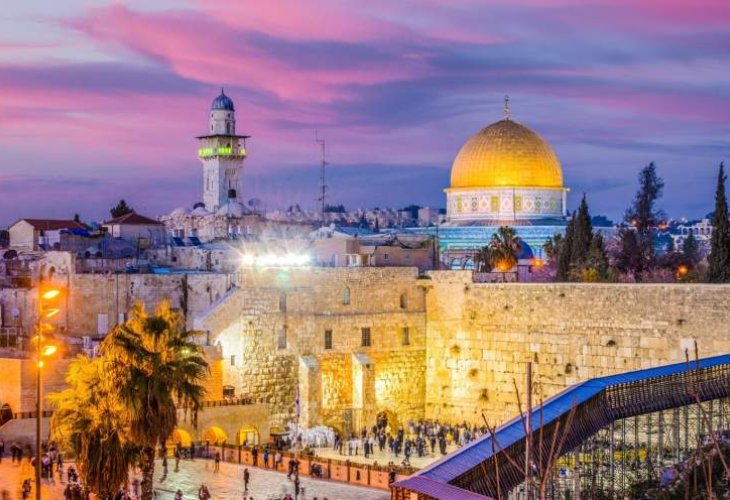
Jerusalem, the city in which the Third Temple is destined to be built and where Mashiach will dwell, will not be merely the capital of the Land of Israel. According to the Talmudic Sages, it is destined to become the capital of the entire world — “the joy of all the earth.” As Rabbi Yochanan taught in the Talmud: “In the future, Jerusalem will become a metropolis for all the nations.”
In the era to come, Jerusalem will stand at the very center of the world, its most prominent city. Many nations and kingdoms will gather there and walk in its light. Numerous prophets spoke of this vision, most famously in Book of Isaiah: “And it shall come to pass in the end of days, that the mountain of the Lord’s house shall be established at the top of the mountains… and many peoples shall go and say: Come, let us go up to the mountain of the Lord… for out of Zion shall go forth Torah, and the word of the Lord from Jerusalem.”
This prophetic image presents Jerusalem not only as a Jewish center, but as a universal spiritual destination.
A City of Extraordinary Beauty and Wealth
The Talmudic Sages describe Jerusalem of the future in breathtaking imagery. In tractate Bava Batra, Rabbi Yochanan teaches that the Holy One, blessed be He, will bring precious stones and pearls of immense size of thirty by thirty cubits, and place them at the gates of Jerusalem, based on the verse: “And I will make your windows of rubies, and your gates of precious stones.”
Another Midrash states that Jerusalem will be founded upon ten different kinds of precious stones: ruby, topaz, emerald, and others. The city is envisioned as being built entirely from jewels and pearls, with its boundaries filled with priceless stones available to all of Israel.
Rabbi Benjamin Levi adds an especially striking image: the borders of Jerusalem will be filled with precious stones and pearls, and all Israel will come and take from them according to their needs. In this vision, the city’s abundance symbolizes not only material wealth but divine blessing and honor.
Another tradition states that Jerusalem’s boundaries will extend for twelve mil by twelve mil of precious stones and pearls, further emphasizing the immeasurable splendor of the redeemed city.
Peace, Expansion, and Prayer
One remarkable Midrash in Pesikta Rabbati describes a future in which even human disputes are transformed by the atmosphere of Jerusalem. If one person owes another, instead of turning to a judge, they will go before Mashiach. Upon reaching the borders of Jerusalem, they will find the city filled with precious stones. One stone alone will be enough to settle the debt, and peace will be restored. This is connected to the verse: “The Lord will make your borders peace.”
Another teaching describes the source of Jerusalem’s wealth as coming from the nations of the world, whose riches will be gathered and brought to the city.
The physical grandeur of the future Jerusalem is also described in magnificent terms. One Midrash states that it will be surrounded by three walls: one of silver, one of gold, and one made of radiant precious stones shining in many colors.
Perhaps the most astonishing description is of its future expansion. According to the Sifrei on Book of Devarim, Jerusalem will expand in every direction, and its gates will reach as far as Damascus.
The Yalkut Shimoni goes even further, describing a time when Jerusalem will become as large as the Land of Israel, and the Land of Israel itself as vast as the whole world. It asks how people from the ends of the earth will come every Shabbat and every new month, and answers with a wondrous image: clouds will carry them to Jerusalem so they may pray there.
This centrality of Jerusalem is reflected not only in prophecy but also in Jewish prayer. Whether during the Temple era or after its destruction, the Sages instituted constant remembrance of Jerusalem in the liturgy. It is mentioned in Grace After Meals, the Amidah, the blessings after the Haftarah, and the sheva brachot.
For this reason, the article concludes with a heartfelt call: let us increase our prayers for the rebuilding of Jerusalem, and may we merit to see these wondrous visions fulfilled with our own eyes, speedily in our days.

