

World News
US-Iran Talks Collapse After 21-Hour Marathon in Pakistan
Disputes over nuclear commitments, sanctions relief, and the Strait of Hormuz derail negotiations as both sides trade blame
- Brian Racer
- | Updated
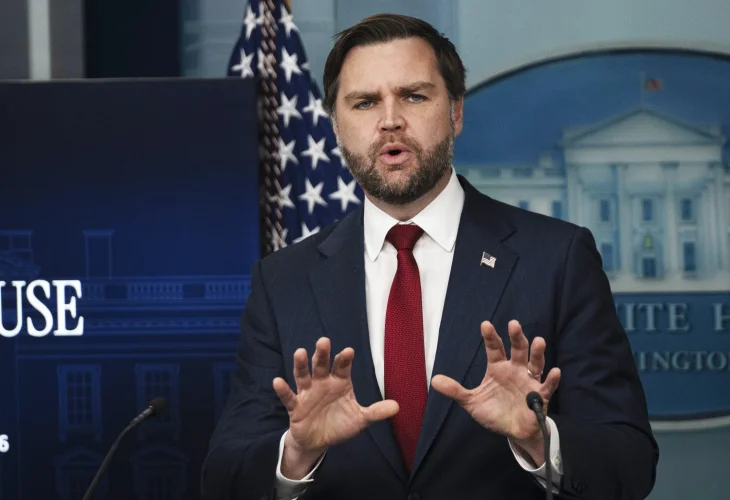 JD Vance (Shutterstock)
Talks between the United States and Iran collapsed early Sunday in Islamabad after a 21-hour marathon session failed to produce an agreement, with JD Vance announcing the American delegation was returning to Washington empty-handed. “We’ve had a number of substantive discussions with the Iranians. That’s the good news. The bad news is that we have not reached an agreement — and I think that’s bad news for Iran much more than it's bad news for the United States of America," he said.
The breakdown came just days after a U.S.-brokered ceasefire and was meant to translate battlefield gains into a diplomatic framework. Instead, it exposed deep and unresolved gaps between Washington and Tehran, particularly on Iran’s nuclear program and control over the Strait of Hormuz, raising fresh concerns that the current pause in fighting may not hold.
The talks began Saturday in Pakistan’s capital under heavy security, following meetings between both sides and local leadership. The U.S. delegation, led by Vance alongside Steve Witkoff and Jared Kushner, entered direct negotiations with a senior Iranian team that included top political and economic officials. Pakistani officials later described multiple rounds as “intense and constructive,” but negotiations stretched through the night without a breakthrough.
At the center of the collapse was the nuclear issue, which American officials treated as non-negotiable. “We need to see an affirmative commitment… we haven’t seen that yet,” Vance said, referring to Washington’s demand that Iran commit long-term to never pursuing nuclear weapons. The U.S. position also included removing enriched uranium from Iranian territory.
The second major flashpoint was the Strait of Hormuz. Iran pushed for expanded control and influence over the waterway, including the ability to regulate passage, while the United States insisted it must remain open. Iranian officials signaled that no progress would be made without what they called a “reasonable deal,” while state-linked media accused Washington of making “excessive demands.”
Economic pressure formed a third major point of contention. Tehran demanded the release of billions of dollars in frozen assets, sweeping sanctions relief, compensation for past damage, and the ability to resume unrestricted oil exports. At the same time, Iran sought to expand the talks into a broader regional arrangement that would include a ceasefire in Lebanon, an issue U.S. officials reportedly rejected outright.
By Sunday morning, the talks had reached a breaking point. The United States said it had presented its “final and best offer,” which Iran refused. “Iran refused our proposal,” Vance said, adding that the American side had been flexible but “failed to make progress.” Iranian officials countered that it was Washington that blocked a deal, saying “the American side’s excessive demands prevented progress,” and describing the negotiations as taking place in an “atmosphere of mistrust.”
Throughout the talks, President Donald Trump signaled that the outcome would not alter Washington’s strategic position. “Maybe they make a deal, maybe they don’t… we win regardless,” he said. On the Strait of Hormuz, Trump added, “We’ll open up the Strait… they are either afraid, or weak, or lying.”
Even as negotiations were underway, developments on the ground highlighted how fragile the situation remains. U.S. Navy destroyers moved through the Strait of Hormuz as part of mine-clearing operations, while Iranian forces issued warnings that foreign military vessels could be targeted. Some oil tankers managed to pass through the waterway, but others remained delayed or were forced to negotiate conditions for transit.
Pakistan, which hosted and mediated the talks, said it would continue efforts to bring the sides back to the table. “Pakistan will continue to facilitate engagement,” officials said, while urging both sides to maintain the ceasefire.
For now, however, there is no immediate path forward. Iranian officials signaled there are currently no plans for another round of talks, even as they stressed that diplomacy “never comes to an end.” The United States, for its part, left the table with its final offer unchanged.
In Israel, officials are already preparing for the possibility that the ceasefire could collapse, with growing assessments that a return to fighting may come sooner rather than later. Whether the sides resume negotiations or shift back toward escalation may become clear in the coming days.

