

Magazine
Seven Brothers, One Mission: Inside a Family of Lifesavers
Meet a unique family of Magen David Adom EMTs balancing lifesaving work with what matters most at home.
- Moria Luz
- | Updated
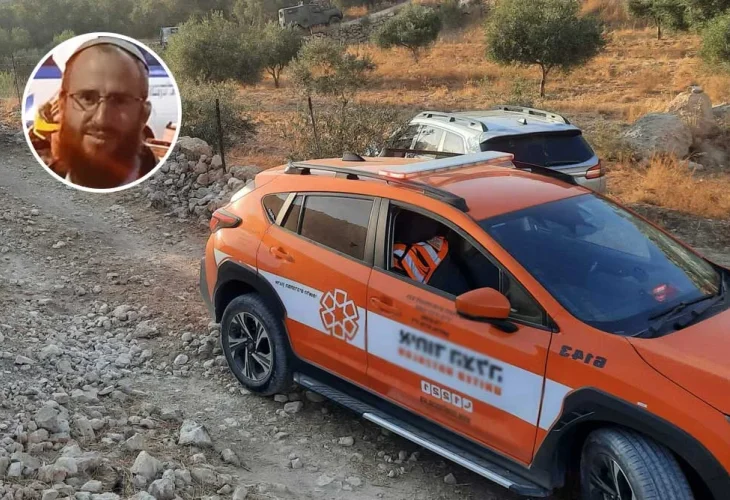 Inset: Avraham Farkash
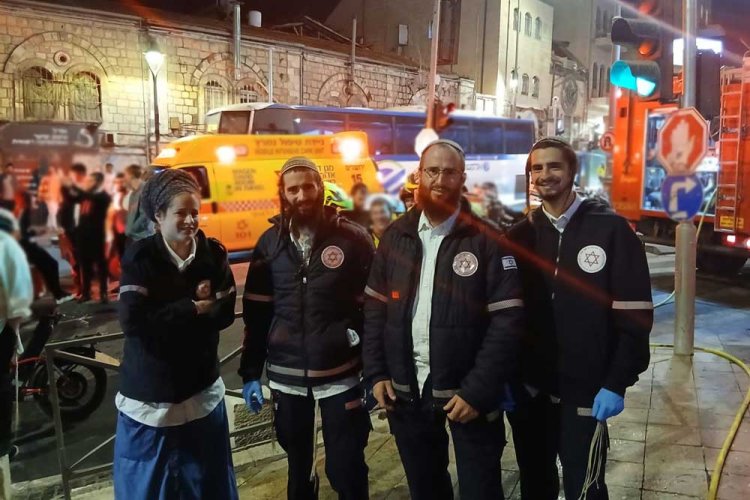
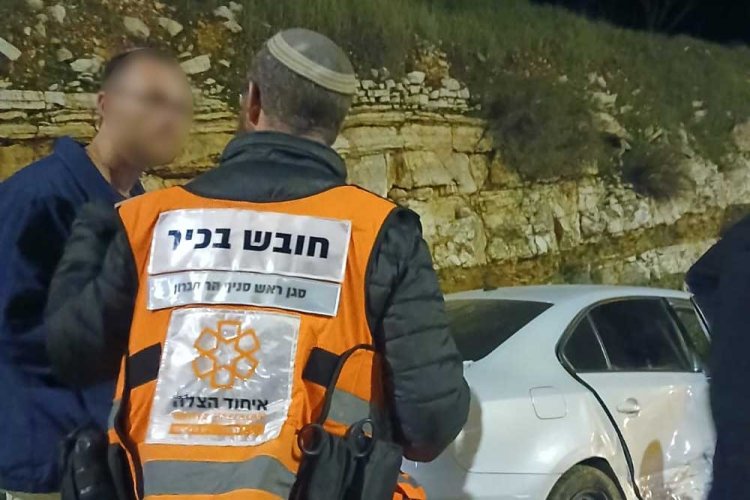
Flames shot high, wrapping an old building on all sides. Frightened passersby rushed to call emergency services, and that evening a report of an arson fire in Jerusalem came in. Avraham Farkash, who was on shift with Magen David Adom at the time, was dispatched to the scene. In the smoke-filled chaos, he suddenly noticed three familiar faces of his brothers, also wearing the recognizable red vests.
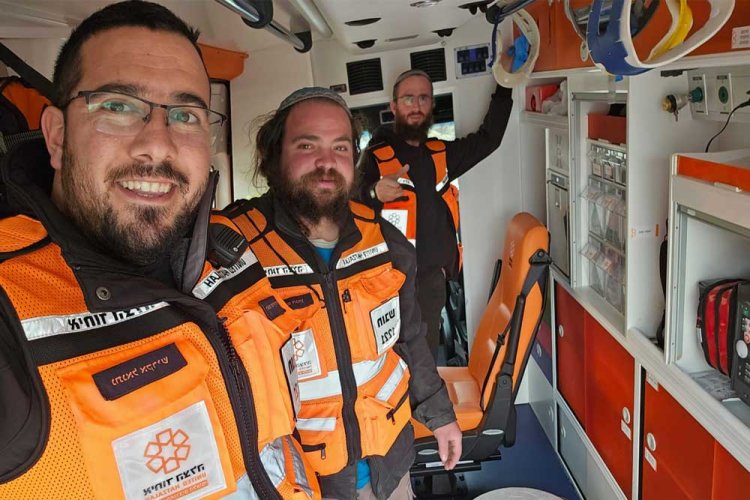
For the Farkash family, this kind of reunion is almost routine. Out of 13 siblings, seven are involved in lifesaving volunteer work. In a special interview with Hidabroot, Avraham, the eldest, speaks openly about the meaning of volunteering, as well as the challenges and balance it requires.
“A Much-Needed Shot of Encouragement”
Farkash, now a senior EMT with MDA Jerusalem and deputy head of the United Hatzalah branch in the Hebron region, began volunteering more than 20 years ago. Over the years, he has encountered many difficult scenes.
One early experience, when he was still a yeshiva student in Mitzpe Yericho, left a strong impression. He was dispatched to a severe head-on collision on Route 90 involving fatalities and critically injured victims. “I evacuated a four-year-old with injured limbs. He sat on me in the ambulance until he was taken into the trauma room,” he recalls.
Avraham and his brother Shlomi, whom he praises warmly, were the first in the family to enter this field. Another case they handled together involved a devastating crash between a private car and a bus. While the bus passengers exited safely, the car was completely crushed. “It took me about twenty seconds to realize there was no one left to save,” he says. “I focused mainly on protecting the younger volunteers with us from seeing things they shouldn’t have to see.”
Protecting Others While Staying Strong
As a senior volunteer, Farkash feels a clear responsibility toward younger team members. “It’s part of the job,” he explains. “If they are exposed to difficult scenes, we need to make sure they receive proper support.”
When asked how he separates these intense experiences from his personal life, he explains that it depends on a person’s nature. For him, the most difficult cases are not the sights themselves, but situations where negligence caused harm. “I focus on what I need to do. I didn’t cause the incident, and I won’t determine the outcome. I do my part, and that’s what keeps me grounded.”
After particularly painful calls, he sometimes turns to his rabbi for support. After one especially difficult case involving a baby left in a hot car, he reached out. “He gave me a much-needed boost of encouragement, and it helped me regain strength.”
The Most Important Volunteering Happens at Home
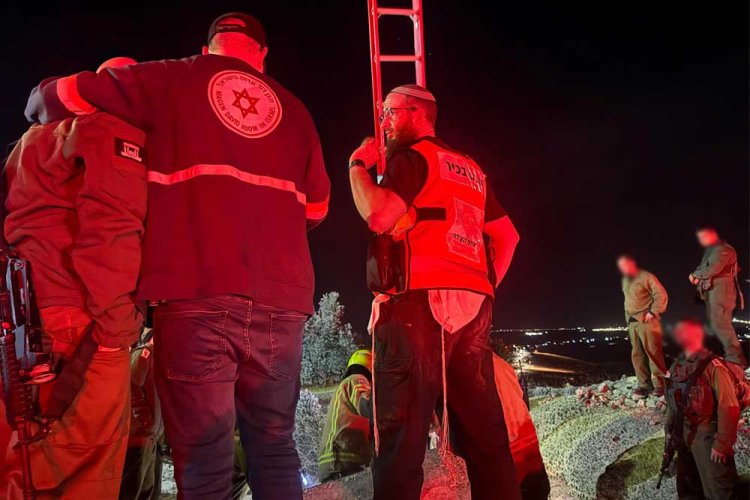
One dramatic incident took place in 2012 during rehearsals for Israel’s Independence Day ceremony on Mount Herzl, when a heavy lighting pole collapsed and injured several soldiers. Farkash and his brother Meir were among the first on the scene. “We carefully evacuated a soldier with multiple fractures,” he recalls, adding with satisfaction that the soldier eventually recovered.
Despite working alongside his brothers, Farkash says there is no real difference between them and other volunteers. “At the end of the day, it’s work,” he says with a smile. The brothers and a brother-in-law share a WhatsApp group where they discuss cases and procedures, along with regular family updates.
Their parents, he says, are proud, though they keep their reactions simple. “They have a lot of nachas from all of us.”
Still, Farkash emphasizes that volunteering comes with real challenges. One of the most important is maintaining balance. “Some people volunteer too much, and it can come at the expense of their home. Sometimes it even becomes a form of escape, and unfortunately, I’ve seen it lead to serious consequences.”
In recent years, he has intentionally reduced his shifts to once every three weeks. As a husband, father of seven, and working professional, he is careful to keep his priorities in order. “The most important volunteering is at home,” he says.
Another sensitive issue involves maintaining appropriate boundaries, including avoiding mixed-gender shifts. Farkash is careful in this area, working only with his sisters when necessary.
Respect for Every Human Being
In the field, volunteers often encounter people in difficult and sometimes unpleasant conditions. Farkash stresses the importance of treating every person with dignity. “Our goal is to save a life and help a human being, no matter their situation,” he says. “Even when someone is acting out, that doesn’t mean we treat them with disrespect.”
When asked whether he feels Hashem’s presence during his work, Farkash seems surprised by the question. “Hashem is present at every moment,” he says simply.
He also addresses questions about halacha in emergency situations. “Saving a life never conflicts with halacha,” he explains. “It is the halacha.” At times, there may be moral dilemmas, such as treating a terrorist, but from a halachic perspective, the duty to save life remains clear.
A Moment That Stays Forever
One of the most powerful moments of his career happened during a call to a neighbor experiencing severe chest pain. Recognizing the signs of cardiac arrest, Farkash immediately began treatment with the help of another neighbor.
After administering a shock and performing CPR, something incredible happened. “Suddenly, he opened his eyes and said, ‘It hurts, stop,’” Farkash recalls. “I told everyone there, ‘Look, right before our eyes, this is like resurrection.’”
The Strength to Keep Going
After more than two decades in the field, what keeps him going?
“The foundation is balance,” he says. “Even when you understand the value of giving, you cannot continue without maintaining a healthy balance with your personal life.”
He also speaks about the support he received from United Hatzalah during a difficult time, when his daughter was hospitalized. “They took care of everything we needed. They became like family.”
And what drives him forward? After a moment of thought, he answers honestly: “Maybe it’s my share in the World to Come.”

