

Israel News
How Israel Will Mark Yom HaShoah as It Begins Tonight
From nationwide sirens and closures to living-room gatherings, Israelis will mark Holocaust Remembrance Day Around the Country
- Brian Racer
- | Updated
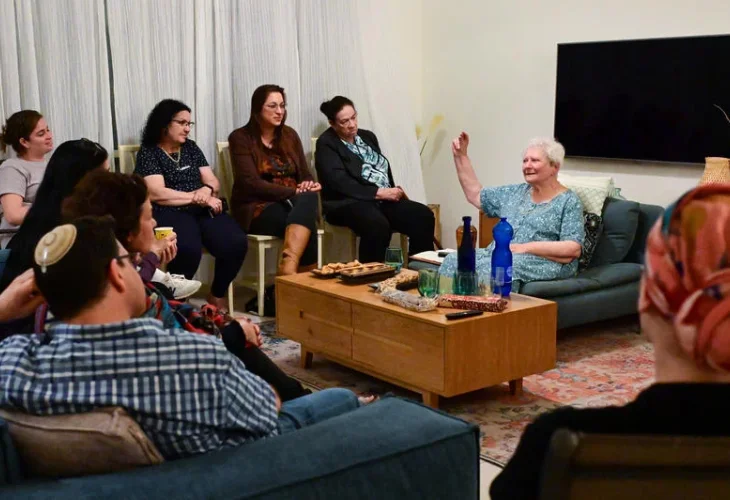 Zikaron Basalon (Michael Giladi/Flash90)
As Yom Hashoah (Holocaust Remembrance Day) begins tonight, Israel enters one of the most solemn days on its national calendar, with public life slowing and the country preparing to pause in collective memory. Across the country, memorial events will be held, businesses will close early, and on Tuesday morning at 10:00 a.m., a two-minute siren will sound, bringing daily life to a standstill as drivers stop on highways and pedestrians pause in silence.
In Israel, Yom HaShoah is not marked only through official ceremonies, but through a nationwide culture of remembrance that reaches into schools, workplaces, and private homes. Alongside state commemorations, grassroots initiatives like “Zikaron BaSalon” have become central to how Israelis remember the Holocaust, reflecting a shift from mainly formal memorials to more personal and participatory forms of testimony.
The official state ceremony at Yad Vashem in Jerusalem will still serve as the formal centerpiece of the day, though this year it will be broadcast in a prerecorded format due to the ongoing security situation. The ceremony, set to air Monday at 8:00 p.m., will include addresses by President Isaac Herzog and Prime Minister Benjamin Netanyahu, with former Ashkenazi chief rabbi Rabbi Israel Meir Lau lighting the memorial torch. Six Holocaust survivors will light torches in memory of the six million Jews murdered by the Nazis, while others will deliver remarks and recite the “El Maleh Rachamim” prayer. Short films presenting the lives of the participants will accompany the ceremony.
Alongside these official ceremonies, one of the most prominent expressions of Holocaust remembrance in Israel today is Zikaron BaSalon, a grassroots initiative that brings survivors’ testimonies and discussions into living rooms, schools, workplaces, and community spaces.
“We felt that the state ceremonies were a bit repetitive, the same songs and the same texts, and we saw ourselves there less,” one of the initiative’s founders said. “There was a fear that Holocaust Remembrance Day would simply pass us by without us marking it.”
The first gatherings were deliberately informal. “We did not need to come in a white button-down shirt or behave according to rigid rules. We looked her in the eyes, spoke, listened. It was clear that something powerful was happening there,” the founder said, describing the early meetings that would grow into a nationwide movement. “That is the beating heart of Zikaron BaSalon.”
Today, thousands of such gatherings take place across Israel each year, often featuring not only Holocaust survivors but also members of the second and third generations who continue to tell their families’ stories. “There is a moment when you understand that it is passing to you. It is not something for the future. It is already happening now,” one participant said. “That is exactly the point. We are already there.”
This year’s observances come as Israel continues to face ongoing conflict, and many events are being adapted accordingly. Some Zikaron BaSalon gatherings are being held in shelters or conducted online. “Even if we have to go down to a shelter and turn on Zoom, we will do it. Memory does not stop because of the security situation,” one organizer said.
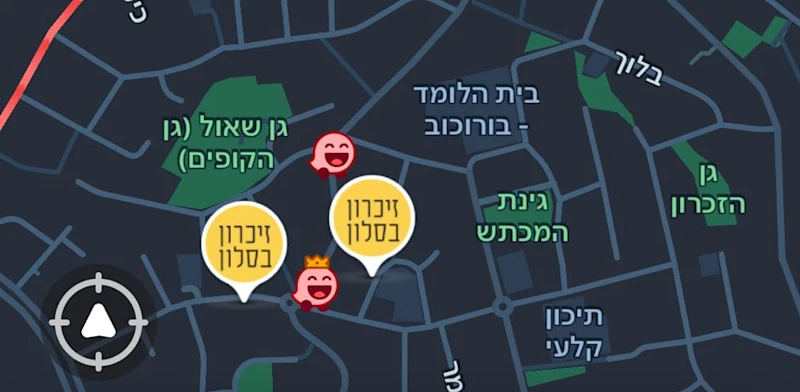
At the same time, new tools are being used to expand participation. As in previous years, Zikaron BaSalon gatherings are being mapped on the Waze navigation app, allowing Israelis to locate nearby open events and join even at the last minute. The initiative reflects how Holocaust remembrance in Israel has expanded beyond formal ceremonies into everyday life.
“It no longer depends on them. It depends on us, and we will not let the memory disappear,” another participant said.
As Yom HaShoah unfolds, Israel’s approach to remembrance is visible not only in its official ceremonies, but in the way memory is carried through homes, communities, and daily life, as each generation takes on the responsibility of preserving it.

