

Raising Children
Parenting Is a Screw, Not a Nail: Why Growth Takes Time
Why lasting character, discipline, and emotional stability in children are built slowly through patience, consistency, and deep connection
- Rabbanit Penina Leshem
- | Updated
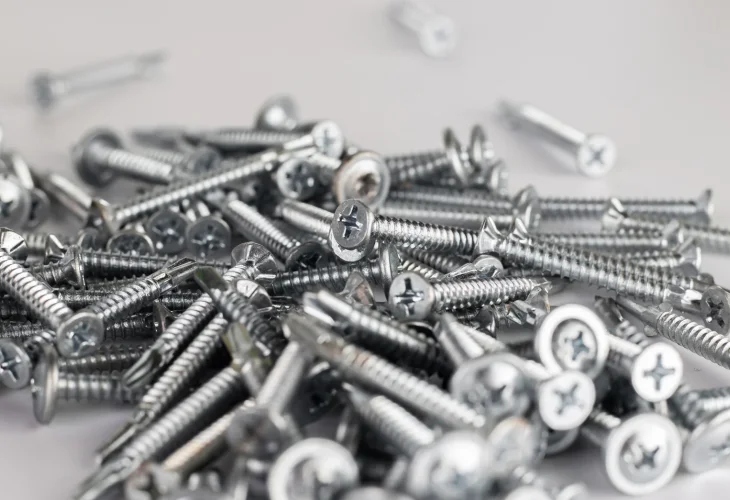 (Photo: shutterstock)
Do you know the difference between a nail and a screw? I did not know either, and honestly, what does that even have to do with us? But once I received a short explanation that completely changed the way I think about parenting and education.
A nail is hammered into the wall — one hit and it’s done. Quick and easy. A screw, on the other hand, is a much more serious process. First, you drill into the wall. Then you insert an anchor. Only after that can the screw be placed. And even then, it does not go in with one blow, but with slow, careful turns.
Quick Fixes vs. Lasting Growth
The most important difference is that a nail often bends. Once it is damaged, it is usually thrown away. No one repairs a bent nail. A screw, however, does not bend so easily. It requires more investment, more preparation, and more patience, but it stays. More than that, it holds far more firmly and can carry real weight, unlike a nail that may suddenly fall and shatter whatever was hanging on it.
Because my daily work is with at-risk teens, I have developed a habit. Whenever a new girl comes to me, I prepare myself emotionally for the fact that she may not trust the system, or people in general. She may be used to a lack of discipline, lack of functioning, and sometimes even speaking disrespectfully to those she is expected to respect.
Most of all, I prepare myself that it will take time. This is a process.
If we want to help this girl build habits of responsibility, respect, character, honesty, and stability, we must take a deep breath and begin slowly, step by step, with great consistency, perseverance, and gentleness. There is simply no way in the world to build new habits overnight.
Becoming the Screwdriver
This mindset turns us into a screwdriver. It teaches us to invest, to prepare the ground before every move, and to turn slowly and carefully, making sure each step is straight, accurate, and secure.
Day after day. Month after month. Year after year. One honest conversation, and then another, and another. And then, one day, the screw is holding firmly in place.
The teenager is polished, radiant, standing on her own feet, wise and incredibly sweet. So stable that it is hard to believe she is the same person who once arrived broken and uncertain.
The Danger of “Nail Parenting”
Now let me speak about what I call “nail parenting.”
Can we really solve a child’s struggle in a single moment? In one quick “that’s it, finished”?
A child asks for something, and we immediately declare, “No.” Simple. We have solved the problem. A student is not functioning, and we immediately bring down the hammer: There is no way to continue in our school like this.
And just like that, the student falls in line, and we feel we have not had to work very hard. A small rebuke, and everything seems arranged.
But what is happening beneath the surface?
The child is boiling inside. At their age, they may not yet be able to openly resist the “no” we have declared, but inside they may feel that we did it only to make life easier for ourselves.
The student who complies out of fear of consequences has not actually told us why they stopped functioning in the first place. They did not tell us, but deep inside, they know.
And perhaps now they feel that we do not truly care about them. This is how nails bend, and sometimes, God forbid, they end up discarded.
Sometimes nails appear stable, as if they are firmly fixed in the wall, but then suddenly collapse without warning, because they were never truly deep. They were never truly stable. They were only the result of a quick fix.
Build children and students who are screws, whose strength comes from depth, patience, and careful investment. Because what is built slowly often lasts.

