

Raising Children
Why Screen Time Isn’t the Real Problem: What’s Really Going On
When screen time becomes a struggle, something deeper is often at play. Here is how to understand your child and guide them forward.
- Hadas Tergano
- | Updated
 (Photo: shutterstock)
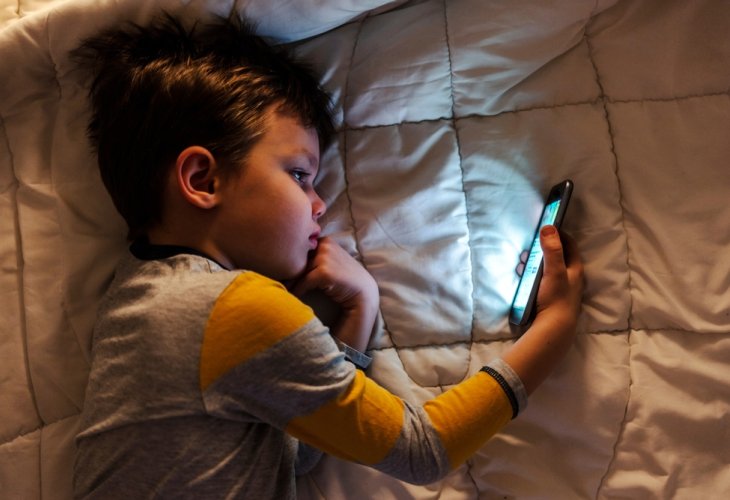
When Avi and Ronit’s children were young, they allowed them some computer time to keep them occupied while preparing for Shabbat. They set clear limits, but the children kept asking for more. The sibling arguments did not stop, and the easiest solution was to send them back to the screen.
Still, Avi and Ronit felt uneasy. They worried their children were beginning to show signs of dependency. As the kids grew older, the concern deepened. Should they completely block screens, or would strict limits only push their children to seek them elsewhere?
This is a question many parents face today.
Rabbi Dan Tyomkin, an educator and parenting expert, explains that while screens can have a negative impact, completely eliminating them is not always realistic. Instead, parents must approach the issue thoughtfully. Supervised, age-appropriate content and a balanced approach can help reduce harm while maintaining structure in the home.
Looking Beyond Behavior: What Children Are Really Telling Us
One of the most important ideas Rabbi Tyomkin emphasizes is this: there is no bad child. There is only a child who feels bad.
When a child’s emotional needs are not met, frustration builds. That frustration often shows up as negative behavior. Instead of seeing these behaviors as defiance, we can view them as signals that something deeper is missing.
It is easy to blame parenting, schools, or even an entire generation. But the real issue is often internal. Like a ship that sinks not because of the waves but because of a hole within, children struggle when something inside them needs attention.
While it may not be possible to prevent every case of disengagement or dropout, providing emotional support and understanding can significantly reduce the risk. Adolescence is a time of searching, confusion, and sometimes pain. Alongside practical efforts, parents are encouraged to turn to prayer and ask for the wisdom to guide their children with care and sensitivity.
When the Cause Is Not What You Expect
Sometimes, what looks like screen addiction or behavioral issues may have a deeper root.
Rabbi Tyomkin highlights ADHD as one possible factor. This condition affects not only attention, but also self management and impulse control. Children with ADHD may struggle with time management, prioritizing tasks, and delaying gratification, all of which can lead to excessive screen use.
He explains this through a simple analogy: the brain has a system of “brakes” that helps regulate behavior. When those brakes are not functioning properly, the child may feel driven by impulses they cannot easily control.
Because ADHD is not always visible, children are often misunderstood. They may be labeled as lazy or unmotivated, when in reality they are dealing with a neurological challenge.
Medication can help, but it is not a cure. Like any medical decision, it involves weighing benefits and risks. Choosing not to treat ADHD can also have consequences, including low self esteem and academic or social struggles.
When Resistance Goes Deeper: Understanding ODD
Another condition Rabbi Tyomkin discusses is Oppositional Defiant Disorder, or ODD.
Children with ODD consistently resist authority. They argue, refuse, and feel a strong need to have the last word. While many children test boundaries at times, this behavior is intense, ongoing, and deeply ingrained.
Parents of these children often feel overwhelmed and judged. Everyday situations become stressful, and family life can feel chaotic. Standard parenting techniques may not work, leading to frustration and guilt.
From the child’s perspective, they are not the problem. They see the world as unfair and feel compelled to fight against it. Trying to control them forcefully can make things worse, but giving in completely can also create problems.
The solution lies in a balanced approach. With the right guidance, parents can set clear boundaries while also giving these children a sense of control in healthy ways. Building trust and offering structured independence can help redirect their strong will toward positive outcomes.
The Real Issue: Treating the Root, Not the Symptoms
Rabbi Tyomkin offers a powerful insight through a simple comparison.
No one would fix a car by covering up warning lights. Those lights exist to alert us to a deeper problem. The same is true for children’s behavior.
Traits like defiance, disconnection, or excessive screen use are not the root issue. They are warning signs. The real cause may be emotional pain, trauma, social struggles, or feelings of isolation.
When parents focus only on stopping the behavior, they risk missing the deeper need. True progress comes from understanding what the child is experiencing and addressing it with care.

