

Wonders of Creation
How Animals Find Food: Nature’s Perfect Design
From spiders to sharks, discover how animals find food using incredible skills and what it reveals about the wisdom behind nature’s design.
- Et Lachshov
- | Updated
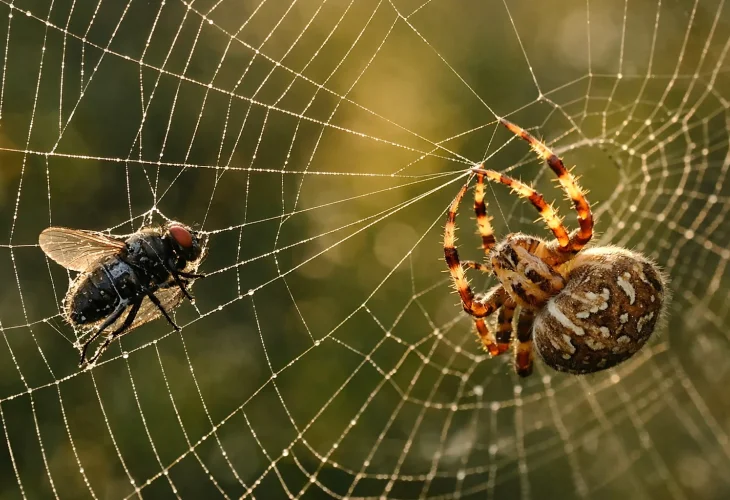
One of the wonders of nature is the way animals find their food. Each creature has been given the exact tools it needs to survive. From the smallest insect to the largest predator, every animal uses its unique abilities to locate and obtain nourishment.
Think of a spider weaving a delicate web to catch its next meal, or a bat navigating the dark using echolocation. These abilities are not random. They reflect a precise design that allows each animal to live and thrive in its environment.
A Natural Curiosity We All Share
Anyone who has visited a zoo with children has likely seen how fascinated they are by animals eating. Watching monkeys peel bananas or crack nuts is both entertaining and captivating.
There is something deeply engaging about this simple act. Whether it is a hippo swallowing large amounts of grass or a silkworm quietly chewing a leaf, eating is one of the most basic and powerful instincts in the natural world.
But behind this simple act lies a world of remarkable strategies.
Masters of Camouflage and Patience
Some animals rely on patience and disguise.
The praying mantis, for example, blends perfectly into its surroundings, waiting quietly for prey to come close. This natural camouflage helps both predators and prey survive in the wild.
Spiders take a different approach. They create intricate webs designed to trap insects. When food is plentiful, they may even store their catch by wrapping it in silk for later.
Another fascinating hunter is the antlion. It builds a small pit in the sand and waits patiently at the bottom. When an ant slips inside, escape is almost impossible.
Strength, Strategy, and Balance
Other animals rely on strength and strategy.
Young lions learn to hunt by targeting weaker members of a herd. While this may seem harsh, it plays an important role in maintaining balance in nature. Predators help keep animal populations healthy by removing the weak and sick.
Birds of prey, such as falcons and eagles, are equipped with extraordinary vision. They can spot small animals from great distances, allowing them to hunt with incredible precision.
Unique Abilities Above and Below the Surface
Some of the most fascinating hunting techniques are found in unexpected places.
Deep in the ocean, the anglerfish uses a glowing lure to attract prey in the darkness. Unaware of the danger, smaller fish swim closer, only to be captured in an instant.
Sharks, often misunderstood, are equipped with highly advanced sensory systems. They can detect electrical signals produced by other animals, allowing them to locate prey even when visibility is low. Despite common fears, shark attacks on humans are rare. These creatures rely on a finely tuned system of senses to survive in their environment.
On land, cats have the ability to see in very low light, thanks to a special layer in their eyes that reflects light. This gives them a major advantage when hunting at night.
A World of Thoughtful Design
Across the animal kingdom, the variety of hunting methods is truly remarkable.
Some animals rely on speed and strength, while others depend on patience, camouflage, or highly developed senses. From powerful electrical detection to the slightest vibration in the water, each creature is perfectly suited to its surroundings.
These systems are not accidental. They reflect a world filled with wisdom and thoughtful design.
A Lesson From the Animal Kingdom
When we look more closely at how animals find their food, we begin to see more than survival. We see precision, balance, and purpose.
Each creature has exactly what it needs. Each system works in harmony with its environment.
The more we observe the natural world, the more we can appreciate the incredible wisdom behind it, and the lessons it offers us about life, balance, and the care built into creation.

