

Raising Children
When Growth Is Invisible: Parenting Lessons From the New Year for Trees
A powerful parenting lesson from Tu B’Shevat on faith, patience, and believing in the seeds we plant in our children long before the results become visible
- Chen Azulai
- | Updated
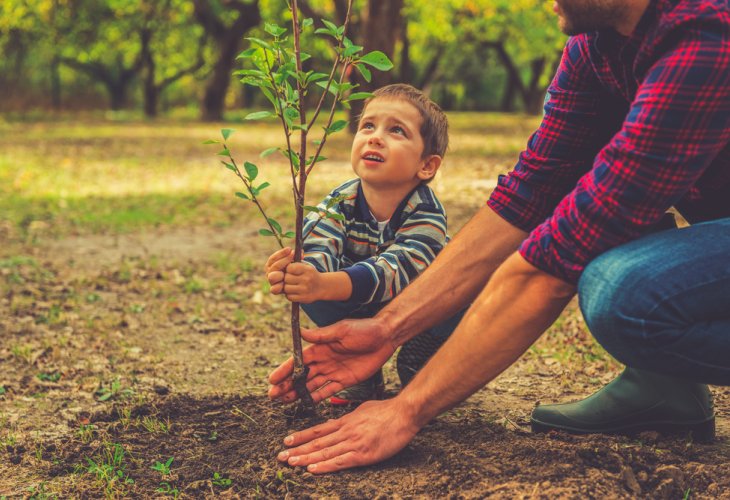 (Photo: shutterstock)
Tu B’Shevat can feel like a somewhat puzzling time. If we pause to think about it, there seem to be far more fitting times to celebrate the New Year for the trees. Spring, for example, when the trees are at their peak — beautiful, flourishing, and in bloom. We even recite a special blessing over blossoming trees in the month of Nisan. So why is the festival of trees placed specifically in the middle of winter, when the tree stands almost bare, with hardly any fruit, and the weather is gray and gloomy?
Rashi explains the timing of Tu B’Shevat: “Since most of the year’s rains have already passed, and the sap has begun to rise within the trees, the fruits now begin to form” (Rosh Hashanah 14a).
It is specifically the weakening of the winter rains that allows the sap to rise in the trees, and from that point the fruit begins its earliest stage of formation. This means that the fruits we will eventually see in the spring actually begin their process of growth on Tu B’Shevat itself.
Tu B’Shevat teaches us a deeply Jewish perspective: to celebrate and rejoice even before the blossom appears, and even before the results are visible.
A Lesson About Raising Children
I would like to share a small and charming incident that happened in my home, one that taught me something deeply important about raising our children.
I have a great love for everything connected to gardening and anything that grows. As soon as the Shemitah year ended, during which my balcony and all its flowerpots had been rather neglected, I decided to restore the ruins and begin a new flourishing garden.
As a first step, I took an empty flowerpot, filled it with soil, removed a few seeds from a tomato left over from breakfast, watered it, and placed it in the sun.
Two weeks later, I went excitedly to my husband. “My tomatoes have started growing!” I announced with delight.
My husband glanced at the pot and saw three tiny stems that were short, wrinkled, and unimpressive. Nothing about them remotely resembled a tomato.
And truly, anyone else looking at that pot would probably not understand all the excitement.
But I was excited, because I knew what I had planted.
Why should it matter that for now there were only tiny stems? To me it was absolutely clear that the tomatoes would come. It had already begun.
And then I thought to myself: how similar this is to raising our children.
Sometimes what we see in daily life seems light-years away from what we taught, from what we planted. After all, I taught them to be organized — so why does the room look like this? I taught him to be polite and respectful — so why is he acting so rude and disruptive? Sometimes we truly do not yet see anything encouraging or positive in the process of educating our children. Everything may seem gray, empty, discouraging, and sad.
But if we remember the seed we planted, we will know how to wait for it.
Sometimes the flowers — or the tomatoes, appear only after a long stretch of plain leaves, bare branches, and what looks like winter. After much watering, nourishment, sunlight, and prayer.
If we remember what we planted, we can wait with faith. Not belief in a vague or uncertain way, but belief with clear inner certainty: This is what I planted, and it will come. It will grow. With Hashem’s help, we will yet enjoy and harvest its fruits.
Tu B’Shevat reminds us that growth often begins long before it becomes visible. The most meaningful changes often start beneath the surface, hidden from the eye, quietly gathering strength.
The fruit is already on its way, even if today all we can see are the stems.

