

Raising Children
How Overprotection Prevents Children from Becoming Independent
Discover why stepping back as a parent can help children build resilience, confidence, and the emotional strength needed to face life’s challenges independently
- Sarah Langzam
- | Updated
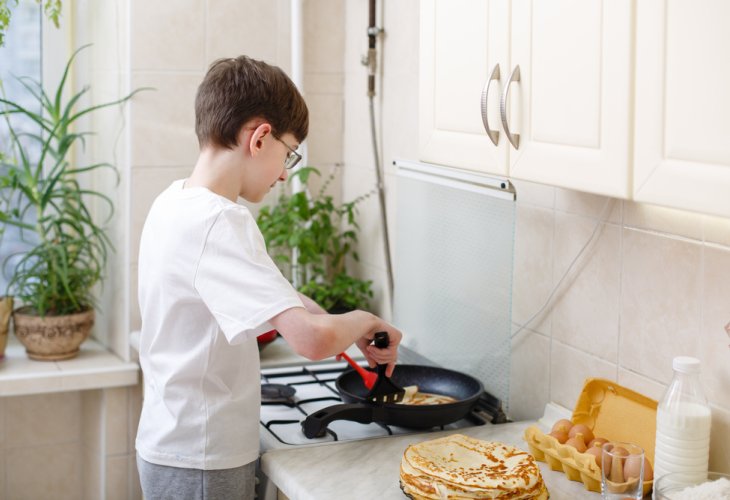 (Photo: Shutterstock)
There are many things we want to have both ways. Most likely, you want both wealth and happiness. Or perhaps you want to host the children while still keeping the house clean. Sometimes these “both-and” desires complement one another. However, quite often this “both-and” reflects two conflicting wishes that we long to see fulfilled at the same time.
With all our hearts, we want our children to have smooth, happy lives, free of obstacles and heartache. Yet at the same time, we want them to be emotionally healthy, strong, resilient, and able to stand firm through the waves of life. And indeed, that is what life will be. Life is like the sea — sometimes very stormy, sometimes calm — and as children grow, they must learn how to keep their balance and not fall, both in peaceful times and especially in turbulent ones.
How does one learn to maintain balance in general, and physical strength in particular? At the gym, they will tell you that only through effort, practice, and training — such as standing on one leg while strengthening the relevant muscles, do we develop strong muscles and proper balance. These are the very abilities that protect us while walking down the street, running after the bus, or even stumbling over a raised stone on the sidewalk.
When Helping Becomes Overprotection
One day, a mother came to me with a request: she wanted treatment for her daughter. “My daughter is too sensitive,” she said. “She gets hurt easily and is not emotionally mature for her age.” I asked for some background. “What happens in her day-to-day life?” I asked. “How are things managed at home with her?” As I continued to explore, it became clear that the mother still woke her daughter up every morning and did various tasks for her that the girl could easily do on her own.
The mother was trying to smooth out every bump in her daughter’s daily path. She still prepared her sandwiches and clothes, removing from her the need to care for her own needs and to take responsibility for herself. And at the same time, she wondered why her daughter seemed weak in character, emotionally underdeveloped, and lacking in self-confidence.
Overprotection does not allow our children to grow. It does not give them the opportunity to build the abilities that are so essential for healthy self-esteem and emotional resilience.
The Courage to Step Back
After the mother left, I was reminded of the case of Hannah (a pseudonym). Hannah has a married son who is struggling financially. Her daughter-in-law also stopped working, for reasons known only to her. Hannah worries constantly. She worries about what will happen in her son’s home and where they will find food for the children.
Unable to bear the situation, Hannah continually gives them money. She gives and sighs, wondering when they will finally grow up and understand, as she does, that supporting a household may require the mother to go out and work. Yet by continuing to give, she is actually preventing independence.
She does not allow the couple to reach the necessary conclusions on their own. In fact, she prevents them from experiencing the healthy pressure that would require them to make a change and seek a solution to the difficult situation they have fallen into.
One step — or even several steps — backward on the mother’s part would allow the couple to arrive at the conclusions that are best for them and for their family.
Independent children are not born that way. Independence is an acquired ability, one that a child develops only when a mother allows them to step into the world and gain it for themselves.
Sarah Langzam is a parent group facilitator, an emotional counselor using the One Brain method, and a support group leader for mothers of married children.

