

World News
U.S.–Iran Nuclear Talks Set to Resume Thursday After Last Round Stalled
Nuclear negotiations between the U.S. and Iran are expected to restart this Thursday, even as major gaps remain. Vice President J.D. Vance on the last round: "The ball is in their court. We were clear: the enriched uranium has to be removed from Iran."
- Yuval Aviv
- | Updated
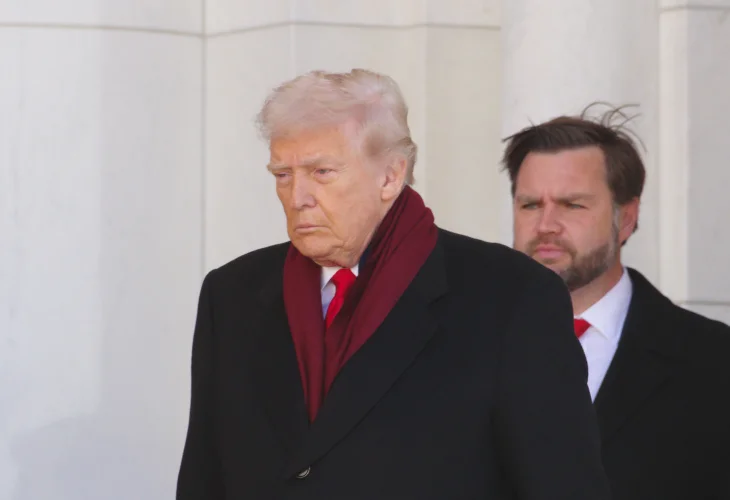 Trump and Vance (Credit: Shutterstock)
Despite the failure of the last round, negotiations between the United States and Iran are expected to resume as early as this Thursday, the AP reported today (Tuesday), citing American officials.
According to a report in The New York Times, during the talks in Islamabad, the U.S. demanded that Iran halt uranium enrichment for a period of 20 years. In response, the Iranians proposed suspending enrichment for up to only five years. The proposal, conveyed according to two senior Iranian officials and an American official, was rejected by U.S. President Donald Trump.
It was also reported that the Americans raised another demand: removing the highly enriched uranium from Iranian territory. Tehran, for its part, proposed diluting the material so it could not be used to make a nuclear weapon. This issue also remained unresolved.
Amid the diplomatic developments, USNI News reported that the aircraft carrier "George Bush," en route to the Middle East, chose to avoid crossing the Mediterranean via the Strait of Gibraltar—and is instead circling Africa to the south on its way to the Arabian Sea. According to the report, the decision was made out of concern about Houthi attacks in the Bab el-Mandeb Strait area.
U.S. Vice President J.D. Vance, who led the negotiations in Pakistan, addressed the talks in an interview with Fox News last night: "We had some good signs; we made progress in the negotiations." When asked about the prospect of continued talks, he replied: "That is a question for the Iranians—the ball is in their court. We were clear: the enriched uranium has to be removed from Iran—and we must get a commitment from the Iranians that they will not develop a nuclear weapon."
Vance added that during the talks their understanding of Iranian conduct became sharper: "During the negotiations we realized how they operate—and that is why we left Pakistan. They were not able to close a deal—and they had to return to Tehran to get approval. We put a lot on the table and made clear what our red lines are. We have many cards—we need to see what the Iranians will do."

