

Wonders of Creation
The Sun’s Protective Covering: Midrash, Science, and the Layers That Sustain Life
Explore how the Midrash’s description of the sun’s “sheath” connects with modern astronomy, from the photosphere and corona to the radiation shielding that makes life on Earth possible
- Rabbi Zamir Cohen
- | Updated
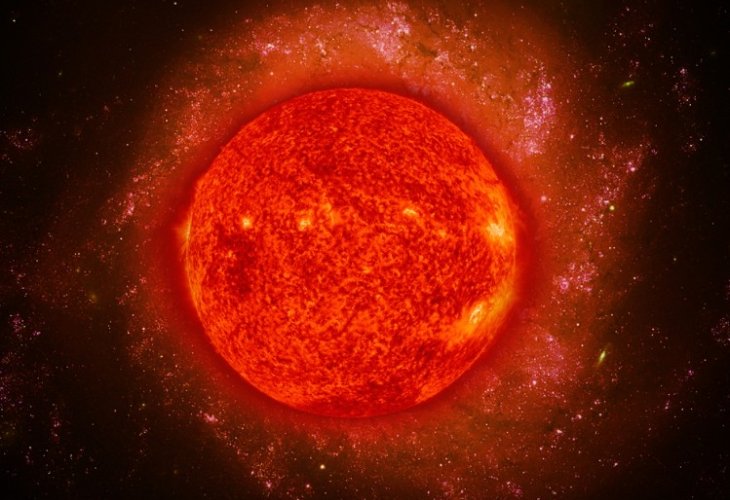
In Bereishit Rabbah, the Midrash states that the sun has a “covering” or “sheath.” In this context, it cites the verse from Tehillim: “For the sun He has set a tent among them” (Tehillim 19:5).
This idea of the sun having a protective outer layer is mentioned in other places as well, including Talmud. From their words, it is understood that without this “covering,” the inhabitants of the earth would suffer severe harm.
At first glance, this idea may seem difficult to understand. After all, the sun is visible to everyone, and there is no obvious sign of a literal outer wrapping or sheath around it. Yet modern astronomy offers a fascinating scientific perspective that parallels this description.
What Science Says About the Structure of the Sun
According to modern astrophysics, the sun is a massive sphere of extremely hot gas and plasma.
Its visible surface, known as the photosphere, has a temperature of approximately 6,000°C, while its core reaches an astonishing 15 million°C.
At the center of the sun, nuclear fusion reactions release enormous amounts of energy. This energy gradually moves outward through multiple layers before reaching space.
Among these layers are outer regions that absorb, soften, and regulate the radiation and shock waves produced inside the sun. These include the radiative zone, the convective zone, the photosphere, and the corona.
The Protective Role of the Sun’s Outer Layers
Modern science teaches that the sun emits powerful radiation, including ultraviolet radiation, X-rays, and gamma radiation.
If these intense radiations were to reach Earth directly without moderation, life on our planet would be impossible.
Fortunately, several protective systems exist. First, the sun’s own outer layers regulate and diffuse much of the energy before it leaves the sun. Second, once the radiation reaches Earth, our atmosphere and magnetic field provide additional protection.
Without these systems, the world would be exposed to destructive radiation.
In this sense, the idea of a “covering” that shields life from the sun’s full intensity can be understood in a scientifically meaningful way.
A Reflection
For many readers, this parallel between ancient rabbinic language and modern scientific understanding offers an opportunity for reflection.
Whether one views this as poetic description, theological symbolism, or a remarkable harmony between traditional texts and science, the image of the sun’s “covering” continues to inspire thought and wonder.

