

Magazine
Living With ALS: Given 5 Years, Choosing Joy 22 Years Later
Diagnosed with ALS at 20 and given five years to live, Debi Ziner chose faith and joy, building a life of love, purpose, and resilience over two decades later.
- Moria Luz
- | Updated
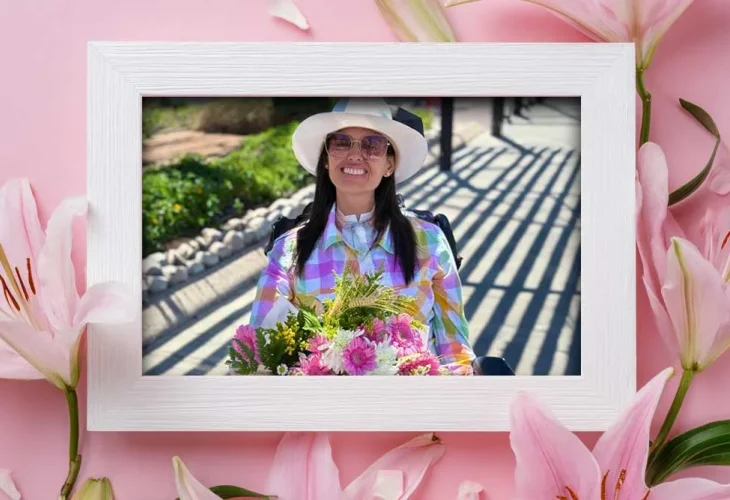 Debi Ziner
“It was one of the most moving weddings. My husband, Amichai, was there from the moment of the diagnosis. He never left, and he chose to marry me when I was already in a wheelchair,” says Debi Ziner.
Before everything changed, Debi was an energetic teenager who loved to run, climb, and jump. Her friends even nicknamed her “Mowgli,” after the carefree character from The Jungle Book. But at 19 and a half, at the height of her strength, unusual physical symptoms led to a long series of medical tests.
Six months later came the diagnosis: ALS.
Doctors told her she had five years to live.
More than two decades later, Debi is still here, sharing a message of faith, resilience, and joy that goes far beyond physical limitations.
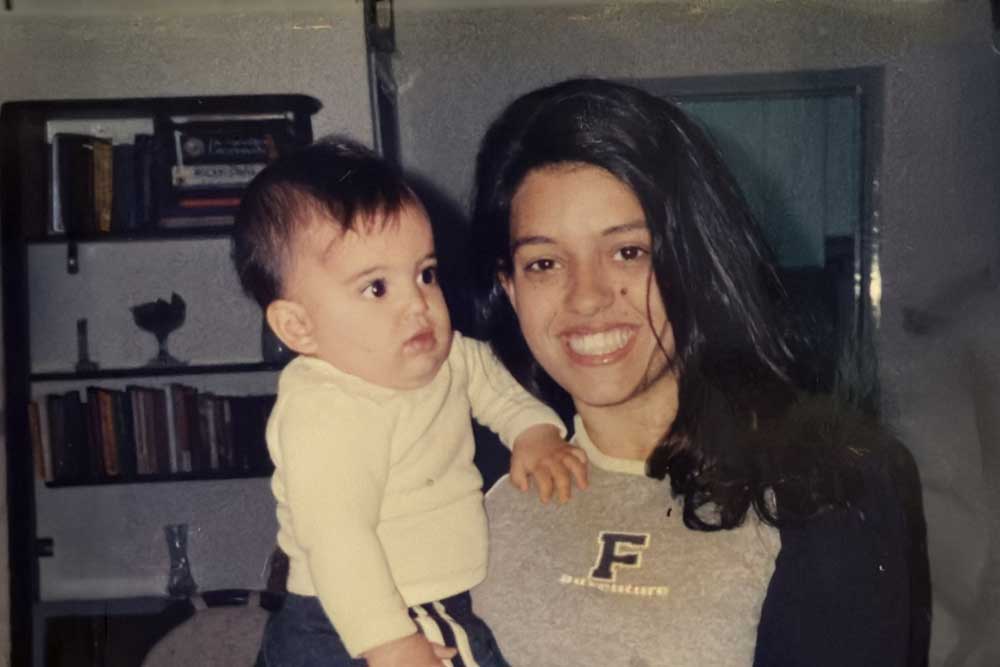 Debi a few months before her diagnosis
When Everything Changed
“Suddenly, I couldn’t do things that once took seconds,” Debi recalls. “I couldn’t open a bottle. I couldn’t run up the stairs. I would fall and lose my balance. That was the moment I realized something was truly wrong.”
Until then, she had never even heard of ALS.
“The drive home with my parents was the quietest ride of my life,” she says.
Instead of surrendering to fear, Debi began learning everything she could about the disease. Determined to fight for her strength, she committed to exercise and physical therapy, even when doctors discouraged it at the time.
“I’m stubborn,” she says with a smile. “And thank God I didn’t listen. Today they say it helps.”
Choosing Optimism
Debi describes optimism not as a personality trait, but as a daily practice.
“I invested not only in my physical health, but in my emotional strength as well,” she explains. “It kept me focused on doing, instead of sinking into despair.”
She and her family even traveled to the United States for a second opinion. There, doctors confirmed the diagnosis and estimated she had three to five years to live.
“I didn’t know what to believe,” she says. “It was overwhelming. News like that is impossible to fully process.”
 With faith and strength, Debi continues to choose joy
An Inner Journey
As the disease progressed, Debi gradually lost her ability to speak, eat, and move independently. For three years, she stayed home, struggling with embarrassment and a loss of confidence.
“I didn’t want people to see me like that,” she shares.
But from that place of difficulty, something profound began to grow.
“Some people travel the world,” she says. “I went on an inner journey.”
Through that journey, Debi returned to a life of faith.
“I realized something powerful. There is a divine spark within me. Hashem is all-powerful, and if I carry a spark of that, then I must also carry strength.”
That realization gave her the courage to step back into the world.
A Relationship Built on Depth
Debi met her husband, Amichai, years before her diagnosis. They married eight years later, when the disease had already advanced.
“We are true soul friends,” she says. “He doesn’t see me as a sick person. He sees me as Debi.”
Their relationship is built on deep understanding, humor, and respect.
“He knows when I’m hurt without me saying a word,” she says. “He doesn’t even need the computer to understand me.”
Debi communicates using an eye-tracking device, yet their connection goes beyond words.
“And yes,” she adds with a smile, “like any woman, I still get annoyed when he leaves his socks in the living room.”
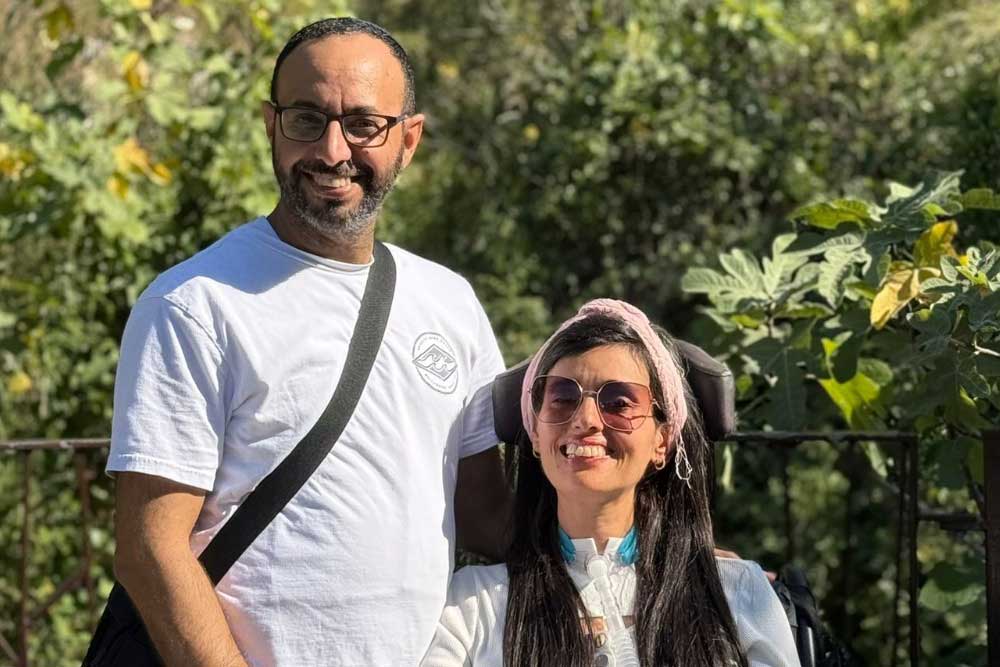 Debi and her husband
Independence and Strength
Despite her physical limitations, Debi maintains a strong sense of independence.
A dedicated caregiver supports her daily needs, allowing her relationship with Amichai to remain one of partnership rather than dependency.
“That separation was important to us from the beginning,” she explains.
At home, Debi manages schedules and keeps everything running, just as many women do.
Holding On to Hope
One of the most painful challenges the couple has faced is their struggle to have children.
“Learning that I couldn’t carry a pregnancy was the hardest moment,” Debi shares.
Yet even here, her faith remains steady.
“When you want something deeply, you keep moving forward. You trust that Hashem will provide a path.”
A Life of Giving
From her wheelchair, Debi leads a full and meaningful life.
She founded a nonprofit organization dedicated to empowering teens, especially girls facing difficult circumstances. Through workshops, lectures, and creative programs, she helps young people discover their inner strength.
“If I was given limited time, I wanted to use it to do good,” she explains.
Debi also channels her creativity through art and design, collaborating with Amichai to create jewelry while teaching and inspiring others.
In addition, she offers guidance to individuals and families dealing with illness and disability, sharing both practical advice and emotional support.
“To help even one person is an incredible privilege,” she says.
Living With Gratitude
Despite everything she has endured, Debi has never questioned why this happened to her.
“I never asked ‘why me,’” she says. “What would that give me?”
Instead, she focuses on what she does have.
“A loving family. An incredible husband. A devoted caregiver. Friends. A life filled with meaning, joy, and laughter.”
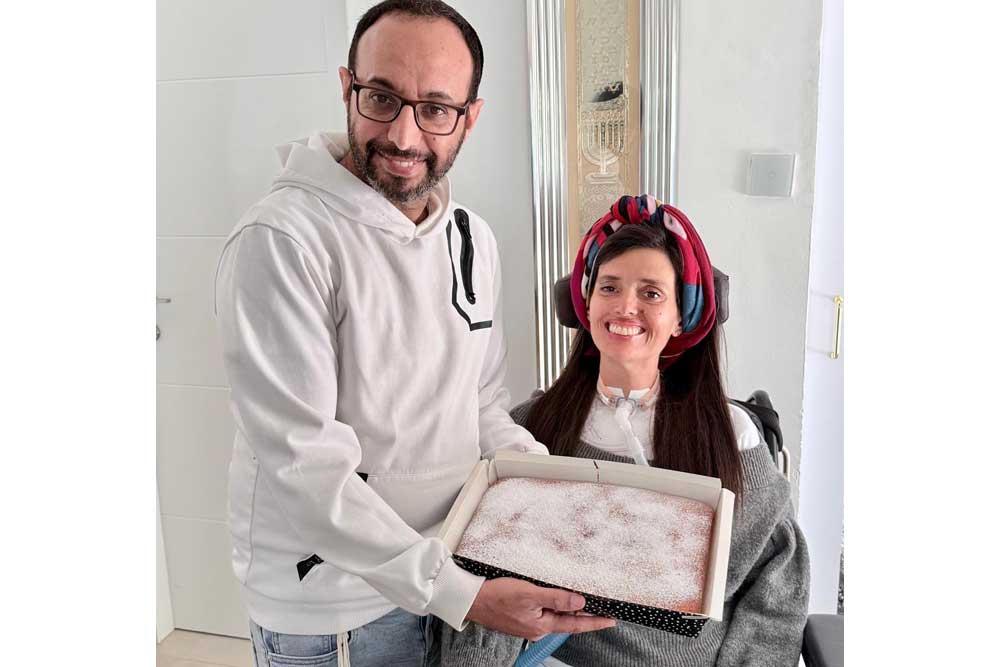 "He doesn't see me as a sick person, he sees me as Debi"
Looking Ahead
Debi does not dwell on the past.
Her focus remains on the present and the future, especially one heartfelt hope.
“I want to be a mother. I want Amichai to be a father. With Hashem’s help, that dream will still come true.”

