

World News
New Kentucky Law Requires Religious Outreach Before Cremating Unclaimed Bodies
Law signed follows Chabad-led effort to prevent cremation against religious beliefs and could serve as a model for other states
- Brian Racer
- | Updated
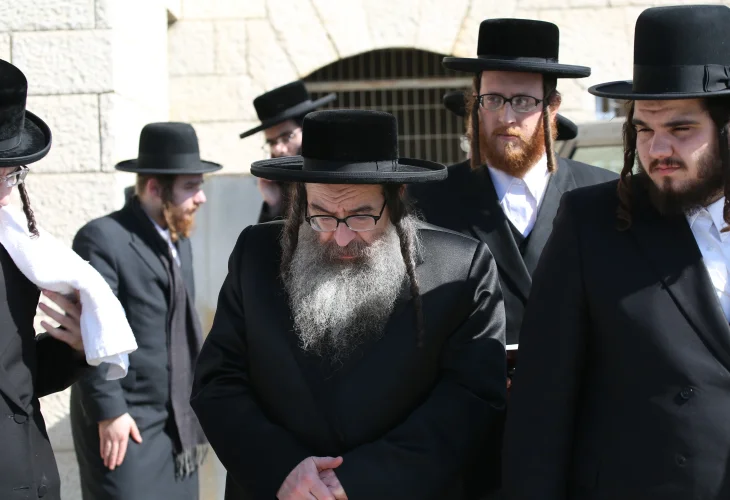
A new Kentucky law requires authorities to contact religious organizations before cremating unclaimed bodies, following an initiative led by a local Chabad rabbi. The legislation, known as SB 27, was signed into law on Tuesday.
The law addresses a growing concern that individuals could be cremated against their religious beliefs if no family comes forward to claim their bodies. Under Jewish law, cremation is prohibited, making burial a religious obligation.
Under the new framework, coroners may proceed with cremation of unclaimed bodies only after consulting with any religious organization that has registered its willingness to assume responsibility for burial. The law also requires a bona fide effort of at least 30 days to locate next of kin before any final decision is made.
The issue emerged as Kentucky moved to modernize its handling of unclaimed bodies, allowing cremation as a lower-cost alternative to burial. Rabbi Shlomo Litvin, Director of Chabad of the Bluegrass and Chairman of the Kentucky Jewish Council, said he immediately recognized the risk this posed.
“If there is, God forbid, a Jew who doesn't have family, or they are homeless, or it could be an older person who passes away in the old age home and there's no one to bury them, they would, God forbid, be cremated,” Litvin told The Jerusalem Post.
Litvin contacted Republican State Senator Greg Elkins, who sponsored the bill, and proposed a solution.
“The solution is I'll pay for the burial, and that if there's any reason to think the person's Jewish, have them contact me, have them contact Chabad, and we will pay, we'll arrange transport, we'll arrange a grave in a Jewish cemetery,” he said.
Earlier versions of the legislation referenced Chabad specifically, but the final version was broadened to include any religious organization willing to take responsibility. Litvin supported the change, emphasizing that the goal extended beyond one group.
“this was never about credit, it’s about helping people.”
Jewish law requires burial in the earth and does not permit cremation. Litvin stressed the importance of ensuring that individuals can be buried in accordance with their beliefs.
“If someone can be buried with dignity, and according to Jewish Law, instead of being cremated against their beliefs, that’s what matters. And hopefully this creates a model that can be copied in other jurisdictions.”
According to Litvin, most unclaimed bodies are not anonymous individuals, but people within the community who lack family or support systems. These cases often involve elderly residents or isolated individuals whose identities are known but who have no one to arrange burial.
He expressed hope that the law will influence similar efforts elsewhere.
“The fact that I did it already encourages others. There are efforts already in three states in the Northeast, states that have very large Jewish communities,” he said.
Covering burial costs will rely entirely on donations, but Litvin said that would not stand in the way.
“If it saves one Jew, it's worth all the effort,” he said.

