

Parashat Vayechi
The Legacy of Yaakov: Balancing Prayer and Action
How Yaakov brought blessing to Egypt, what it means to truly live, and why prayer is compared to both a sword and a bow
- Rabbi Moshe Sheinfeld
- | Updated
In this week’s Torah portion, we read about the parting of Yaakov from his sons shortly before his passing from this world.
Rabbi Meir Simcha of Dvinsk, in his commentary Meshech Chochmah on this parashah (Bereishit 47–48), opens with a profound insight: there are different ways a person can live. One person lives only for himself, another for his household, another for his city, and there are those who live for the entire world. About such a person it is said: “The righteous is the foundation of the world” (Mishlei 10:25).
Yaakov did not live merely for himself, nor only for his family, and not even only for the land of Goshen. He lived for all of Egypt. This, explains the commentator, is why the famine in Egypt ceased after Yaakov blessed Pharaoh that the Nile would rise to meet him and water the land (Bereishit 47:10 and Rashi there).
Even the Egyptians mourned Yaakov’s death, as the verse says: “This is a grievous mourning for Egypt” (Bereishit 50:11). Their grief was not only due to Yaakov’s honor as the father of the second to the king, Yosef, but also because they feared that the famine might return. Even the Egyptians understood that as long as Yaakov lived in Egypt, his presence brought blessing and protection to the land. Such is the spiritual power of a righteous person.
To Truly Live: More Than Mere Existence
Rabbi Yehudah Aryeh Leib Alter, at the opening of the parashah, pauses over its very first word: “And Yaakov lived in the land of Egypt.” The Torah does not say “Yaakov was in Egypt” but rather “Yaakov lived.”
This distinction is deeply meaningful.
In the language of Torah, there is a difference between merely being and truly living. To live means to live a life of truth, not a life of spiritual stillness or emptiness. As the Sefat Emet explains, life means cleaving to the root and source from which vitality constantly flows.
Yaakov maintained this spiritual state even in Egypt, a place often symbolizing concealment and spiritual darkness. He remained attached to the Creator and lived with the awareness that there is nothing besides Him, even in the midst of Egypt.
Yaakov drew life and abundance not only upon himself, but upon the entire land around him.
This is something we must all strive toward. Wherever we are, we should seek to live not only for ourselves — which in itself is no small task, but in a way that positively impacts the world around us. In other words, to aspire to become, in our own measure, a “foundation of the world.”
The Sword and the Bow: Two Forms of Prayer
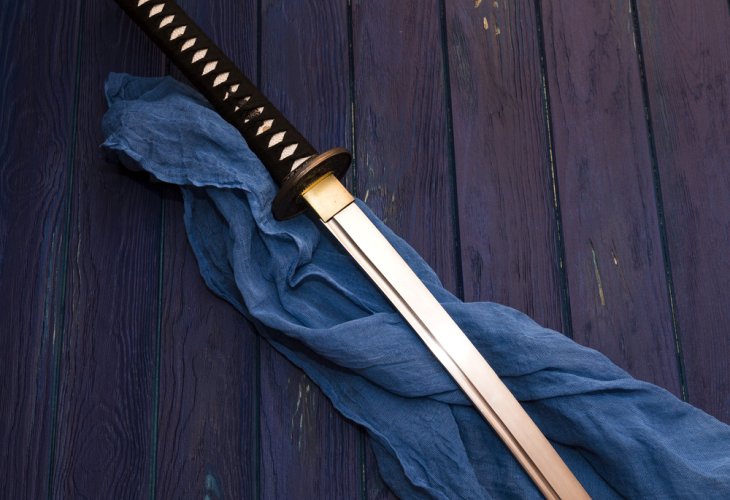
One striking point emerges from Yaakov’s blessing to Yosef. Yaakov says to him: “And I have given you one portion above your brothers, which I took from the hand of the Amorite with my sword and with my bow” (Bereishit 48:22)
The famous translation of Onkelos renders the final words as: “with my prayer and with my supplication” Yaakov is saying that his victory was not achieved through physical force, but through spiritual strength — the power of prayer and pleading.
The Meshech Chochmah beautifully explains the distinction between these two forms of prayer, and the lesson is deeply relevant to all of us.
Prayer refers to the established liturgy instituted by the Men of the Great Assembly — the fixed structure of daily prayer. According to halacha, even a basic level of concentration is sufficient to fulfill one’s obligation, and even if one had intention only during the first blessing, one has fulfilled the mitzvah.
Supplication, however, is something different. It is personal, private, and specific — a heartfelt prayer for one’s own unique needs. When a person adds something personal and original to their prayer, a deeper level of intention is required for it to be truly effective.
This is the difference between the sword and the bow. The sword is inherently powerful. Its capacity to wound lies within the blade itself. With very little effort, it can cut. So too, the fixed prayers established by the sages derive power from the very words and structure of the liturgy. Their strength is built into the text itself.
The bow, by contrast, is different. On its own, it causes no damage. Its effectiveness depends entirely on the one who draws it — on the tension, focus, and direction with which the arrow is aimed.
Personal supplication derives its force from the intention of the one praying. The more focused the heart, the greater its impact. The more deeply we direct ourselves in our personal requests, the more powerfully those prayers can affect our lives.
We all need salvation, guidance, and blessing. Let us therefore hold on to both the sword and the bow: the strength of the established prayers and the depth of heartfelt personal supplication.

