

Behind the News
US Pushes Israel–Lebanon Talks as Israel, Hezbollah Signal Continued Fighting
Diplomatic push led by the US and Lebanese officials contrasts with military reality, as Israel prepares for further fighting and Hezbollah rejects talks
- Brian Racer
- | Updated
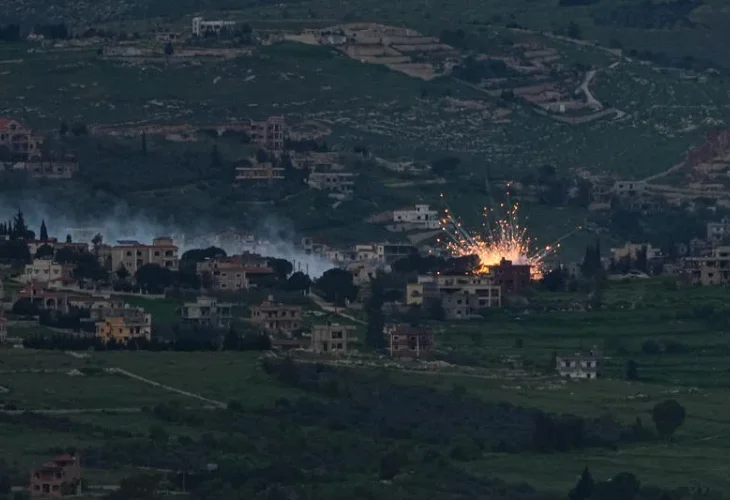 Smoke and fire rise from southern Lebanon during an Israeli military operation, April 15, 2026. Photo by Ayal Margolin/Flash90
U.S. President Donald Trump said Wednesday night that Israeli and Lebanese leaders are expected to speak for the first time in roughly 34 years, marking a rare diplomatic opening despite ongoing fighting. “The Israeli and Lebanese leaders are expected to speak today, for the first time in about 34 years,” Trump said, adding that efforts are underway to create “a little breathing room” between the sides.
The announcement came as the United States and Lebanese officials push for de-escalation, even as the main players on the ground signal continued fighting. Israel is preparing for further operations, while Hezbollah and Iranian officials reject the idea of negotiations.
The diplomatic track has gained momentum in recent days, including a high-level meeting in Washington on Tuesday between Israeli and Lebanese representatives, the most senior contact between the sides to date.
At the same time, Lebanon’s leadership appears divided. While government officials have expressed support for ceasefire efforts, particularly in the Tuesday meeting, parliamentary speaker Nabih Berri, a key ally of Hezbollah, voiced opposition to the negotiations. According to sources cited by the Hezbollah-affiliated outlet Al-Akhbar, Berri was quoted in recent days saying, “They came to the United States to achieve a ceasefire, but returned to fight Hezbollah.”
Hezbollah officials have also rejected the diplomatic effort outright. Senior lawmaker Hassan Fadlallah said the Lebanese government had taken “a wrong path that leads only to increasing the rift” among the country’s factions. Iran has reinforced that position publicly. Mohammad Bagher Ghalibaf said that “the resistance and Iran are one entity, whether in war or in a ceasefire.”
On the ground, Israel has continued to prepare for further fighting. IDF Chief of Staff Eyal Zamir emphasized yesterday that Israel is maintaining a high level of readiness. “We are at a very high level of readiness, Air Force aircraft are armed and ready,” he said during a visit to southern Lebanon, adding that new operational plans for both Lebanon and Iran have been approved.
Within Israel’s leadership, the security cabinet convened Wednesday night to discuss a possible temporary ceasefire in Lebanon under growing U.S. pressure, according to Channel 12. The meeting ended without a decision, with Israeli officials telling the network that while talks are being considered, operations against Hezbollah are continuing and Israel remains committed to dismantling the group.
As talks are discussed and diplomatic signals increase, the positions of the key actors remain sharply divided. Whether the emerging contacts can translate into a meaningful shift on the ground remains unclear, as the sides most directly engaged in the fighting continue to prepare for its continuation.

