

World News
“Trying to Help Iran”: Vast Majority of Senate Democrats Back Blocking Israel Arms
Record opposition in Senate exposes deep party shift, as lawmakers denounce Netanyahu, claim US aid to Israel is “not making us safer"
- Brian Racer
- | Updated
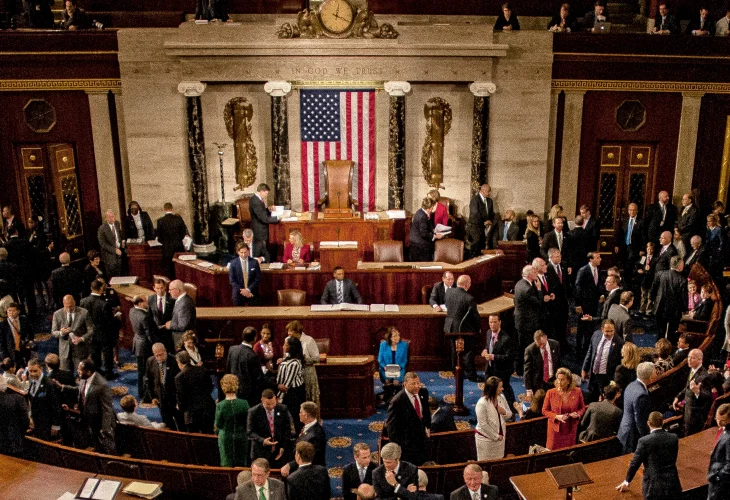 US Senate (Shutterstock)
A sweeping majority of Senate Democrats voted Wednesday to block US arms sales to Israel, marking the strongest congressional opposition to military aid for the Jewish state in decades. While the measures ultimately failed, 40 of 47 Democrats backed halting a $295 million bulldozer deal, and 36 supported blocking a $152 million transfer of heavy bombs.
The votes signal a dramatic shift inside the Democratic Party, where opposition to Israel’s military campaign has moved from rhetoric to legislative action. Just two years ago, similar efforts drew support from roughly 15 Democrats; by 2025 that number rose to 27. This week’s vote, with nearly three-quarters of the caucus backing at least one measure marks a new record.
Bernie Sanders, who led the effort, framed the vote as a response to growing public opposition to US support for Israel’s wars. “The United States must use the leverage we have — tens of billions in arms and military aid — to demand that Israel ends these atrocities,” Sanders said. He added that “the overwhelming majority of American people do not want to continue to give weapons to Netanyahu and his horrific wars in the Mideast,” declaring, “This is where the American people are. The polls are very clear.”
Several prominent Democrats who had previously supported Israel aid joined the push. Senator Mark Kelly of Arizona, long considered a reliable supporter of Israel, voted for both resolutions. “The reckless decisions being made by Prime Minister Netanyahu and President Trump led me to this decision,” Kelly said, adding, “This is not business as usual… it is not making us safer.”
Other lawmakers echoed similar concerns. Senators Adam Schiff and Alex Padilla of California said the ongoing conflict had “no clear strategy, no legal authority, and no defined end.” Senator Chris Van Hollen argued that Washington should “rein in” Israeli policy, linking US military support directly to the expansion of the war.
The resolutions targeted two categories of military transfers: a $295 million sale of armored bulldozers and a shipment of 12,000 1,000-pound bombs. Israel has rejected accusations that it intentionally targets civilians, stating that its military operations are aimed at terror infrastructure and threats posed by groups such as Hamas and Hezbollah.
Despite the scale of Democratic support, a smaller group of party leaders opposed the measures. Senators Chuck Schumer and Kirsten Gillibrand of New York, and Senator Chris Coons of Delaware were among those who voted against the resolutions. Coons said his position should be seen “neither as an endorsement of the actions of the Netanyahu government nor as an abandonment of the state of Israel, the Jewish people, or the US-Israel relationship.”
Republicans, meanwhile, opposed the measures almost unanimously and warned of strategic consequences. Jim Risch said the resolutions would “send the message that the United States is prepared to leave our ally Israel vulnerable” and could embolden Iran. He accused Democrats backing the effort of effectively aiding Tehran, declaring they were “trying to help… Iran.”
The debate comes due to broader tensions over US involvement in the regional war. The Trump administration has already bypassed standard congressional review procedures to expedite weapons transfers to Israel, citing emergency authority tied to the conflict with Iran. Many Democrats have linked continued arms shipments to concerns about escalation, arguing the war lacks a defined strategy or endpoint.
While the resolutions ultimately failed in the Republican-controlled Senate, the vote points to a deeper shift inside the Democratic Party. What was once a fringe position has now moved into the mainstream, with a growing number of lawmakers willing to act against continued military support for Israel, suggesting that not just arms sales, but broader US backing, could face increasing resistance on Capitol Hill.

