

Behind the News
Iran Using Viral AI Lego Videos to Mock Trump Worldwide
From Lego-style Trump mockery to viral memes, Iran using AI satire to undermine U.S. credibility
- Brian Racer
- | Updated
 Screenshot/X
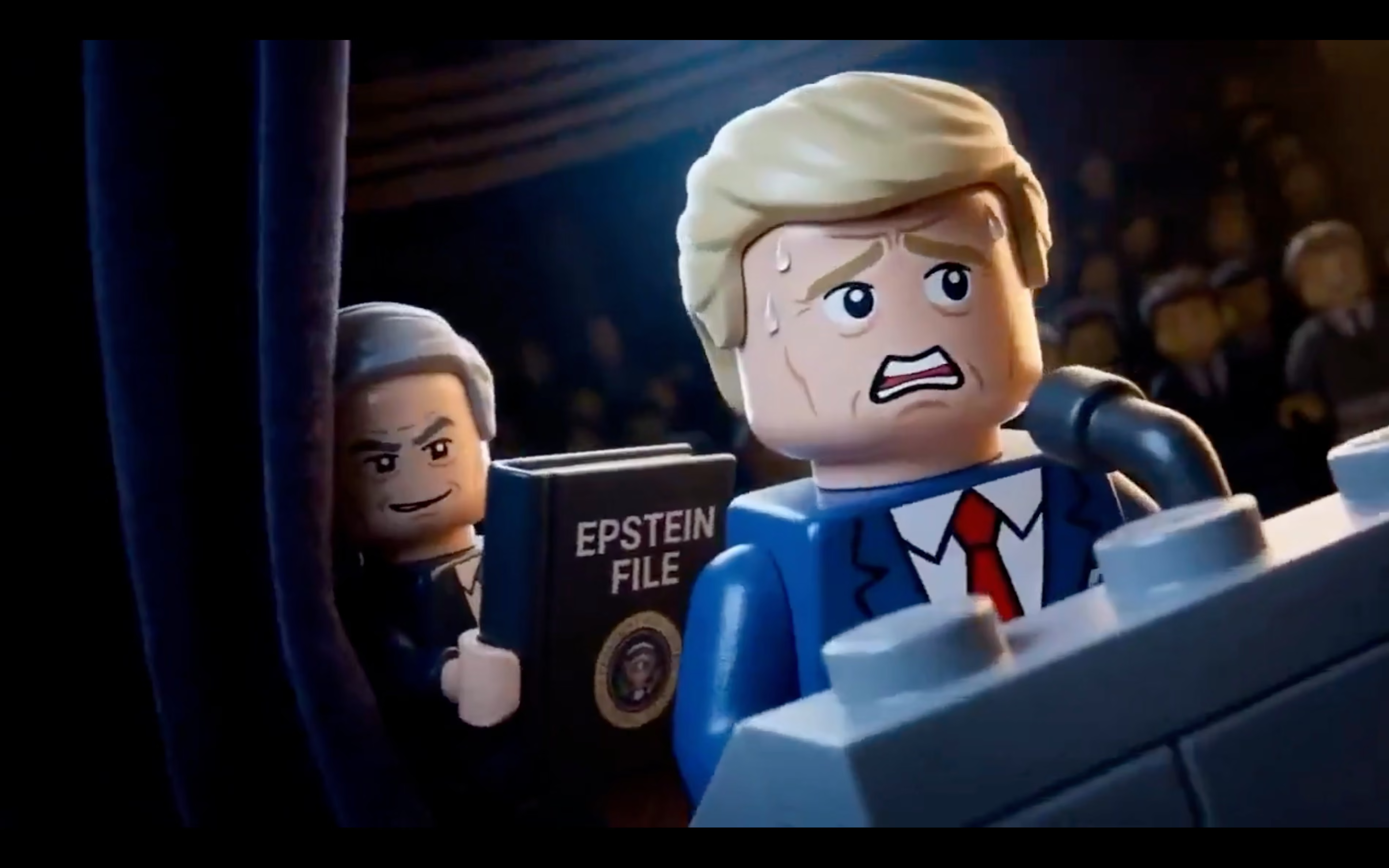
Iran-aligned accounts are flooding social media with viral AI-generated videos and photos, many styled like Lego animations, that mock US President Donald Trump and reshape how the war is being perceived online.
The clips, often produced in English and designed for global audiences, have spread rapidly across platforms, using humor, memes, and simplified visuals to frame the conflict in Iran’s favor. A recent BBC interview with one of the creators revealed the operation is not independent. The Iranian government was described as a “customer,” suggesting a more organized effort behind the viral content.
What happened in Isfahan?From now on, it seems that mental and psychological health evaluations will also be necessary for U.S. presidential candidates. pic.twitter.com/BHkm8KOrKO
— Iran Embassy in Australia (@IraninAustralia) April 7, 2026
The messaging across the videos follows a consistent pattern. Trump is portrayed as weak, chaotic, or unserious, while US leadership is framed as deceptive, failing or working with ill-intent. Israel, including Prime Minister Benjamin Netanyahu, is often depicted as influencing or escalating US actions, and controlling President Trump. At the same time, Iran is presented as resisting a larger aggressor and exposing what the videos describe as Western hypocrisy.
New MAGA Toy Story just dropped…
— ☫ Iran Embassy in The Hague, The Netherlands (@IRAN_in_NL) April 14, 2026
“America First”… but it looks more like Israel comes first. ? pic.twitter.com/8cxcCoGQIl
The content ranges from quick memes to more detailed animations. One clip shows a dog staring blankly at the camera after Trump threatened to destroy “a whole civilization,” suggesting nothing really happened. Another points to rising gas prices to imply economic chaos under US leadership. In the Lego-style videos, Trump is exaggerated and childlike, reinforcing a tone of ridicule.
Those who were waiting last night for Iranian civilization to be destroyed. pic.twitter.com/SZkII0djfK
— Iran Embassy SA (@IraninSA) April 8, 2026
Are you ready folks? pic.twitter.com/SUSiPfdiua
— Iran Embassy in Thailand ☫ (@IranInThailand) April 13, 2026
The creators say the visual style is intentional. They chose Lego-like imagery because it’s a “world language,” making it easy to understand across cultures. The simple, playful format turns complex war messages into something people often find funny, which helps the videos spread quickly.
According to the BBC interview, the team behind the videos consists of fewer than ten people who produce content quickly, often reacting in near real time to developments in the war. The clips are amplified by large social media accounts, including Iranian and Russian state-linked profiles and Iranian embassies, and continue to circulate even after platform bans, with new accounts appearing as others are removed.
The approach contrasts sharply with messaging from the United States. Official US videos tied to the campaign known as “Operation Epic Fury” have combined real strike footage with elements from video games, movies, and sports-style highlight reels, presenting the war as a display of military dominance. These clips emphasize power, destruction, and victory, often using fast-paced edits and familiar entertainment formats to frame operations as decisive successes.
UNDEFEATED. pic.twitter.com/Jt69bcag5y
— The White House (@WhiteHouse) March 12, 2026
Pure American dominance. ??? pic.twitter.com/nvgWLar2ak
— The White House (@WhiteHouse) March 6, 2026
Iran’s strategy takes a different approach. Rather than showing strength, the videos mock and undermine their opponents, using humor and familiar cultural references to influence how Western audiences see the war. Many are designed to make people laugh at Trump, not take him seriously, and deepen divisions in how the conflict is understood and its objectives.
Experts say this reflects a broader shift in information warfare. By using tools trained on Western media and cultural norms, Iranian creators can produce content that feels familiar and relevant to audiences outside the region. The result is messaging that spreads quickly across political and cultural lines, often faster than traditional reporting can respond.
At the same time, the content carries a darker edge. Some videos include conspiracy narratives and imagery critics describe as antisemitic, including depictions of Netanyahu drinking blood. The creator interviewed by the BBC rejected that characterization, saying, “Our videos are not antisemitic; our videos are anti-Zionist.”
Despite efforts by platforms to remove accounts linked to the videos, the content continues to circulate widely. The speed, adaptability, and shareability of AI-generated propaganda have made it difficult to contain, allowing narratives to take hold before they can be challenged.

