

History and Archaeology
From Stalin’s Ally to Helping Jews Escape: The Story of Ana Pauker
She stood at the center of Communist power, but her story took an unexpected turn. How Ana Pauker helped Jews behind the Iron Curtain.
- Yosef Ya'abetz
- | Updated
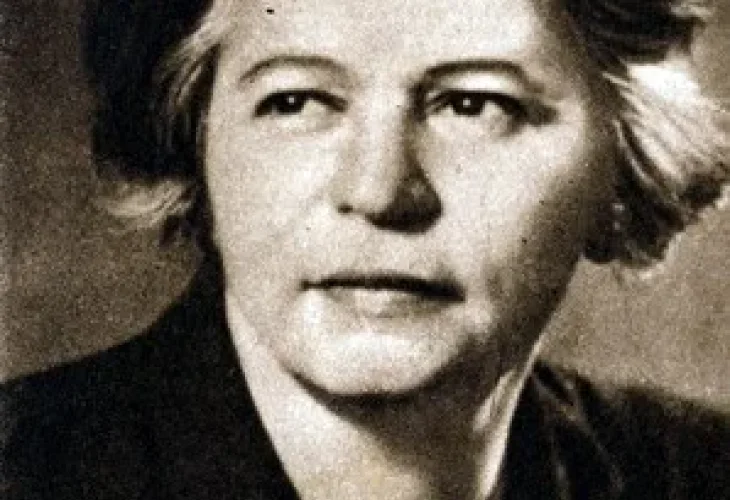 Ana Pauker (Credit: The National Museum of Romanian History)
On September 20, 1948, the American weekly Time placed Anna Pauker on its cover, calling her “the most powerful woman in the world.” At that moment, she stood at the height of her influence; Romania’s foreign minister and, in the eyes of many, the true power behind the regime in Bucharest. Yet few knew her past. It was as if it had been erased in the wake of the Communist revolution.
She had been born in 1893 as Hana Rabinsohn, into a poor ultra-Orthodox Jewish family in Romania. Her father was a shochet and active in the synagogue, while her mother supported the household by selling food. Hana received a traditional Jewish education, studied Hebrew, and even worked as a teacher in a Jewish school.
A Life Transformed
In 1915, Hana joined the Romanian socialist movement. From there, she moved toward Bolshevism and became deeply involved in the Communist Party. Around the same time, she married Marcel Pauker, a prominent communist activist. Gradually, Hana Rabinsohn became Anna Pauker.
She entered a world that demanded the erasure of the past. Tradition, identity, and roots were pushed aside. Only the revolution mattered.
Her life became one of relentless activism. She was arrested repeatedly, exiled to cities like Berlin, Paris, and Vienna, and eventually made her way to Moscow, where she joined the Comintern. The personal cost was immense. She was separated from her children for long periods, and in 1938, her husband was murdered in Stalin’s purges.
Rise to Power
After the rise of the Nazis, Pauker returned to Romania, where she was once again arrested. During an attempted escape, she was shot in both legs and later sentenced to ten years in prison. In 1941, she was released in a prisoner exchange and sent to the Soviet Union.
When she returned to Romania in 1944, everything had changed. Backed by the Red Army, she rose quickly through the ranks of the Communist leadership. By December 1947, she had been appointed foreign minister, the first woman in the modern world to hold such a position.
In practice, her influence extended far beyond her official title. She became one of the most powerful figures in Romania, perhaps the most powerful for a time. Encyclopaedia Britannica describes her as the leader of the “Muscovite” faction, and contemporary reports portrayed her as someone who “talks to Stalin.”
This was the height of her power.
Power and Its Price
But her influence was deeply tied to the harsh realities of the regime she represented. Pauker played a central role in establishing the Stalinist system in Romania. This included the suppression of political opposition, widespread nationalization, and the dismantling of independent institutions.
Her image in the West reflected this. Journalists and cartoonists labeled her “Stalin in a skirt” and an “Iron Lady,” long before that title became associated with others.
The title “most powerful woman in the world” carried a heavy shadow.
A Turning Point
Then history shifted.
As the Jewish Yishuv in Eretz Yisrael worked toward establishing a state, the Jewish Agency reached out to Pauker, aware of her Jewish roots. Moshe Sharett sent her a deeply emotional letter, asking for Romania’s recognition of the State of Israel.
Something stirred within her.
After years of persecution and loss endured by the Jewish people, the opportunity to help seemed to awaken something long buried. The “Iron Lady” softened. For a moment, she set aside the rigid ideology that had defined her life.
On June 11, 1948, Pauker conveyed Romania’s official recognition of the new state. Shortly afterward, Romania allowed the establishment of the Israeli legation in Bucharest. Over time, it became the only Communist country to maintain continuous diplomatic relations with Israel throughout the Cold War.
Opening the Gates
Pauker’s support went further.
In the years that followed, the Jewish Agency and the State of Israel sought ways to bring Jews out from behind the Iron Curtain. Pauker’s door remained open. Between 1948 and 1952, nearly 119,000 Jews emigrated from Romania to Israel with her assistance.
For many, she became an unexpected ally.
Fall from Power
At the same time, Stalin’s attitude toward Jews and Zionism grew increasingly hostile. The infamous Prague Trials accused Jews of espionage, and Jewish life across the Communist bloc came under intense pressure.
In 1952, Pauker herself fell from grace. She was removed from her positions, accused of “rightist deviation” and sympathy for Zionism, and placed under arrest.
In an instant, the woman once seen as the embodiment of Communist power became a suspect in the very system she had helped build.
Stalin reportedly ordered her execution, but his sudden death spared her life. She was released to house arrest, where she lived out her remaining years.
A Quiet End
In the end, Anna Pauker returned to being Hana Rabinsohn.
She lived quietly, removed from power, alone before the Creator of the World. In her later years, she faced serious illness and lived in relative isolation.
And yet, there was a sense that her later actions brought her a measure of peace. After a life defined by power, ideology, and upheaval, she left the world more connected to her people than she had been for many years.

