

Behind the News
Israel’s North Is Quiet — But There’s No Clear Deal With Hezbollah
With Hezbollah rejecting key terms, the current calm will hinge on how both sides respond to the next violation or strike
- Brian Racer
- | Updated
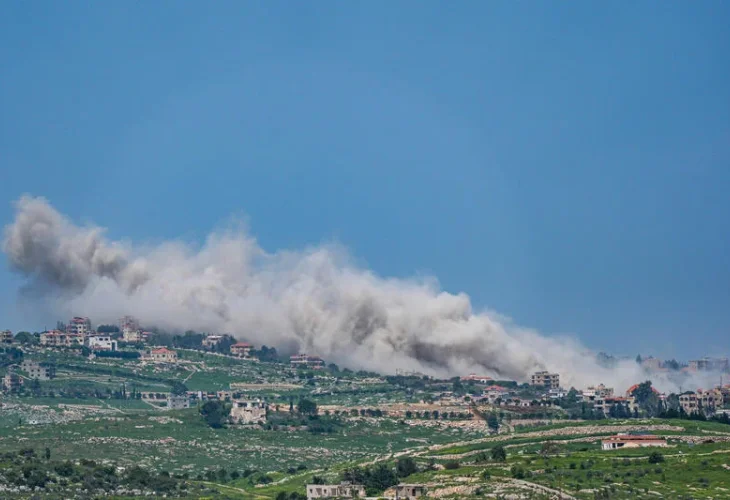 Smoke rises from southern Lebanon during an Israeli military operation, April 17, 2026. Photo by Ayal Margolin/Flash90
Northern Israel has fallen largely quiet in recent days, with schools reopening, restrictions lifted, and residents beginning to return to routine after weeks of sustained fighting along the Lebanon border. But the calm may be more fragile than it looks. While the U.S.-brokered ceasefire between Israel and Lebanon has reduced immediate hostilities, both sides appear to be operating under different understandings of what was agreed, raising questions about how long it can hold.
The arrangement, announced last week after talks led by U.S. President Donald Trump, was framed as a 10-day cessation of hostilities between Israel and the Lebanese state. Under the framework, Lebanon’s government is expected to take steps to prevent attacks from its territory, while Israel is to halt offensive operations but retain the right to act in self-defense against imminent threats.
Trump described the outcome in far stronger terms, writing that “Israel will not be bombing Lebanon any longer. They are PROHIBITED from doing so by the U.S.A. Enough is enough!!!” U.S. officials later clarified that Israel still maintains the right to respond to planned or ongoing attacks.
That gap is reflected in Hezbollah’s response. The Iran-backed terrorist group is not a formal party to the agreement and has rejected a key Israeli demand that it retain the ability to act against threats inside Lebanon, saying that “any ceasefire must not allow Israel freedom of movement inside Lebanon.” It has also said that Israeli forces on Lebanese soil give “the right to resist,” signaling it does not accept Israel’s interpretation of the deal.
Despite that, the border has remained largely quiet. Israeli authorities have eased Home Front Command restrictions across much of the north, and schools and kindergartens reopened in many communities, even as residents express uncertainty about how long the calm will hold.
The quiet, however, has not meant a complete halt to violence. A soldier wounded by a pre-planted explosive device in southern Lebanon died yesterday, and the IDF reported striking a “terrorist cell” that approached troops in violation of the ceasefire. A separate incident saw a French UN peacekeeper killed in southern Lebanon.
Lebanon’s government has publicly backed the ceasefire framework and is expected to play a central role in enforcing it, but the situation highlights the longstanding divide between the Lebanese state and Hezbollah, which operates independently and maintains its own military capabilities. Lebanese officials have urged caution even as some civilians began returning to southern areas.
For now, multiple factors appear to be helping hold the quiet in place, including diplomatic pressure from Washington and the broader regional context. At the same time, neither side has signaled a willingness to formally resolve the underlying dispute over what actions are permitted under the ceasefire. That leaves the current situation less as a settled agreement and more as a temporary pause.
What happens next may depend on a handful of early signals: whether Hezbollah resumes rocket fire or anti-tank attacks, how Israel responds to any perceived violations inside Lebanon, and whether the initial 10-day period is extended. Smaller incidents from explosives to clashes involving armed cells could also test the arrangement without triggering an immediate collapse.
For now, Israel’s north is quiet. But without a shared understanding of the rules, that calm may depend less on agreement, and more on who decides to test it first.

