

Israel News
“Our hearts are burning with joy”: 16 Families Return to Sha-Nur 21 Years After Disengagement
Hundreds attend ceremony as 16 families move into rebuilt northern Samaria site, as part of a broader effort to reverse parts of the 2005 withdrawal
- Brian Racer
- | Updated
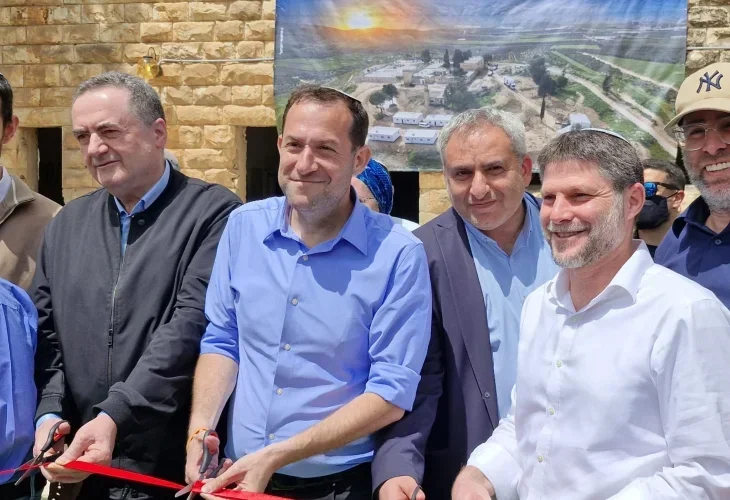 Site at Sha-Nur
Hundreds of Israelis gathered Sunday at the site of Sha-Nur in northern Samaria, as 16 families moved into caravans marking the first renewed Jewish presence there since the 2005 disengagement.
The return to Sha-Nur, one of four communities evacuated as part of Israel’s withdrawal from Gaza and parts of northern Samaria, is both a symbolic and practical step toward reversing elements of that policy more than two decades later.
Located in northern Samaria near Jenin and Shechem (Nablus), Sha-Nur was among the settlements dismantled in 2005 alongside Chomesh, Ganim, and Kadim. While the Gaza withdrawal remains unchanged, recent Israeli legislation and government decisions have opened the door to renewed Israeli presence in these northern Samaria sites.
The path back to Sha-Nur has unfolded gradually. In 2023, the Knesset repealed parts of the Disengagement Law that had barred Israelis from entering the area. In 2024, the government approved renewed access to several of the evacuated sites. Sunday’s move marks the first stage of actual residential return, with additional families expected to join in the coming months.
On the ground, trucks unloaded belongings into caravans as families moved in, reversing the path of the 2005 evacuation. Trucks loaded with furniture and personal belongings arrived at the hilltop site, unloading into newly placed caravans where families began settling in.
Among them was Yossi Dagan, head of the Samaria Regional Council, who was himself removed from Sha-Nur during the 2005 evacuation and returned Sunday with his family.
“The spirit, the faith, the determination, and the tears have won!” Dagan said at the ceremony. “We returned to Chomesh, we returned to Sha-Nur, and we will soon return to Ganim and Kadim and build many new communities in northern Samaria.”
He added, “Today we are making history and effectively canceling the expulsion from northern Samaria,” describing the moment as both a national milestone and a personal closing of a 21-year circle.
Finance Minister Bezalel Smotrich called the move “a historic correction,” saying, “We are correcting a historic wrong of the disengagement … and returning to Sha-Nur. This is a day of celebration for the settlement movement and for the State of Israel.”
He went further, linking the move to a wider vision, adding: “Instead of giving land to the enemy, we take land from the enemy,” and calling on Israel to “prepare for the full conquest of the Gaza Strip and establish Israeli settlement there,” arguing that “without settlement there will be no security.”
Justice Minister Yariv Levin signaled a wider political horizon, stating, “The day is not far when we will apply sovereignty over Judea and Samaria.”
For families arriving at the site, the moment carried a more personal meaning after two decades of waiting. “Our hearts are burning with joy. After 21 years of waiting, a dream is coming true,” said residents Channa and Meir Goldminz, who were among the first to move into the community.
“The story here is the great embrace we are receiving from the people of Israel,” said resident Yitzchak Zuckerman. “The understanding is that the people of Israel are returning, not just a group of individuals.”
The return of Sha-Nur is unfolding in stages, beginning with 16 families and temporary structures, with plans for expansion over time. Officials and residents alike described Sunday’s ceremony not as a final step, but as the opening phase of a longer process aimed at rebuilding the community and expanding Israeli presence in northern Samaria.
For those gathered on the hilltop Sunday, the message was clear: after more than two decades, the return has begun.

