

Raising Children
The Hidden Crisis in Education: Why So Many Children Are Losing Their Way
How pressure, humiliation, and lack of emotional connection are pushing students away — and what parents and educators must change to restore dignity, motivation, and lasting success
- Rabbi Yisrael Azulai
- | Updated
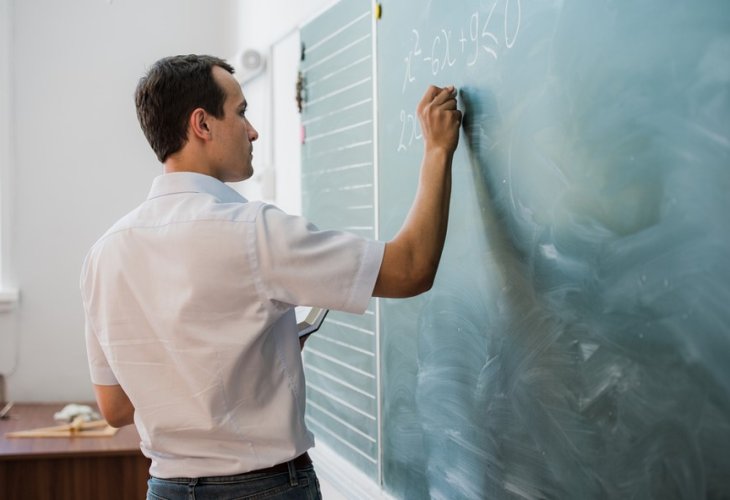 (Photo: Shutterstock)
Many educators, parents, and therapists find themselves wondering how far the difficult situation facing today’s children and educational systems will go, especially in such a challenging era. Despite all the interventions, treatments, and good intentions, we continue to witness painful stories: another mother standing helplessly as her dream for her child shatters in an instant.
A child once raised with joy, warmth, and hope suddenly begins to unravel. Some are expelled from schools, yeshivot, or seminaries. Others remain physically present in the most prestigious institutions, yet the light in their eyes has faded. These children carry deep inner frustration and a sense of helplessness, and the consequences soon follow. Seemingly overnight, they lose the desire to attend school.
A Silent Crisis in Our Classrooms
Where are we leading this precious generation? Our streets are increasingly filled with boys and girls full of anger and lacking motivation. Principals, teachers, and parents watch as the very children entrusted to their care drift further away, even while outwardly complying with expectations. They attend classes and show up for prayers, but inside, something has gone quiet. The joy is gone. Their souls are wounded in ways we often fail to recognize, all under the banner of “good intentions.”
I recall walking with a student who was bright, kind, and full of life — an only child raised with great care and love. At his parents’ request, I accompanied him to an entrance exam for a respected yeshiva. He was nervous. When asked a question in Talmud, he struggled to respond — not because he didn’t know the answer, but because anxiety blocked him. The entire test lasted four minutes.
Afterward, I approached the examiner, confident the boy would be accepted. Instead, I was stunned. “He’s not suitable for our yeshiva,” the examiner said dismissively, before rushing on to the next student. In four short minutes, the future of a sensitive, promising child was redirected, without understanding, without compassion, and not through any real fault of his own.
The Cost of Humiliation
Is this how we nurture our children? Is this how we hope to instill love for our heritage and values? Sadly, this is just one example among many that occur daily. Too often, we fail to consider the delicate emotional world of our children. Where is their dignity in our eyes? Have we forgotten the teaching of our sages: “Let the honor of your student be as dear to you as your own”?
In my work, I once treated a student who had dropped out of school and deteriorated into severe anxiety and depression, losing even the motivation to get out of bed. When I gently asked him what had led him to this point, tears filled his eyes.
“Three months ago,” he said, “I arrived late to class. The teacher stopped the lesson and shouted at me in front of everyone: ‘How dare you come late again? Go to the principal — I don’t want you in my class.’ That humiliation broke me. I’ll never forgive him. After that, I didn’t want to come to school anymore. I started acting out just so they would send me home.”
This is the devastating power of public shame.
Rebuilding Through Respect and Love
At a major educational conference attended by hundreds of teachers and school leaders, a prominent rabbinic figure posed a simple question: “How many of you loved your teacher when you were students?” Only a small fraction raised their hands. Then he asked, “And how many of your students love you?”
The room fell silent.
We cannot claim innocence. Every day, our children are placed in the hands of those we trust to guide, support, and understand them, yet too often, the opposite occurs. True, there are exceptional educators who embody care and dedication, but they are still too few.
The responsibility is ours. We must restore the dignity of our children. Look them in the eyes. Listen to them. Speak with them calmly and respectfully. Never humiliate them — because the damage can be profound and lasting.
As the Alter of Slabodka taught: before you attempt to educate a child, you must pour buckets of love upon them.
Only through love, respect, and genuine human connection can we begin to repair what has been broken, and prevent further harm.

