

Yom HaZikaron (Memorial Day)
He Couldn’t Let His Brother Go Alone: Remembering Elchanan
What stays with a person after such horror, and how do you go on after losing a brother in your arms? Menachem Kalmanzon shares his story of courage at Kibbutz Be’eri.
- Moriah Luz
- | Updated
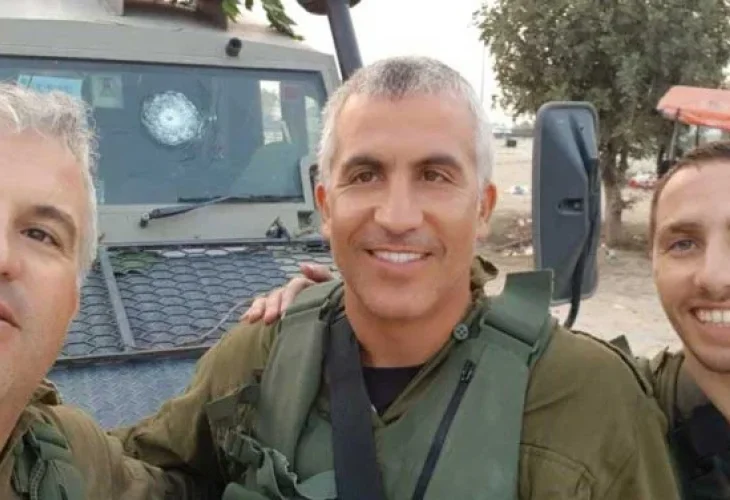 Elchanan Kalmanzon Hy"d (left), Menachem Kalmanzon, and Itiel Zohar
As Yom HaZikaron begins, Israel pauses to remember those who gave their lives so others could live. Some stories are almost too difficult to take in, yet they carry a clarity about courage and sacrifice that stays with us long after.
Menachem Kalmanzon remembers one image that never left him: a quiet home, food sitting on the kitchen counter waiting to be cooked, life interrupted mid moment, the people already gone. It is in scenes like this that the weight of this day becomes real, not as an idea, but as something deeply human and painfully close.
A Call That Could Not Be Ignored
Menachem, 38, a father of six and a longtime volunteer in his community’s emergency response team, was not on active duty that day. He was a teacher, living an ordinary life, until his brother Elchanan hy"d called and said there was something serious happening in the south and that he was going. There are moments when everything narrows down to a single decision, and Menachem’s response came immediately: “You’re not going alone. I’m coming with you.”
At that point, they still believed the situation was under control. They thought they were heading into something that had already passed its peak. But as they drove south, passing burned vehicles, abandoned weapons, and empty roads, the reality slowly revealed itself. This was not over. It was unfolding, and they were driving straight into it.
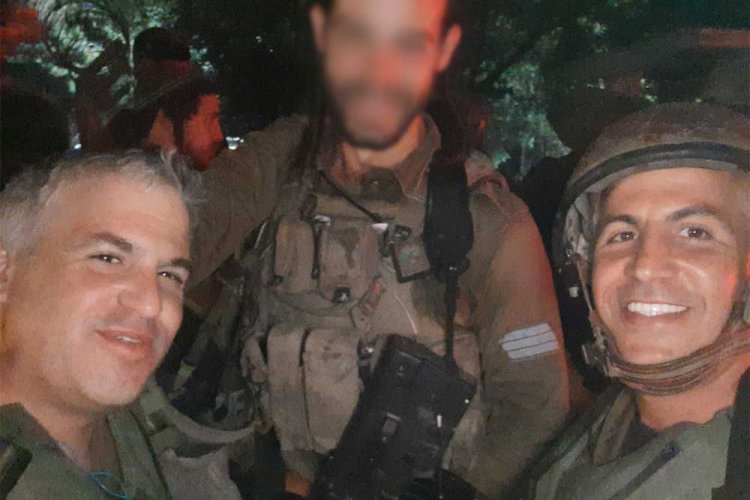 Elchanan (left) with his brother Menachem, and another soldier
Entering the Unknown
By the time they reached Kibbutz Be’eri, it was evening. The gate was burned, bodies lay outside, and soldiers were still preparing to enter while families stood nearby, pleading for help. Nothing about the scene suggested order or safety. Then came the call about a 13 year old girl trapped in a burning house, sending messages and begging for someone to come.
“Elchanan said, ‘The house is on fire. We’re going in now.’” There was no long discussion, no weighing of options, just a clear decision in the face of urgency.
Choosing to Go In
There was fear, of course. Menachem thought about his wife, his daughters, and the losses their family had already known. He understood what it could cost. But sometimes the question is not whether something is safe, but whether you are the one who can act in that moment. And so they went in.
Inside the kibbutz, the situation was far worse than they had imagined. There was active combat, terrorists still present, and civilians hiding, waiting, hoping someone would reach them. Moving from house to house, they quickly understood that their role was not to fight, but to rescue, to get people out of danger one by one.
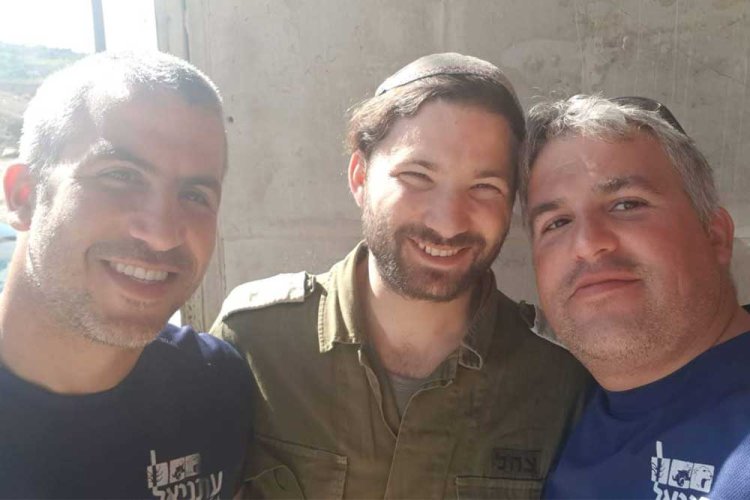 Elchanan (right) with his brother Menachem and nephew Itiel
The Weight of What They Saw
But not every door led to survival. There were homes where they arrived too late, families searching for loved ones who were no longer alive, and moments that do not fade with time. One encounter stayed with Menachem in particular. A man emerged from hiding, shaken and disoriented, barely able to speak. When asked about his family, he kept repeating, “They are not here,” over and over, until the meaning became clear. Sometimes, that is all there is to say.
Pushing Beyond Limits
Through the night and into the next day, they continued. Dozens of missions, back and forth, eventually rescuing around 100 people. They were exhausted, afraid, and at times physically unable to go on. At one point, they decided they had reached their limit. Then someone approached them and said his family was still inside.
What do you say in that moment, that you are too tired? They kept going. Later, Menachem shared that the words of the Rambam stood before him, reminding him that in times like these, a person focuses only on the mission in front of them, even when the cost is personal.
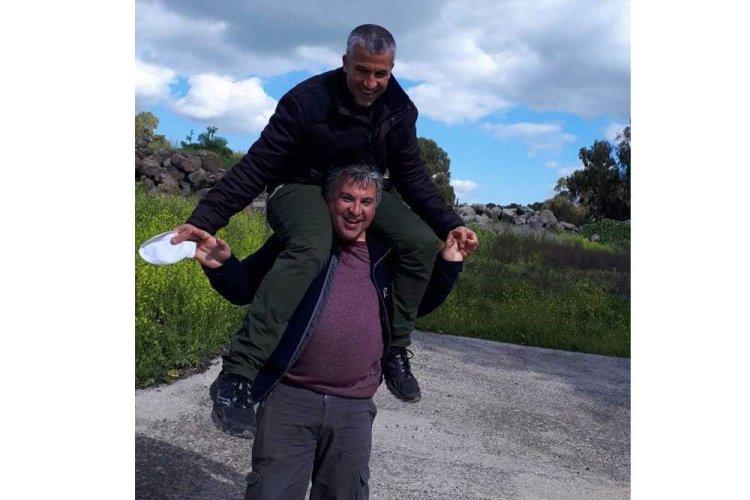 Brothers Elchanan and Menachem
The Ultimate Price
The next morning, after hours without rest, they decided to complete one final rescue. Elchanan entered first, and within seconds a terrorist hidden inside opened fire. In an instant, everything changed. Elchanan was killed, Menachem was injured trying to pull him out, and their nephew Itiel fought back and neutralized the attacker.
After everything they had done, after all the lives they had saved, this was the cost they were forced to carry forward.
Living With Loss, Holding On to Purpose
How does a person return from a place like that? “I don’t know why one comes back broken and another comes back strong,” Menachem said. “I hold on to why we went, and that we did it.” There is pain, and there are questions, but there is also a quiet decision not to let the story end there.
“It brings a request,” he said, “that Hashem should bring healing to the people of Israel.”
The Choice to Show Up
Elchanan hy"d chose to go. So did Menachem. So did so many others whose stories fill this day. Yom HaZikaron is not only about how they fell, but about how they lived, and the choices they made when it mattered most.
And perhaps the question that remains is what those choices ask of us. At the end, when Menachem was asked if he would do it again, he paused for a long moment before answering.
“If Elchanan called me, I would go with him again.”

