

Raising Children
How to Motivate a Child Who Doesn’t Want to Learn: Timeless Parenting Advice
Discover practical guidance on rebuilding connection, inspiring motivation, and creating a positive learning environment through love, patience, and understanding
- Naama Green
- | Updated
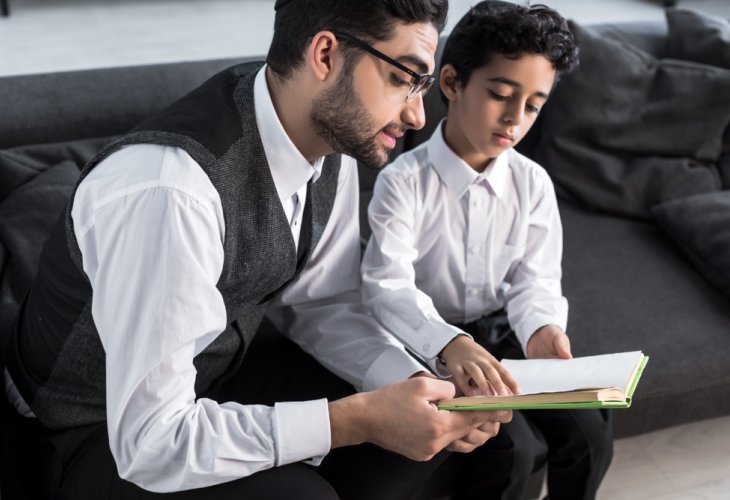 (Photo: Shutterstock)
The esteemed Rabbi Moshe Hillel Hirsch, head of the Slabodka Yeshiva, is considered one of the great educators of our generation, and his precise guidance has helped many navigate difficult periods in their lives.
During the COVID period, when schools and yeshivot were closed, many children and young adults found themselves at home throughout the day. Parents faced a pressing challenge: how to learn with their children, and what to do when a child simply does not want to learn. In response, Rabbi Hirsch delivered a special lecture addressing these issues, offering practical and deeply insightful guidance.
Preparing the Right Environment for Learning
One of his first recommendations was surprisingly simple: do not approach learning when you are tired. When a parent is exhausted, even small things can become frustrating, and the benefits of learning together are lost. Preparation is equally essential. A parent should study the material beforehand, rather than trying to learn it in real time with the child. Without preparation, explanations may become unclear, misunderstandings may arise, and the learning experience can quickly turn into tension instead of growth.
Teaching According to the Child’s Nature
Another key principle is to teach each child according to their own way. A child’s thinking process may differ significantly from that of the parent, and it is important to recognize and respect those differences. Learning should be adapted to the child’s strengths and style, not forced into the parent’s framework. At the same time, the atmosphere must remain positive. Learning should be approached with calmness and joy, without overwhelming the child.
When a Child Disconnects from Learning
When a child is completely disconnected from learning, Rabbi Hirsch explains that in such cases, the instinct to first eliminate distractions and only then introduce study is often ineffective. Instead, the approach should begin with creating a positive and engaging learning experience. By offering material that is interesting and enjoyable, the child can gradually reconnect. Only afterward can other distractions be reduced step by step.
The Power of Positive Engagement
He shares a story about the Chazon Ish, who once spent an hour learning with a young man who was struggling and frequenting inappropriate environments. The expectation was that he would rebuke the boy, but instead he focused solely on creating a meaningful and enjoyable learning experience. His reasoning was clear: the boy was drawn to those places because he found enjoyment there. If he could find a deeper, more meaningful enjoyment in learning, he would naturally move away from what was harmful.
Rebuilding the Parent Child Connection
The most significant challenge arises when the relationship between parent and child has been damaged. When there are arguments, anger, or harsh words, the connection itself weakens. And without that connection, influence becomes nearly impossible. Yet, Rabbi Hirsch emphasizes that deep within, every child desires a relationship with their parent. That desire can be the key to rebuilding what has been lost.
Restoring Love and Trust
In such situations, the first step is not to correct behavior, but to restore the relationship. A child must feel that they are loved, that they matter, and that their parent genuinely cares about them. This requires a shift in focus. Instead of only asking about achievements or responsibilities, a parent should show interest in the child’s experiences, even in seemingly trivial matters. Where did you go? What did you see? Did you enjoy it? These questions communicate care and attention.
The Importance of Appreciation
Equally important is the sense of appreciation. A child needs to feel not only loved but also valued. Even during difficult periods, when the child is struggling, it is essential that they sense their parent’s belief in them. This inner confidence can give them the strength to continue moving forward.
Overcoming Disappointment
This is not easy. Parents may feel disappointment, and even if it is not expressed directly, it can be sensed. Rabbi Hirsch stresses the importance of working internally to see the child’s true essence, to recognize their goodness despite current struggles. If a child feels that their parent is disappointed in them, it can be deeply damaging.
Building a Healthy Foundation
Ultimately, two elements are essential: love and appreciation. When these are present, the relationship begins to heal. The change may not happen overnight, but within a relatively short time, significant improvement can occur.
The Role of the Parent
There is one final condition. The parent themselves must be someone the child can respect. When a child sees integrity, warmth, and consistency, it strengthens the bond and reinforces the parent’s influence. In such an environment, many of the common struggles simply do not develop.
Creating a Home of Joy
A home filled with joy, love, and a sense of calm can transform everything. When the atmosphere is positive and free of tension, many difficulties are naturally reduced. This, perhaps, is one of the most powerful tools a parent can offer.

