

Wonders of Creation
The Secret of Desert Survival: It All Comes Down to Water
What makes the desert so extreme? Discover why water is the key to survival and how life adapts to these harsh conditions.
- Debbie Reichman
- | Updated
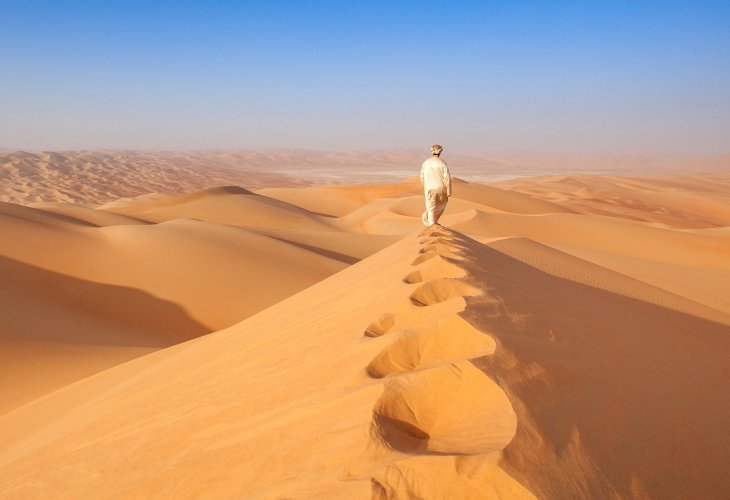 (Photo: shutterstock)
Water is one of the most basic needs for life, yet in some parts of the world, it is incredibly scarce. The desert is the clearest example of this reality. In these vast, dry landscapes, water is not just important, it is the difference between survival and extinction.
A desert is defined as a region that receives very little rainfall, making it extremely dry. While many people picture deserts as endlessly hot, not all deserts fit that image. There are also cold deserts, such as the Gobi Desert in northern China and even parts of Antarctica, where temperatures remain freezing year round. Still, the most familiar deserts are the hot ones, like the Sahara and the Namib, where temperatures can swing from intense heat during the day to surprising cold at night.
What Makes a Desert So Dry?
Many deserts are located near the equator, where the sun’s rays are strongest. These areas receive a great deal of heat, but that does not always translate into regular rainfall. Instead, the air patterns in these regions create dry conditions.
Warm air rises, cools, and releases moisture, often over oceans or other regions. By the time that air moves toward desert areas, it has already lost much of its moisture. As it sinks again, it becomes dry and hot, creating the arid conditions that define deserts.
Life in Harsh Conditions
Surviving in the desert is not easy. The lack of water, combined with extreme temperature changes, makes it difficult for most plants and animals to live there. As a result, deserts tend to have far less life than more temperate environments.
However, the plants and animals that do exist in deserts are uniquely adapted to these conditions. Many have developed ways to store water for long periods or to reduce water loss. Some animals are active only at night, when temperatures are cooler, while others can go for long stretches without drinking at all.
Deserts Around the World
Some of the world’s most well known deserts include the Sahara in North Africa, the Namib in southern Africa, the Atacama in South America, and Death Valley in the United States. Each of these regions presents its own extreme version of desert life.
Closer to home, Israel also has its own desert landscapes, including the Negev and the Judean Desert, along with the nearby Sinai Desert. These areas offer a powerful reminder of how precious water is, and how life depends on it in even the most challenging environments.
A Deeper Perspective
In Jewish tradition, the desert is not only a physical place, but also a setting that reveals deeper truths. It is a place where the essentials become clear, where dependence on water, and on what sustains life, cannot be ignored.
Water, in this sense, represents more than physical survival. It reminds us of what nourishes us, what keeps us going, and what we cannot live without. Just as life in the desert depends entirely on water, so too a person’s inner life depends on what they choose to draw from and hold onto.
In a world that often feels full and busy, the desert quietly teaches a simple lesson: what truly sustains us is often the most essential, and sometimes the most easily overlooked.

