

Raising Children
The Surprising Link Between Your Brain, Parenting, and Growth
Like flowers that bloom over time, discover how small steps in parenting can reshape the brain and lead to lasting growth.
- Leah Auerbach
- | Updated
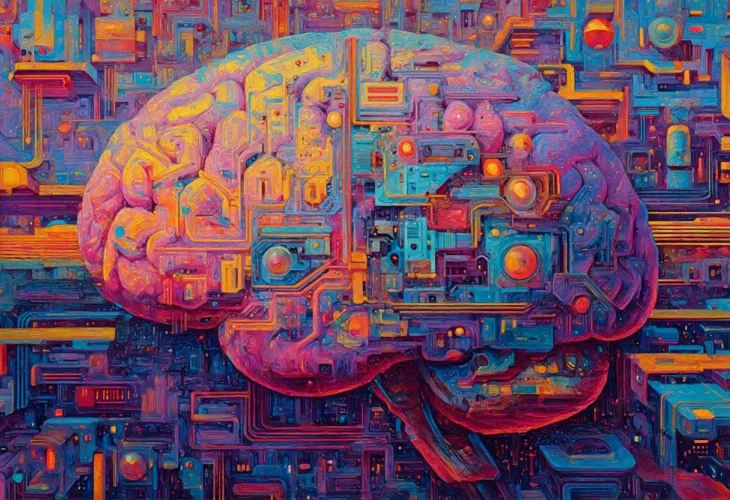
The human brain is far more flexible than we once believed. Even after trauma, loss, or major disruption, it has the ability to adapt, rebuild, and find new ways to function.
There are stories that make this almost impossible to ignore.
When the Brain Rebuilds Itself
Cameron Mott from Britain was just nine years old when a severe brain illness led doctors to perform a rare and drastic surgery. Half of her brain was removed. By all expectations, many of her abilities would be permanently lost.
Yet, over time, Cameron regained those abilities and returned to a normal life. Her brain reorganized itself in ways that surprised even experts.
Daniel Kish from the United States lost his vision as a baby due to cancer. Instead of remaining limited by that loss, he developed a way to “see” using sound, creating clicking noises and interpreting the echoes around him.
Brain scans revealed something remarkable. The parts of his brain usually responsible for vision had taken on a new role, processing sound instead. His brain adapted completely.
Dr. Jill Taylor, a brain researcher, experienced a severe stroke that left her unable to perform basic functions. In the years that followed, the healthy side of her brain gradually took over the damaged areas. She eventually returned to a full life and shared her journey in a book that reached readers around the world.
What Is Neuroplasticity?
These stories all point to one powerful concept: neuroplasticity.
Neuroplasticity is the brain’s ability to change and adapt. It is constantly forming new connections, adjusting to experiences, and creating new pathways. Every time we repeat a thought, a behavior, or a response, we strengthen that pathway.
It is like walking along a new trail. At first, the path is unclear. But the more we walk it, the more defined it becomes, until it feels natural.
A Brain That Keeps Growing
This process is especially active in early life. Babies create an incredible number of new connections every second. Children form billions of new connections each day as they learn and grow.
But this ability does not disappear with age. Even later in life, the brain continues to form new connections. It is always capable of change.
What This Means for Our Children
This understanding carries a powerful message for parents.
The emotional patterns children develop, how they respond to stress, how they build trust, how they protect themselves, are all shaped through repeated experiences. These patterns may feel deeply ingrained, but they are not fixed.
Even when a relationship feels strained, even when there is distance, even when guilt lingers over what was missed in the past, change is still possible.
The brain continues to evolve, and new pathways can still be created.
Building a New Path
Change does not happen all at once. It happens through small, consistent steps.
Each moment of connection, each act of patience, each word of love creates another step along a new path. At first, it may feel unfamiliar or even forced. But over time, with repetition, it becomes more natural.
Even when it seems like nothing is changing, something is happening beneath the surface.
Like water slowly shaping stone, these repeated actions begin to soften what once felt fixed.
Keep Going
There may be times when the distance feels too great, when it seems like the connection cannot be restored. But the nature of the brain tells a different story.
It reminds us that nothing is truly final. That growth is always possible.
So keep going. Keep showing up. Keep building those small moments of connection.
Sometimes the road is long, but every step matters. And along the way, the seeds you plant will eventually bloom.
A Space for Growth
Parenting is not always easy. It brings moments of exhaustion, frustration, and doubt. But it also offers opportunities for deep connection and growth.
This space is here for all of it, the challenges and the breakthroughs alike.
What would you like to explore next?
Leah Auerbach is a parent coach specializing in an attachment-based developmental approach. She works with parents of highly sensitive children and supports families in building regulation, connection, and resilience.

