

Israel News
Will the Cease-Fire Hold? Iran Says It Has No Plan for the Next Round of Talks
As the U.S. gets ready to open talks in Pakistan, Tehran sends mixed signals about whether negotiations will even happen. Israel is watching closely and preparing scenarios for a rapid escalation.
- Yuval Aviv
- | Updated
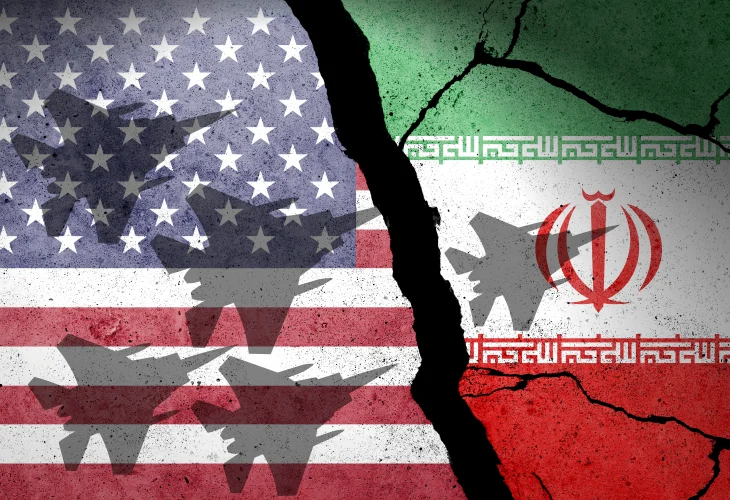 (Credit: Shutterstock)
Amid rising tensions and preparations for another round of talks, conflicting messages are coming out of Tehran about continuing negotiations with the United States. Iranian Foreign Ministry spokesperson Esmaeil Baghaei said today (Monday) at a press conference that "So far, as I stand here, we have no plan for the next round of negotiations and no decision has been made on the matter." This comes as the American delegation is already on its way to Pakistan, where the talks are slated to open tomorrow.
This statement stands in contrast to remarks made earlier by other senior Iranian officials. Ebrahim Azizi, chair of the Iranian parliament's National Security Committee, said that "It has been decided to continue the discussions with the U.S., but that does not mean 'negotiations at any price.' Iran has red lines that must be upheld, and the negotiations will take place only within those principles."
Iranian President Masoud Pezeshkian tried to strike a more conciliatory tone, noting that "Diplomacy is needed to lower tensions." According to the Iranian news agency IRNA, he added that "War is in no one's interest. All rational and diplomatic means should be used to reduce tensions."
In the background, accelerated diplomatic efforts are underway in Pakistan. According to a Reuters report, authorities there have been stepping up contacts with Washington and Tehran since Sunday to ensure the second round opens as soon as tomorrow. Sources involved in the contacts said that "Authorities in Pakistan are holding intensive talks to make the second round happen and to achieve a real understanding. What matters to Pakistan is that the next round not be fleeting, but constructive and a foundation for a possible agreement."
Iran's vice president, Mohammad Reza Aref, threatened that "Security in the Strait of Hormuz is not free. You cannot restrict Iran's oil exports while expecting free security for others. The choice is clear: either a free oil market for all, or the risk of significant costs for everyone. The stability of global fuel prices depends on a guaranteed and lasting end to the economic and military pressure against Iran and its allies."
Against this backdrop, Israel is raising its alert level. Within the political-security establishment, the assessment is that U.S. President Donald Trump is determined to reach an agreement, and that if the talks do not yield immediate results, the cease-fire may be extended to allow diplomacy to continue. Still, there is concrete preparation for the possibility that the contacts will collapse and things will deteriorate quickly.

