

Israel News
On the Eve of a Cease-Fire Deadline, U.S.–Iran Talks Teeter as Tehran Digs In
Islamabad is prepped for another round, but Iran hasn’t confirmed it will show up—while leaders warn they’ve "prepared new cards on the battlefield" and Washington readies its team.
- Yuval Aviv
- | Updated
 (Credit: Shutterstock)
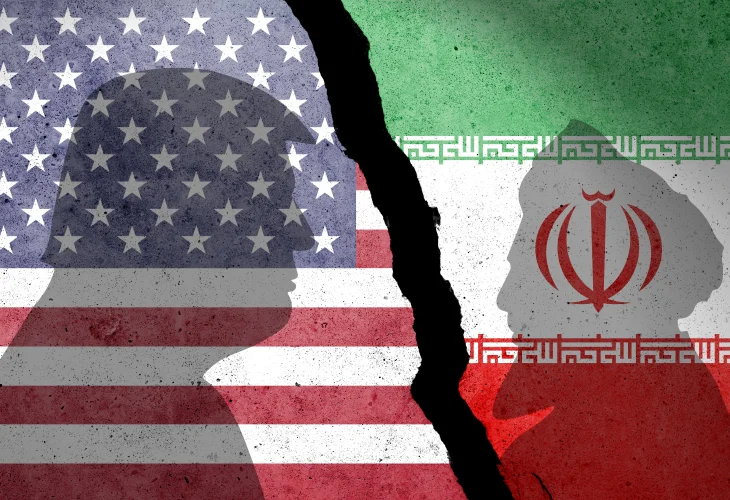
A day before the cease-fire between the two countries expires: Despite preparations in Pakistan's capital, Islamabad, sources involved in the contacts between the United States and Iran say that, as of now, it is unclear if and when another round of talks will take place. The Iranians have not yet officially confirmed their participation, and the messages from Tehran remain contradictory: while a senior Iranian official told Reuters yesterday that Tehran is "considering favorably" the possibility of joining, overnight (Monday into Tuesday) the leadership struck a much tougher tone.
The speaker of Iran's parliament, Mohammad Baqer Qalibaf, who is leading the contacts, declared that Tehran will not negotiate under pressure and threats: "Trump, by imposing a siege and violating the cease-fire, seeks, in his imagination, to turn this negotiating table into a table of surrender or to justify a renewed escalation of the war. We do not accept negotiations under the shadow of a threat, and over the past two weeks we have prepared to reveal new cards on the battlefield."
Mohammad Marandi, an Iranian strategic-affairs commentator close to the regime, estimated that an Iranian delegation is not expected to arrive in Pakistan at all: "In my estimation, there is no intention on Tehran's part to come to Islamabad. I think the Iranians assume the war will flare up soon, and therefore they are working to expand facilities and produce UAVs."
On the other side, the United States continues to prepare for the talks, even if it's not clear they will actually take place. The site "Axios" reported that President Donald Trump's vice president, J.D. Vance, is expected to arrive in Pakistan during the day and take part in the talks.
Meanwhile, a senior Pakistani official said in an interview with the "Washington Post" that Islamabad delivered a clear message to Washington: avoid harsh public statements. According to him, Pakistan asked U.S. President Donald Trump to present the contacts as a joint achievement for both sides, and even recommended extending the cease-fire by another two weeks.
According to a CNN report, just as it seemed the sides were moving toward understandings, there was a sharp turn. Since Friday, Trump has posted a series of messages on the Truth Social network, alongside media interviews, in which he presented an optimistic picture and even declared that Iran had already agreed to a series of conditions—claims that sources involved in the contacts said had not yet been finalized. Among other things, the American president claimed that Tehran had agreed to hand over the enriched uranium and even hinted at an imminent end to the war.
In Iran, officials rejected Trump's statements and even denied that a process was underway toward another round of talks. These denials led to a rapid collapse of the cautious optimism that had built up in recent days around the possibility of an agreement.

