

Magazine
She Heard the Gunfire and Ran Toward It: Dr. Morel Joyce
In the midst of terror, Dr. Morel Joyce stepped forward to help. A moving account of bravery and compassion.
- Eti Dor-Nachum
- | Updated
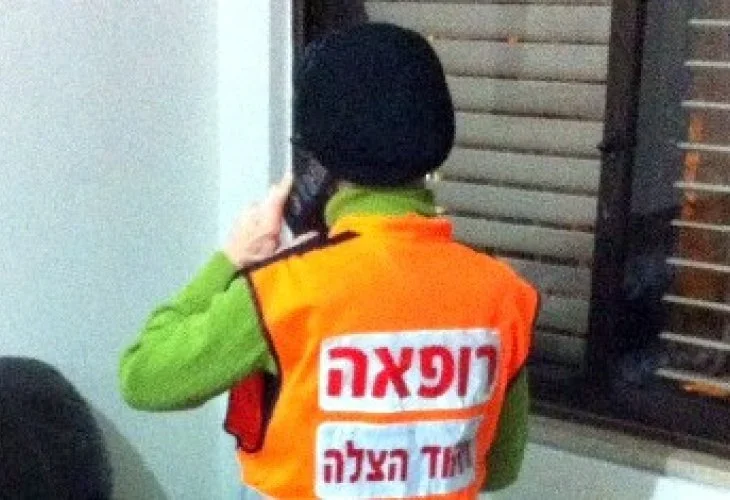 Dr. Morel Joyce, a volunteer with United Hatzalah
On Yom HaZikaron, we remember not only those who were lost, but also the moments that revealed extraordinary courage, the people who stepped forward when others could not.
Dr. Morel Joyce’s story is one of those moments.
It was an ordinary morning in Jerusalem. Nothing hinted at the tragedy that was already unfolding just moments away. Dr. Joyce stood in her home in the Har Nof neighborhood, holding her siddur, preparing to begin her day with prayer before heading out to treat her patients.
Then she heard a brief report on the radio: gunfire, wounded, Agassi Street.
She did not hesitate.
A Scene No One Can Forget
Within moments, she was in her car, driving the short distance that suddenly felt endless. On the way, she prayed quietly, asking to be a messenger who could help.
What she found when she arrived was beyond anything she had ever experienced.
The synagogue was silent in a way that felt unnatural. Outside, she found a wounded man, still wrapped in his tefillin, and began treating him immediately. Inside, the attack was still unfolding.
A police officer warned them to leave, that there was still danger. They moved the injured man into an ambulance, and he was rushed to the hospital.
Dr. Joyce stayed.
Treating in the Midst of Terror
Soon after, she began treating Police Officer Zidan Saif, who had been critically wounded while confronting the attackers. Despite all efforts, he later died from his injuries.
More people began to gather. Families stood outside, waiting, hoping, not yet knowing what had happened to their loved ones. The uncertainty was almost unbearable.
Dr. Joyce stood with them.
“I knew,” she later shared, “but we didn’t want to believe it.”
When It Becomes Personal
As an experienced physician, Dr. Joyce had seen difficult cases before. But this was different.
In the hospital, trauma is clinical. Here, it was deeply personal.
“These were my brothers,” she said. “This was not just injury. This was hatred, deliberate and brutal.”
In that moment, she felt something shift within her. She was no longer an observer. She was part of the story of her people, sharing in their pain.
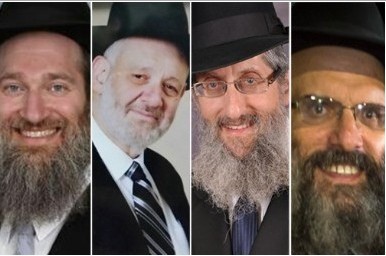 The victims of the terror attack
A Life of Purpose
Dr. Joyce’s path to that moment began long before.
Born in Toronto, she carried a lifelong dream of living in Israel. Together with her husband, she built a family and later made aliyah, joining the Har Nof community, a place defined by Torah, kindness, and deep connection.
She became a doctor later in life, driven by a desire to help others. Alongside her work, she volunteered with United Hatzalah, responding to emergencies and offering care wherever it was needed.
Helping others was not just her profession. It was her calling.
Carrying the Aftermath
In the days that followed the attack, Dr. Joyce found herself struggling in a way she had never experienced before.
“I needed emotional support,” she admitted. “That had never happened to me as a doctor.”
The images, the voices, the grief of the families, it all stayed with her.
And yet, even in the pain, she continued to stand with others. Visiting the bereaved, listening more than speaking, simply being present in moments where words could not reach.
A Community That Holds Together
The Har Nof community, like so many others across Israel, was shaken. But in the aftermath, something else emerged as well, unity.
People came together in prayer, in acts of kindness, in reflection. There was a shared understanding that they were part of something larger, a people bound together not only in joy, but also in pain.
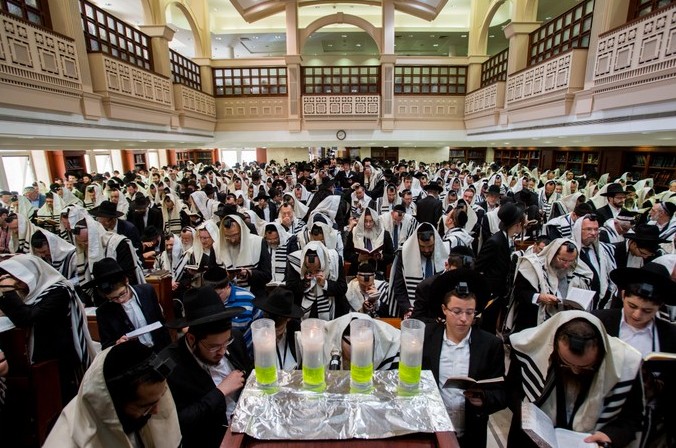 The community came together (Photo: Flash 90)
A Message for Today
On Yom HaZikaron, stories like this remind us of more than loss. They remind us of the people who run toward danger, who step forward in moments of fear, who carry others even when it is difficult.
Dr. Joyce does not claim to understand why such tragedies happen.
“We can’t understand the ways of Hashem,” she says. “But we can respond. We can grow. We can strengthen ourselves.”
And perhaps that is the message she carries forward.
To use what we are given, to help where we can, and to stand with one another, especially in the hardest moments.
Because even in the darkest times, there are those who choose to bring light.

