

Behind the News
Iran Mines Could Take 6 Months to Clear — So Who Controls Hormuz?
Even as Trump extends the ceasefire, ship seizures, gunfire and a continuing U.S. blockade suggest the strait remains far from normal
- Brian Racer
- | Updated
 Shutterstock
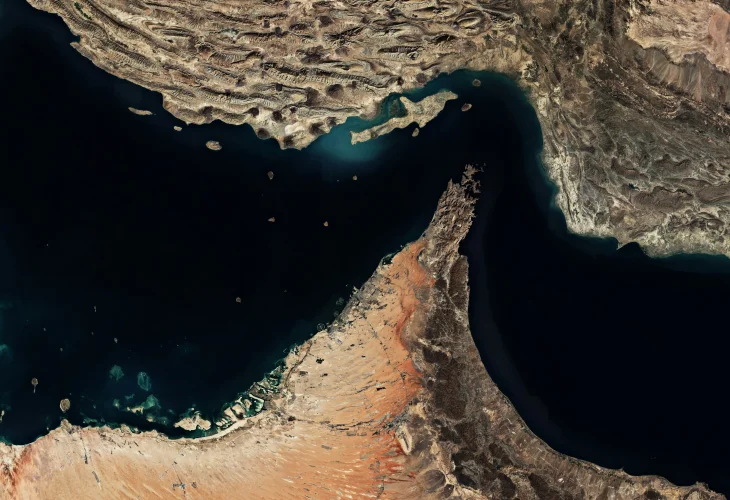
A classified Pentagon briefing to Congress warned this week that clearing Iranian mines from the Strait of Hormuz could take up to six months. According to the Washington Post, lawmakers were told Tuesday that Iran may have placed more than 20 mines in and around the strait, including some reportedly linked to GPS technology.
The warning raised new questions about whether the ceasefire between the United States and Iran has meaningfully stabilized one of the world’s most important shipping routes. It also highlighted the growing disconnect between ceasefire diplomacy and conditions in the Gulf, where shipping disruptions have continued even after President Trump extended the ceasefire Tuesday without setting a new deadline while also saying the U.S. naval blockade against Iran would continue.
The Trump administration has signaled that it remains in control of the situation in the Strait of Hormuz, with White House Press Secretary Karoline Leavitt telling reporters later Tuesday that President Trump was “satisfied” with the ongoing U.S. naval blockade against Iran and stressed that “The cards are in President Trump’s hands right now.”
Yet events in the waterway have continued to point to ongoing instability. Iranian authorities announced Wednesday that two cargo ships had been seized in Hormuz for “inspection,” following reports that three commercial vessels came under attack in the strait over the past two days. Reuters also reported Wednesday that more than 230 oil tankers remained delayed or stranded around the Strait of Hormuz due to uncertainty over safe passage through the waterway.
The continued disruptions also lead to the broader challenge facing any large-scale mine-clearing operation. Beyond simply locating explosive devices, the Pentagon’s lengthy timeline suggested U.S. officials may not yet view conditions in the strait as stable enough for a rapid clearance effort, the Washington Post added.
Iranian officials have also shifted their own public messaging in recent days. After earlier statements suggesting commercial traffic was resuming, Iranian officials now say reopening Hormuz under current conditions is “impossible” while the U.S. naval blockade remains in place, reinforcing concerns that Iran may still retain significant leverage with relatively low-cost asymmetric tactics such as naval mines and small-vessel operations. .
For now, the ceasefire may have reduced the intensity of direct military confrontation, but the maritime and economic dimensions of the conflict appear far from resolved. Even as diplomacy continues, the global economy remains tied to whether the Strait of Hormuz can actually return to stable commercial operation in the months ahead.

