

Raising Children
Parents Are Worried: What Future Are Our Kids Heading Toward?
In today’s fast-moving world, many parents feel something isn’t working. What do kids really need to grow into confident, grounded adults?
- Yisrael M. Cohen
- | Updated
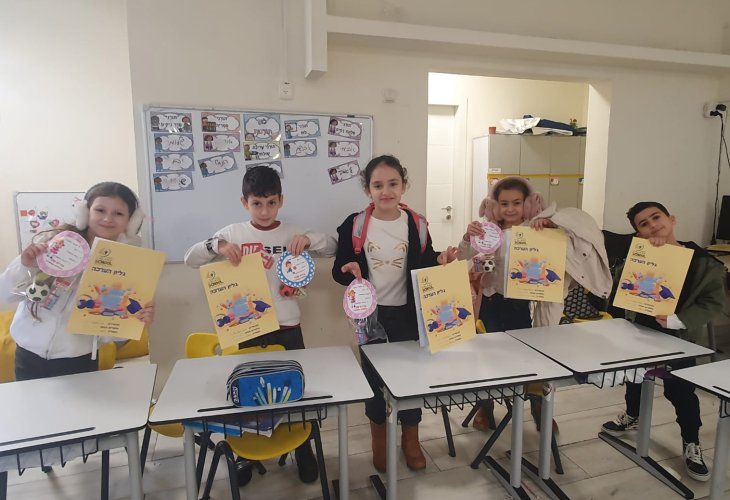
Across many communities today, parents are asking the same uneasy questions. Why is respect harder to come by? Why do children seem more disconnected from family, values, and even themselves?
It is not only about grades or academic performance. The deeper concern is about character, connection, and direction. Many parents feel they are losing influence at a younger age than ever before, and they are not sure how to respond.
The Gap Between What We Want and What We See
Most parents share a similar vision. They hope to raise children who are kind, respectful, and grounded. Children who know how to relate to others, who feel connected to their family, and who grow up with a sense of purpose.
At the same time, they want strong academics, engaged teachers, and a school environment that supports both emotional and intellectual growth.
But in reality, many feel caught between two worlds. On one side, academic pressure. On the other, a culture increasingly shaped by screens, fast content, and peer influence that does not always align with the values they want to pass on.
The result can feel overwhelming.
A Culture That Shapes Our Children
Children today are growing up in a world that moves quickly and constantly competes for their attention. Screens are not just a tool, they are a primary environment. Language, behavior, and expectations are shaped there.
When that influence becomes dominant, it can weaken a child’s connection to family, to tradition, and to their own inner world.
Parents often try to counterbalance this, but it is not easy to compete with an entire culture.
What Are Parents Really Looking For?
When you listen closely, the request is not complicated, but it is very specific.
Parents want a school that sees the whole child. A place where values and academics are not competing priorities, but work together. A place that is structured, but also warm. Serious, but also human.
They want children to succeed, but not at the cost of who they are becoming.
A Different Approach to Education
Some educational models are trying to respond to this need by rethinking the structure of learning itself.
One such approach draws from the Finnish education model, which has gained global attention for its balance between academic success and student well-being.
At its core, this model emphasizes smaller class sizes, individualized attention, and active, hands-on learning. Instead of focusing only on memorization, it encourages curiosity, creativity, and problem-solving.
Students are not just passive listeners. They are active participants in their own learning.
Learning That Stays in School
One of the most striking differences in this model is how it treats homework.
Rather than shifting responsibility to parents after school hours, the learning process is designed to take place during the school day. Students review, practice, and deepen their understanding in a supported environment.
This allows home to remain a space for family, rest, and connection, instead of becoming an extension of the classroom.
Structure That Supports Growth
Another key element is thoughtful structure.
Smaller classes allow teachers to truly know their students. In some cases, having more than one educator in the room creates space for different learning styles and needs.
Technology is used as a tool, not a distraction, integrated in ways that support learning rather than replace it.
All of this is built around a central question: what helps a child grow, not only academically, but as a person?
The Role of Values
Education is not only about information. It is about formation.
Values such as respect, responsibility, kindness, and connection do not develop on their own. They need to be modeled, reinforced, and lived.
For many families, this also includes a connection to Jewish identity, tradition, and the rhythm of the Jewish year, not as an abstract idea, but as something meaningful and relevant.
What Makes the Difference
When the environment is right, the results go beyond grades.
Children begin to carry themselves differently. They speak with more respect. They relate more thoughtfully to siblings, parents, and others around them.
Learning becomes something they engage in, not something they resist.
And perhaps most importantly, they begin to develop a sense of who they are.
A Thought to Take Forward
There is no single perfect solution, and no system can solve every challenge. But the direction is clear.
Children need more than information. They need guidance, structure, and values that help them grow into themselves.
For parents, the question is not only “Where will my child succeed?” but “Where will my child grow?”
Because in the end, education is not just about preparing children for tests.
It is about preparing them for life.

