

Parashat Vayechi
The Power of Letting Go: What Joseph and Rachel Teach About True Greatness
A timeless lesson on forgiveness, selflessness, and why giving up for others leads to lasting reward and spiritual legacy
- Rabbi Menachem Jacobson
- | Updated
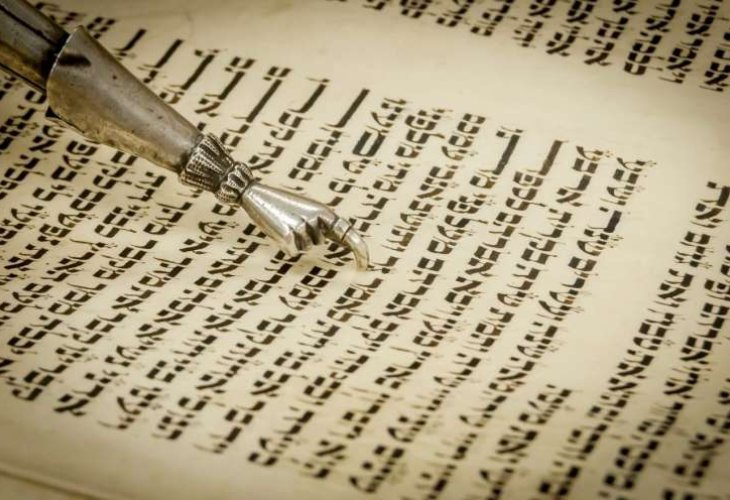 (Image: shutterstock)
The final part of the Torah portion of Vayechi deals with the brothers’ fear that Joseph might take revenge after their father’s passing, and with their request for forgiveness, which they present in their father’s name: “Now, please forgive the transgression of your brothers and their sin, for they did you harm.” Joseph responds with remarkable nobility, calming them and acting as if he has no reason to be angry: “God intended it for good, in order to accomplish what is now being done, to keep many people alive.”
Given the successful ending of the story, it is understandable that feelings of anger may have softened. It is also easy to recognize that everything was guided from above.
However, there is one element that does not seem necessary to the overall process that led to Joseph’s rise to power: his being thrown into the pit. According to the Sages, this pit was filled with snakes and scorpions, and Joseph experienced mortal fear there. This step was not essential for the outcome. Even if his brothers had sold him without first throwing him into the pit, the process could have continued. It would seem, therefore, that this detail alone could justify resentment and anger — even toward what ultimately turned out for the good. And yet, Joseph overlooks everything. From where did he draw such extraordinary qualities of forgiveness and restraint?
Perhaps the question itself is misplaced. After all, Joseph is the son of Jacob, the chosen of the patriarchs, and the grandson of Abraham and Isaac. Still, it seems that the root of Joseph’s capacity for forgiveness can be traced to his mother, Rachel.
On the day she was meant to marry Jacob, after waiting seven years together with him, Rachel saw her father replace her with her sister Leah. This did not surprise her; she knew her father well and had even prepared in advance with Jacob how to expose such a deception, agreeing upon identifying signs between them. Yet at the crucial moment, Rachel realized the deep humiliation Leah would suffer if the truth were revealed. She gave up everything — her hopes, her dreams, and her future. She had no guarantee that Jacob would marry her afterward. He may even have been angry at her for cooperating. Still, she relinquished everything for the sake of her sister’s dignity.
Is this not an extraordinary legacy, one that forms the foundation for Joseph’s ability to forgive?
During Joseph’s final visit with his father, Jacob says to him: “And as for me, when I came from Paddan, Rachel died on me along the way… and I buried her there on the road to Ephrath, which is Bethlehem.” Rashi explains that Jacob buried her there so that she would later stand in prayer for her children when they went into exile.
Rabbi Samson Raphael Hirsch notes that this explanation seems out of place here. It would have been more fitting when Jacob asked Joseph to ensure that he himself be buried in the Cave of Machpelah. At that moment, it would naturally raise the question: why was Rachel not buried there?
Rabbi Hirsch explains that Jacob was hinting to Joseph a deeper truth. Rachel appeared to have lost by giving up burial in the sacred cave, just as she seemed to lose when she allowed Leah to marry Jacob in her place. Yet in truth, she did not lose. On the contrary, Jacob now elevates Joseph, Rachel’s son, to the highest level, granting his two sons the status of tribes: “Ephraim and Manasseh shall be mine like Reuben and Simeon.” Through Joseph — because of Rachel’s selflessness, the blessing “I will make you into a multitude of nations” is fulfilled.
The Power of a Mother
The Midrash beautifully connects Rachel’s two acts of self-sacrifice into one continuous expression of selflessness for the sake of others.
What was Rachel’s prayer when her children went into exile? “A voice is heard on high, weeping bitterly — Rachel weeping for her children.” The Sages describe her plea before God: “Master of the world, it is known to You that Jacob loved me deeply and worked for me for seven years. When the time came for our marriage, my father plotted to replace me with my sister. I revealed this to Jacob and gave him signs so he could recognize me. But then I overcame my own desire and had compassion for my sister, so she would not be shamed. I gave her the signs I had received…”
From her lonely grave, Rachel pleads: remember my sacrifice for the sake of another. And God responds: “Restrain your voice from weeping… there is reward for your actions… and your children will return to their borders.”
Joseph continues this path of forgiveness and selflessness for the sake of the unity of the people. The pain remains real, but he does not seek revenge — he comforts instead. He and his mother are rewarded eternally, and two additional tribes emerge from his legacy. Every father blesses his children with their names: “May God make you like Ephraim and like Manasseh.” As we pass this blessing on, we should also pass on the message behind it: one does not lose by giving up. In the long view of eternity, the reward is doubled.
A Thought for Our Time
In our own time, we often see leadership driven by ego, with public life revolving around honor and self-interest. It is precisely now that we must remind ourselves of the deeply rooted Jewish quality of selflessness — the ability to let go, to set aside ego, and to act for something greater.
And perhaps through this, we will merit better days, as we pray: “Restore our judges as at first and our counselors as in the beginning… then you shall be called a city of righteousness, a faithful city.”

