

Behind the News
Trump Uses Canceled Iran Trip to Show He Won’t Chase Iran
Trump repeatedly cited long flights, Iranian “confusion,” and U.S. leverage as he rejected more indirect diplomacy through Pakistan
- Brian Racer
- | Updated
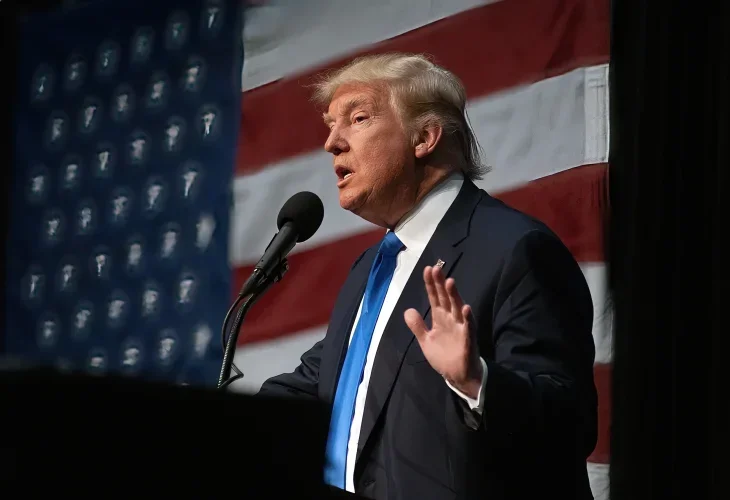 Shutterstock
President Donald Trump canceled a planned Saturday diplomatic trip to Islamabad by special envoy Steve Witkoff and senior adviser Jared Kushner. The decision came after Iranian Foreign Minister Abbas Araghchi left Pakistan following talks with senior Pakistani officials, adding fresh uncertainty to efforts to revive diplomacy surrounding the Iran war.
But Trump’s comments throughout the day suggested he was doing more than canceling the trip. Across posts, interviews, and remarks to reporters, Trump repeatedly signaled that Washington would no longer chase Tehran through indirect talks and foreign mediators.
In a Saturday post on Truth Social, Trump described the planned mission as a waste of time and questioned whether Iran’s leadership was even capable of negotiating coherently.
“Too much time wasted on traveling, too much work! Besides which, there is tremendous infighting and confusion within their ‘leadership,’” Trump wrote. “Nobody knows who is in charge, including them. Also, we have all the cards, they have none! If they want to talk, all they have to do is call!!!”
The comments laid out the central themes Trump would repeat throughout the day: that Iran’s leadership appeared divided, that the United States held the leverage, and that Tehran, not Washington, now needed to initiate contact.
Trump repeated nearly the same argument during an interview with Fox News, again centering the length of the trip and portraying the Pakistan-mediated talks as unproductive.
“I’ve told my people… ‘Nope, you’re not making an 18-hour flight to go there… We have all the cards. They can call us anytime they want, but you’re not going to be making any more 18-hour flights to sit around talking about nothing.’”
Trump repeatedly returned to the image of American officials spending nearly a full day flying across the world only to leave without a breakthrough. Throughout the day, he cited different versions of the same point, referring at various times to 15-, 16-, 17-, and 18-hour flights while insisting the United States would no longer invest time and prestige into talks producing little progress.
At the same time, Trump stopped short of declaring diplomacy dead. Speaking later Saturday to Axios after the cancellation became public, Trump rejected the idea that the move automatically meant the war was restarting.
“It doesn’t mean that,” Trump said when asked whether canceling the trip signaled a return to war. “We haven’t thought about it yet.”
Speaking again to reporters later Saturday, Trump repeated the same themes while further distancing himself from the Pakistan-mediated talks.
“You probably heard that we canceled the trip. We have all the cards. We’re not going to spend 15 hours in airplanes all the time, going back and forth, to be given a document that was not good enough,” Trump said. “So, we’ll deal by telephone, and they can call us any time they want.”
He added: “I’ll deal with whoever runs the show… When they want, they can call me, we have all the cards.”
Earlier Saturday, Araghchi met Pakistani Prime Minister Shehbaz Sharif and other senior officials in Islamabad as Pakistan attempted to revive negotiations. Following the meetings, Araghchi said it remained unclear whether the United States was “truly serious” about diplomacy and said Iran had presented what he described as a “workable framework to permanently end the war.”
Despite repeatedly focusing on travel, leverage, and Iran’s internal divisions, Trump ultimately said the core issue itself was straightforward: “ Iran cannot be allowed to obtain a nuclear weapon.” The comment reinforced the message he had repeated throughout the day, that in Trump’s view, the negotiations had become unnecessarily complicated around what he sees as a simple bottom line.

