

Raising Children
Parenting With Love: A Powerful Lesson From Rabbi Auerbach
What happens when parents try too hard to “educate”? Discover a powerful message about empathy, sensitivity, and guiding children with love.
- Naama Green
- | Updated
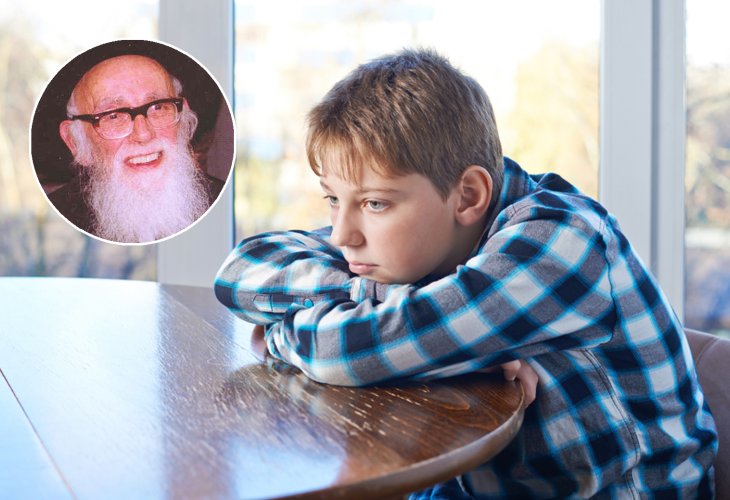 (Photo: Shutterstock)
Rabbi Shimon Spitzer shares a powerful story he heard from Rabbi Elazar Yonah Zilberman.
A man once came to the great Torah scholar, Rabbi Shlomo Zalman Auerbach, of blessed memory, to complain about his son’s behavior. As Rabbi Auerbach listened carefully, he quickly understood that the father was constantly criticizing his son, often harshly.
Rabbi Auerbach responded with a surprising suggestion. “Look at your son as if he were a guest,” he said. “If he were a guest, would you correct him?”
The father pushed back. “But I’m his father. It’s my responsibility to educate him.”
Rabbi Auerbach replied, “I’m willing to give you a signed note saying you are exempt from educating him.” He took out a piece of paper and wrote the words, “Exempt from educating him.” The man took the note and began to leave, but Rabbi Auerbach immediately called him back, took the paper, erased the words, and rewrote them: “Forbidden to educate.”
When “Education” Pushes a Child Away
With deep sensitivity and love, Rabbi Auerbach was teaching a powerful message. Sometimes, what we call “education” can actually push a child away. When a parent feels obligated to constantly correct and criticize, the relationship begins to suffer. But when that pressure is released, it becomes possible to relate to a child with more calm, patience, and genuine love.
The Pain Behind “Fairness”
Rabbi Zilberman shared another painful example. Parents once came to him deeply concerned about their 12 year old child, who had begun to break Shabbat. When he asked what their Shabbat meals looked like, the father explained that he gave candy to children who sang nicely at the table. This particular child did not enjoy singing, so he never received candy.
The father insisted, “I’m not punishing him. I’m simply rewarding the others.” But when Rabbi Zilberman asked how long this had been going on, the answer was shocking. For six months, at every Shabbat meal, this child sat and watched all his siblings receive candy while he got nothing. Again and again, week after week, he experienced being left out.
What may have seemed fair to the parent felt like repeated rejection to the child. Is it any wonder that he began to resent Shabbat?
Small Actions, Deep Wounds
Rabbi Spitzer adds another story that highlights how deeply a child can be affected. A boy refused to stand during Kiddush, and his father insisted, “In this house, we stand.” The boy complied, but chose to stand by the window, clearly distancing himself.
The father decided to reinforce the behavior by announcing that only those who stood properly by the table would receive wine from Kiddush. “My son was so hurt,” the father later shared. “He went to his room and cried through the entire meal.”
The father believed his son had a serious emotional problem, but in truth, the pain came from the humiliation. In front of the entire family, including married siblings and guests, the boy felt exposed and rejected. No harsh words were spoken, and no formal punishment was declared, but the emotional impact was deep.
Love That Brings a Child Back
Rabbi Spitzer also shares a story that demonstrates a completely different approach. A man once described a friend from his youth who had drifted far from religious observance. Years later, he saw him again, now fully committed and observant, and asked what had changed.
The friend described a turning point from his past. “I was in a very low place,” he said. “One Shabbat, I decided to go out to the balcony and smoke in the middle of the meal.” He knew his father might notice the smell and react, but he told himself, “I don’t care. Let him get angry.”
When he returned to the table, he braced himself for the reaction. Instead, as the soup was being served, his father handed him a bowl and said gently, “You must be thirsty. Have some soup. You’ll feel better.” There was no anger, no confrontation, only warmth and care.
“That moment changed me,” he said. “If my father could respond to me like that, I couldn’t continue hurting him.”
The Power of Drawing Close
Rabbi Spitzer concludes with a timeless principle. Children must be guided with yemin mekarevet, drawing them close with love. Especially on Shabbat, the focus should be on warmth, connection, and acceptance.
Because in the end, it is not pressure that shapes a child’s heart. It is love.

