

World News
Internal Pentagon Email Points to Possible Penalties for NATO Allies That Withheld Help Against Iran
Washington is weighing steps against key NATO partners that, officials say, failed to back U.S. operations against Iran. An internal email circulated among top Pentagon ranks outlines options ranging from sidelining Spain to revisiting the U.S. stance on the Falklands.
- Hidabroot
- | Updated
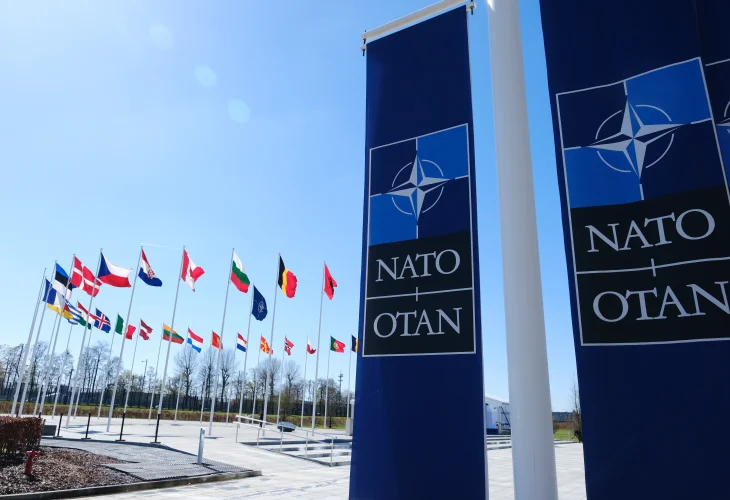 (Credit: Shutterstock)
An internal email circulated among senior Pentagon ranks lays out a series of potential policy steps aimed at punishing NATO countries that, in the U.S. administration's view, did not provide sufficient support for American operations in the war against Iran. According to a U.S. official who spoke to Reuters on condition of anonymity, the document reflects growing frustration toward allies that refused or hesitated to allow access, basing of forces, or overflight rights.
According to that official, the email stated that these rights are "just the absolute baseline of NATO," and the options it details are being discussed at the highest levels of the Pentagon. Measures under consideration include suspending countries, among them Spain, from key or prestigious roles within the alliance.
Tensions between the United States and Madrid escalated after Spain's Prime Minister, Pedro Sánchez, announced that his country would not allow the use of its bases or its airspace for strikes against Iran.
The document also proposes reexamining the U.S. stance toward European territorial assets, including the British-controlled Falkland Islands, which are disputed with Argentina. The call for a review comes against the backdrop of Argentine President Javier Milei's closeness to the U.S. administration.
In addition, U.S. President Donald Trump intensified his criticism of NATO countries that did not help open the Strait of Hormuz. In an interview with Reuters, Trump even hinted at the possibility of withdrawing from the alliance.
However, the U.S. official clarified that the email does not propose leaving NATO or closing bases in Europe, though it does not rule out the possibility of reducing the military presence. Pentagon spokesperson Kingsley Wilson said in response: "As President Trump has said, despite all that the United States has done for its NATO allies, they were not there for us." According to him, "The Department of Defense will ensure the president has credible options to make sure our allies are not a 'paper tiger,' but instead carry their share of the burden. We have no further comment on internal discussions on the matter."
The war with Iran has raised serious questions about the future of the 76-year-old alliance, as European countries, including Britain and France, made clear that participation in a U.S. naval blockade would mean entering the war. U.S. Defense Secretary Pete Hegseth addressed the disagreements and said, "A lot of things have been exposed." In his words, "You are not really an alliance if there are countries that are not prepared to stand by you when you need them."

