

Beginners Guide
Washing Hands Before Bread: Why It Matters and How to Do It Right
Why do Jews wash their hands before eating bread? Discover the meaning and simple steps of netilat yadayim in this easy, beginner-friendly guide.
- Yosef Yaavetz
- | Updated
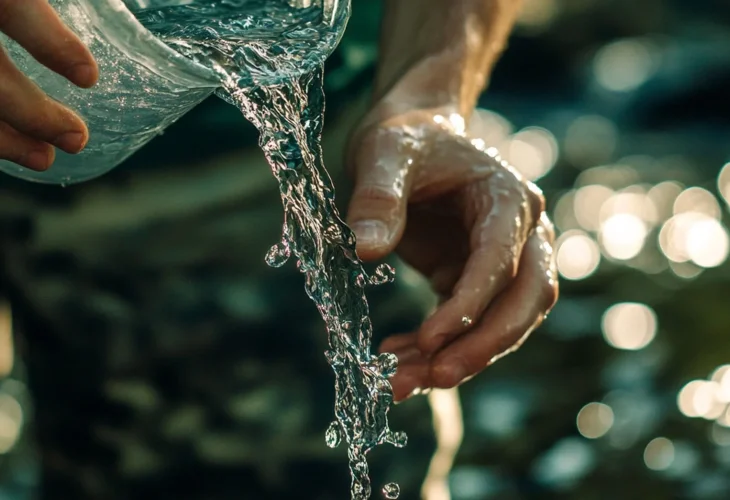
According to Jewish law, we do not eat bread without first washing our hands. But why is this practice so important, and how do we do it properly?
Why Do We Wash?
The practice of ritual handwashing was established by King Solomon and later expanded by the Sages. They explained that before these enactments, the Torah was like a basket without handles, full of meaning and value, but difficult to “hold onto” in daily life. The mitzvot of the Sages help us bring the Torah into practical action.
Originally, handwashing was required only when eating terumah or food consumed in a state of ritual purity. Since our hands are constantly active and may touch impure things, they were given a unique status that requires purification.
Later, the Sages extended this practice to all meals that include bread. This was done both to avoid confusion between different types of meals and to honor the act of eating itself.
Our table is compared to the altar in the Temple. Just as the priests would wash their hands before serving, we wash our hands before eating. In this way, every meal becomes something elevated and meaningful.
How to Wash Properly
Netilat yadayim must be done using a vessel. The cup should be whole, without cracks or chips, and its rim should be intact. It should hold at least a revi’it of water, approximately 86.5 ml according to lenient opinions.
That is why many people use a special washing cup. However, any regular cup can be used if it meets these basic requirements.
Understanding the Process
Before washing, the hands are considered ritually impure according to rabbinic law. The act of washing removes that status.
When water is first poured onto the hands, it becomes impure through contact. However, once enough water is poured, at least a revi’it, it purifies both the hands and the water itself.
This is why it is important not to interrupt the process.
What to Be Careful About
While your hands are still wet and the washing is not complete, avoid touching your other hand or someone else’s hands. Ritual impurity can transfer through contact when moisture is present.
If you do touch another hand before finishing, you may need to wash again.
The Right Way to Pour
Technically, the minimum amount of water can be used, as long as the vessel contains a revi’it. However, in practice, it is best to use a generous amount to avoid complications.
The common custom is to pour twice on each hand, even though strictly speaking, one pour is enough if it includes the required amount.
The Blessing
Unlike most mitzvot, the blessing is recited after washing, not before.
Why? Because before washing, the hands are not yet in a proper state for a blessing. Therefore, we wash first, then recite the blessing “Al netilat yadayim,” and only afterward dry our hands.
Drying is considered part of the mitzvah, as it completes the process of removing the water and preparing the hands for eating.
What If There’s No Water?
If you are traveling and cannot access water without going a significant distance, and you need to eat, there is a solution.
You may cover your hands with gloves or a bag and eat without directly touching the bread. Since the concern is eating with unwashed hands, avoiding contact allows you to eat when washing is not possible.

