

Beginners Guide
Your Kosher Kitchen: Keeping Meat and Dairy Separate
Building a kosher kitchen starts here. Discover the essential rules for keeping meat and dairy separate with confidence and clarity.
- Yosef Yaavetz
- | Updated
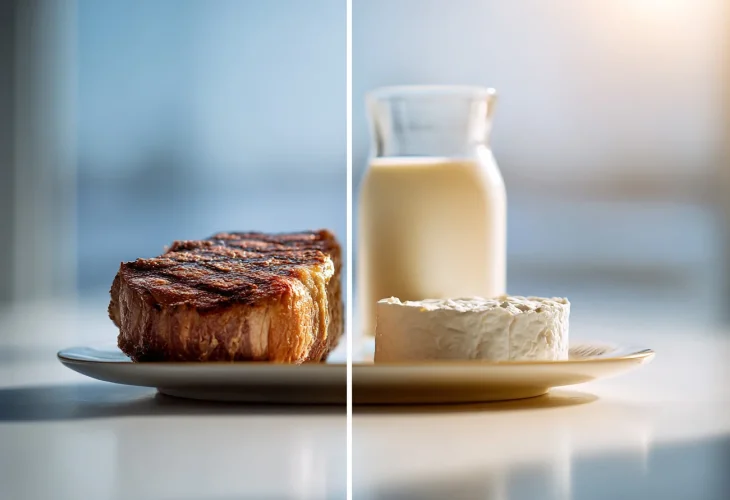
One of the central principles of kashrut is the prohibition against mixing meat and dairy.
This is such a key area because even if you carefully buy only the highest standard kosher products, you can still unknowingly violate serious prohibitions if meat and dairy are not kept separate.
The Torah forbids cooking meat and milk together. On a biblical level, this applies to animal meat, and the Sages extended the prohibition to include poultry as well.
Keeping Meat and Dairy Separate in the Kitchen
Because we regularly cook and eat hot foods, it is essential to have two separate sets of utensils and cookware, one for meat and one for dairy.
For example, a spoon used in hot soup absorbs meat flavor. If that same spoon is later used in hot coffee, it can create a prohibited mixture of meat and dairy.
In theory, using clean utensils for cold foods might not pose a problem. However, to avoid confusion and mistakes, the accepted practice is to keep two fully separate sets. Utensils intended for cold use can easily come into contact with hot food, and accidents can happen in a busy kitchen.
This separation extends beyond cookware. Since hot foods are often served at the table, it is important to keep table surfaces separate as well. If you eat directly on the table or use a table covering, designate it consistently for either meat or dairy. When switching, use a separate placemat.
Ideally, a kitchen should also have two sinks, one for meat and one for dairy, since hot water and food residue are often poured into the sink. If there is only one sink, extra care should be taken to avoid mixing hot meat and dairy items.
Waiting Between Meat and Dairy
After eating meat, it is customary to wait six hours before consuming dairy. This is because meat takes time to digest and can leave residue between the teeth.
After eating dairy, there is generally no need to wait before eating meat. It is sufficient to rinse the mouth and eat something neutral, known as pareve. Some people have the custom to wait about thirty minutes.
If two people are eating at the same table, one eating meat and the other dairy, there should be a clear reminder between them. This can be something noticeable, like a unique object or separate placemats, to prevent confusion.
Understanding Mixtures
A pareve food cooked in a meat utensil does not automatically become meat. Someone who eats it does not need to wait before consuming dairy, even if the utensil was used for meat earlier that day.
However, if a meat utensil that was recently used comes into contact with hot dairy, or a dairy utensil comes into contact with hot meat, this may create a prohibited mixture. The details can vary depending on temperature, quantity, and how the contact occurred, so it is important to consult a rabbi in such cases.
Similarly, if a small amount of milk falls into a meat dish, or the opposite, the food is not always forbidden. In some cases, the mixture may be nullified. Each situation is different, so guidance from a rabbi is recommended.
A Careful and Conscious Kitchen
Keeping meat and dairy separate may seem complex at first, but it becomes natural with time and awareness.
With a bit of planning and attention, your kitchen can reflect the care and mindfulness that are at the heart of kashrut, helping you observe this important mitzvah with confidence.

