

Magazine
Choosing Life Against All Odds: A Powerful Story of Faith, Survival, and Inner Strength
How Dr. Tamar Cohen overcame brain trauma, paralysis, and loss to rebuild her life, discover new purpose, and inspire others through resilience and unwavering belief
- Tamar Schneider
- | Updated
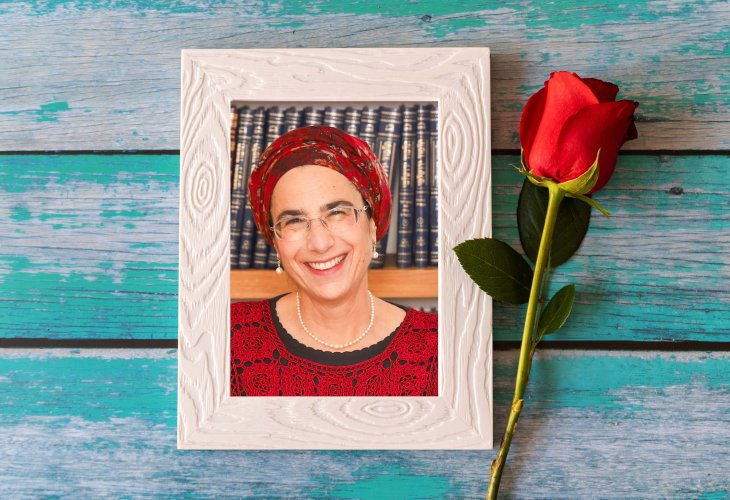 (Inset: Dr. Tamar Yehuda-Cohen)
“When they discovered that blood was leaking from one of the arteries in my brain, they gave me a choice — to block it, which would stop the blood supply to the right side of my brain, or to die,” begins Dr. Tamar Cohen.
Until that day, she had enjoyed a full and blessed life: a happy marriage, eight children, and a fulfilling career as a brilliant scientist. “The choice placed before me was to wait for death or to choose life. They didn’t know exactly what would be damaged after such a procedure, but it was clear that it would result in severe disability. From that point on, I had to choose life again and again.”
Blood in the Brain
Tamar begins by describing the life she had before everything changed. “I’m happily married, a mother of seven children plus one adopted child. Today they’re all married and have children of their own. For 23 years, I worked as a senior scientist in research and development, specializing in the immune system and early disease detection. I was responsible for dozens of international developments and patents and was deeply involved in fascinating research. I also lectured in science, ethics, and Judaism in universities around the world.”
All that changed about twelve years ago. “I went to the hospital because of a severe headache, and they discovered I had bleeding from a large brain aneurysm. An aneurysm means that the wall of an artery weakens and stretches until it can rupture, which leads to certain death. I was already at the stage of leakage, so the only solution was to completely block the artery. That artery supplied blood to the front right side of the brain, so that area would stop functioning. We didn’t know how I would wake up from the surgery, but severe disability was expected.”
“How do you make such an impossible decision?”
“It truly was an impossible choice, but I chose life,” she says. “And it wasn’t just about me. Who would take care of me afterward? My husband Shlomo was by my side through everything. We made these decisions together and carried the consequences together, with patience, understanding, and respect, even for the hard emotions.”
The surgery succeeded, beyond expectation. “My body kept functioning. Miraculously, my right brain didn’t stop working, thanks to a tiny flow of blood from the left side. God created incredible flexibility in the body, and my brain adapted. Still, many functions became harder. Writing an article took twice as long. I needed more rest. It’s like trying to drive at 100 km/h with just a trickle of fuel.”
Invisible Disability
Tamar returned quickly to her routine, but paid a price. “I had what I call an ‘invisible disability.’ People didn’t see how much I struggled, and neither did I. I thought I could do everything as before, and when I couldn’t, I became frustrated. I kept pushing myself like a ‘superwoman,’ working harder but achieving less. I didn’t know how to stop and say, ‘You’ve been through something huge — give your body time.’”
She continued this way through additional aneurysms and procedures — each time forced to choose between life and further disability.
Losing Speech — and Finding a New Voice
About ten years ago, her body could no longer keep up. “I had a stroke and developed severe epilepsy. I lost my ability to speak. Suddenly I couldn’t have conversations, give lectures, or lead research. Years of work disappeared overnight.”
After the initial shock and grief, she found new ways to communicate. “I started writing. I wrote letters to my grandchildren, which is something they still treasure. I brought a laptop to my study partner and typed what I wanted to say. I even continued giving Torah classes by writing them out and having someone else read them aloud.”
Despite the effort, she refused to give up. “The Torah classes were my anchor, my sanity, my identity.”
Rebuilding and Reinventing
Through long rehabilitation, Tamar eventually regained speech. “I had to relearn how to breathe and activate the muscles needed for speech. The brain is incredibly adaptable — it can teach other areas to take over lost functions.”
Although she didn’t return to her scientific career, new opportunities emerged. “I realized my mission had changed, from saving lives through research to helping people through inner work. I trained in coaching and began helping others facing life crises.”
Half a Body Paralyzed
Then came another challenge. “About four and a half years ago, I developed a brain tumor. After surgery, I woke up paralyzed on my entire left side. I also had severe cognitive impairments.”
Doctors told her she would never walk again, but she refused to accept it. “I told my husband not to install an elevator. I said I would walk again, and until then, I’d climb the stairs with my working limbs.”
And she did.
“Today my limbs are weaker, but functional. Some abilities never returned, but I learned to live with the missing pieces, like a puzzle missing parts, while appreciating what remains.”
Turning Pain into Purpose
During her rehabilitation, Tamar began encouraging others. “I shared my story, and it gave people hope. Eventually, I turned it into a book called Cracked Wholeness. Later, I wrote poetry and collected stories of others who transformed their struggles.”
Her message is simple but powerful: “When something breaks, you can’t restore it exactly as it was, but you can build something even better.”
Tamar often asks: “What will you drink — black coffee or a miracle?”
“Everyone can choose how to experience life,” she explains. “You can focus on what’s missing, or on what still exists. You can give up, or turn your life into a miracle.”
Faith Through Everything
Even in her hardest moments, Tamar held onto gratitude. “Even when I couldn’t speak, when I was in pain and heavily medicated, I meant every word when I said ‘Modeh Ani’ (Thank You). Life itself is a gift. I feel God’s presence guiding me through everything.”
She doesn’t claim it’s easy. “It’s not always easy, and I don’t always make the right choices. But I try to grow and give. And these are lives worth living.”
Her final message: “No one can promise what life will bring, but with effort and persistence, every person can reach a better place than where they are now. And that makes it all worthwhile.”

